
Wayne County Unclaimed Money
Wayne County is Michigan's most populous county and has its own distinct process for tax foreclosure surplus claims, different from every other county in the state. This page explains the Wayne County-specific Form 6156 process, covers the Michigan state unclaimed property program, and details the free resources available through the United Community Housing Coalition and other local organizations.
Wayne County Overview
Michigan State Unclaimed Property
The Michigan Department of Treasury runs the free statewide unclaimed property search at unclaimedproperty.michigan.gov. Anyone can search by name for free. Filing a claim is also free. The state has returned over $675 million to Michigan residents, and Wayne County, as the most populous county, likely has a higher concentration of unclaimed funds than anywhere else in the state.
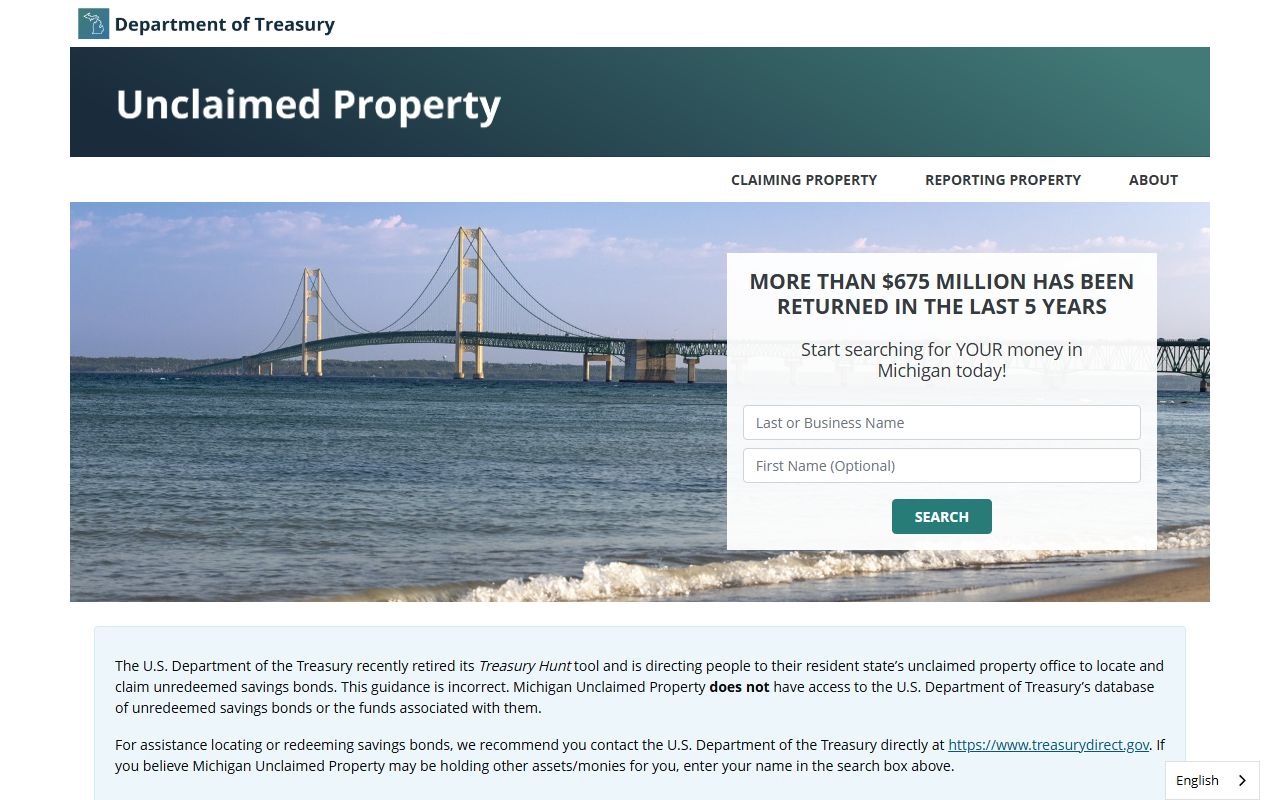
Given the high turnover of residents in the Detroit metro area, former residents who lived in Wayne County and moved away are especially likely to have unclaimed funds. Old bank accounts, uncashed checks, insurance proceeds, utility deposits, and dividends from former employers can all sit with the state for years. Try searching under every name you have used and every address you can remember in Wayne County.
For help with the state program, call the Unclaimed Property Division at (517) 636-5320 or email TreasUPD@michigan.gov. For Wayne County tax and property questions specifically, contact Treasurer Eric R. Sabree's office at (313) 224-5990 or visit pta.waynecounty.com.
Wayne County Treasurer
Wayne County Treasurer Eric R. Sabree oversees the Wayne County Treasurer's office, the largest county treasurer's operation in Michigan. The tax and property portal is at pta.waynecounty.com, and the county's main website is at waynecounty.com.
The Wayne County property tax portal is the primary access point for tax records and surplus fund information.
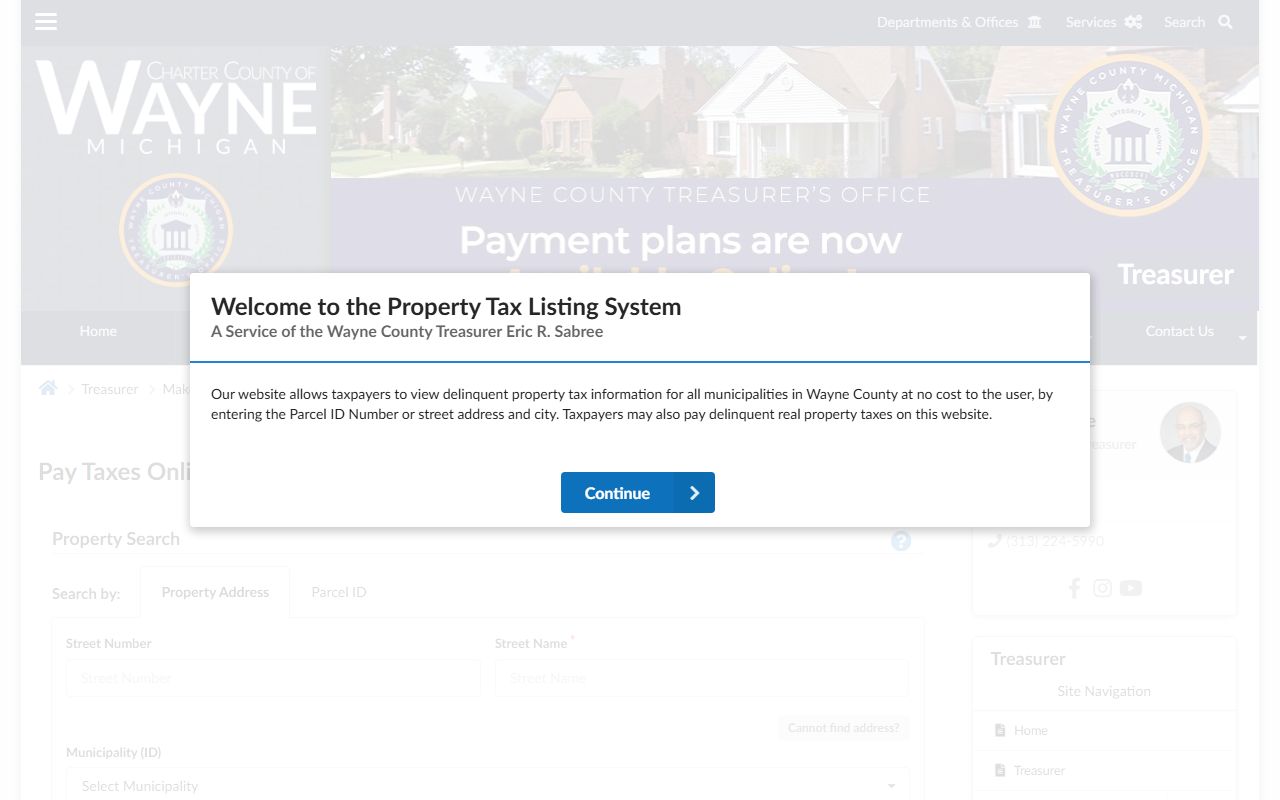
The portal lets you look up property tax records, payment history, and foreclosure status for parcels across Wayne County.
The main county website provides access to all county departments, including the treasurer's office, court information, and other public services.
Wayne County reported over $16 million in unclaimed surplus funds from tax foreclosure sales in just the 2017 to 2019 period, making this one of the most significant surplus fund opportunities in the state. The legal framework that governs these claims includes the 2007 Michigan Supreme Court decision In re Petition by Wayne County Treasurer, 478 Mich 1, 732 NW2d 458, which addressed earlier Wayne County foreclosure practices.
Wayne County Tax Foreclosure Surplus: The Form 6156 Process
Wayne County uses a completely different process for tax foreclosure surplus claims compared to all other Michigan counties. While the rest of the state uses Forms 5743 and 5744 under the standard MCL 211.78t procedure, Wayne County requires Form 6156 and has its own set of deadlines and steps. If your property was in Wayne County, do not use the standard statewide forms.
To be eligible, your home must have been foreclosed for unpaid property taxes in 2015 or later. The property must have sold at auction for more than the amount owed in taxes, fees, and interest. And you must not have already claimed or received a refund.
Step one: Download Form 6156 from the Wayne County Treasurer's website. Complete the form fully, have it notarized, and submit it to the Wayne County Treasurer's office by March 31. You can mail it or deliver it in person. The notary requirement is firm, so do not skip it. The United Community Housing Coalition (UCHC) offers free notary services at their events if you need help with that step.
Step two: The Wayne County Treasurer reviews your form and notifies you by July 1 whether funds are available for your claim. Keep your contact information current so you do not miss this notification.
Step three: If funds are confirmed, file a motion with the 3rd Circuit Court by October 1. Note that this is a different court and a different deadline than the standard statewide circuit court window of February 1 through May 15. Wayne County runs on its own schedule for this step.
Step four: Once the court approves your claim, payment is issued within 21 days of the court order. The entire process from filing Form 6156 to receiving payment can take several months, so patience is important.
The UCHC Tax Foreclosure Hotline at (313) 725-4560 provides free assistance with the entire Form 6156 process. UCHC has a video guide walking through each step, and they hold events where staff can help you complete and notarize the form at no cost. Their information page at uchcdetroit.org is worth reading before you start the process.
The UCHC provides detailed information and free help for Wayne County residents navigating the tax foreclosure refund process.
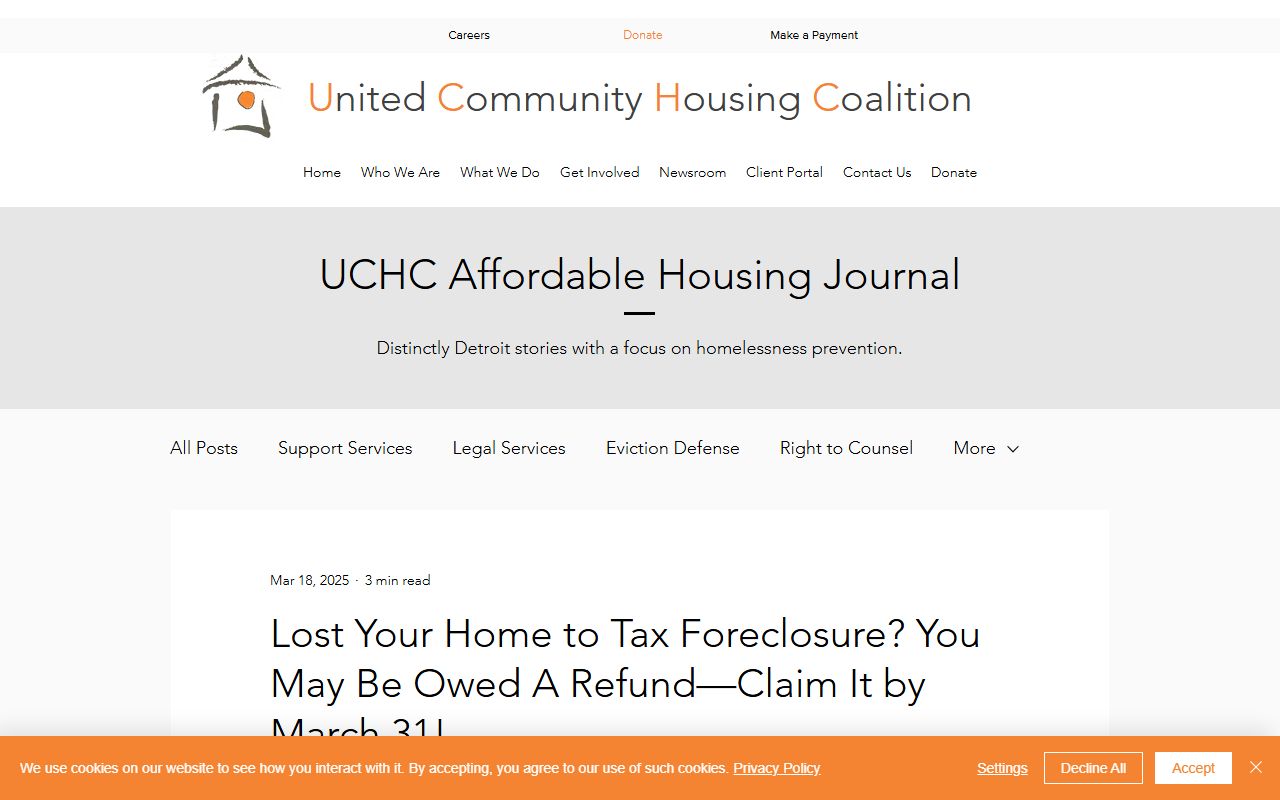
UCHC is one of Detroit's most important housing advocacy organizations, and their free assistance with Form 6156 has helped thousands of Wayne County residents recover funds they were owed.
Michigan Tax Foreclosure Timeline
Michigan uses a three-year process to move a property from delinquent to foreclosed. Wayne County follows this same timeline even though its surplus claim process is unique.
Year one begins March 1, when unpaid taxes become delinquent. A 4% administration fee is added, plus 1% monthly interest. The owner can still pay the balance and clear the delinquency. For Wayne County homeowners in this stage, options include direct payment to the treasurer or a payment plan.
Year two starts on the next March 1, when the property is formally forfeited to the county. Interest increases to 1.5% per month. Redemption is still possible during year two, but the debt grows quickly. Detroit homeowners in this stage should also look into MIHAF grants, which can pay the outstanding taxes directly and stop the process.
Year three ends with foreclosure becoming final on April 1. The county takes title and the property goes to auction. After the sale, the Form 6156 process described above is the only remaining path for former owners who may be owed a surplus. Given the over $16 million in unclaimed surplus funds reported from 2017 to 2019, there are likely many Wayne County properties with unclaimed balances. If you had a property foreclosed in Wayne County in 2015 or later, it is worth checking.
Legal Aid Resources
Wayne County has significant legal aid infrastructure, which is especially important given the volume of foreclosure activity in the Detroit area.
United Community Housing Coalition (UCHC) is the most directly relevant resource for surplus claims. Their Tax Foreclosure Hotline at (313) 725-4560 is specifically designed for Form 6156 help. They provide free notary services, a video guide, and staff assistance at community events. Start here if you think you may have a Wayne County surplus claim.
Michigan Legal Help at michiganlegalhelp.org covers the statewide surplus claims process. While Wayne County uses Form 6156 instead of Form 5743, the background information on the law, your rights, and the circuit court process is still useful context for understanding your claim.
The State Bar of Michigan Lawyer Referral Service connects residents with a licensed attorney for an initial consultation. Call (800) 968-0738 or visit lrs.michbar.org. For larger surplus amounts or cases where UCHC assistance is not sufficient, a brief attorney consultation can be worth the cost.
The Michigan Homeowner Assistance Fund (MIHAF) at michigan.gov/mihaf provides grants up to $25,000 for eligible homeowners facing delinquent property taxes and other housing costs. If you still own your home and are behind on taxes, MIHAF may stop the foreclosure process before it advances further. Eligibility requires income below 150% of the area median income, primary residence ownership, and a COVID-19 related financial hardship on or after January 21, 2020.
Cities in Wayne County
Wayne County contains several large cities, each with its own dedicated page on this site.
Nearby Counties
Wayne County is bordered by Monroe, Washtenaw, and Oakland counties. Residents who have lived in or owned property in these neighboring areas may want to check those pages as well.