
Washtenaw County Unclaimed Money Search
Washtenaw County is home to a large and mobile population, which means unclaimed funds are common here. This page covers the Michigan state unclaimed property search, tax foreclosure surplus claims through the county treasurer, Washtenaw County's role in multi-county litigation, and the extensive local network of housing and legal aid resources serving this area.
Washtenaw County Overview
Michigan State Unclaimed Property
The Michigan Department of Treasury operates the statewide unclaimed property program at unclaimedproperty.michigan.gov. Searching is free. Claiming is free. No deadline ever applies. The state has returned more than $675 million to Michigan residents and continues to hold funds for those who have not yet searched.
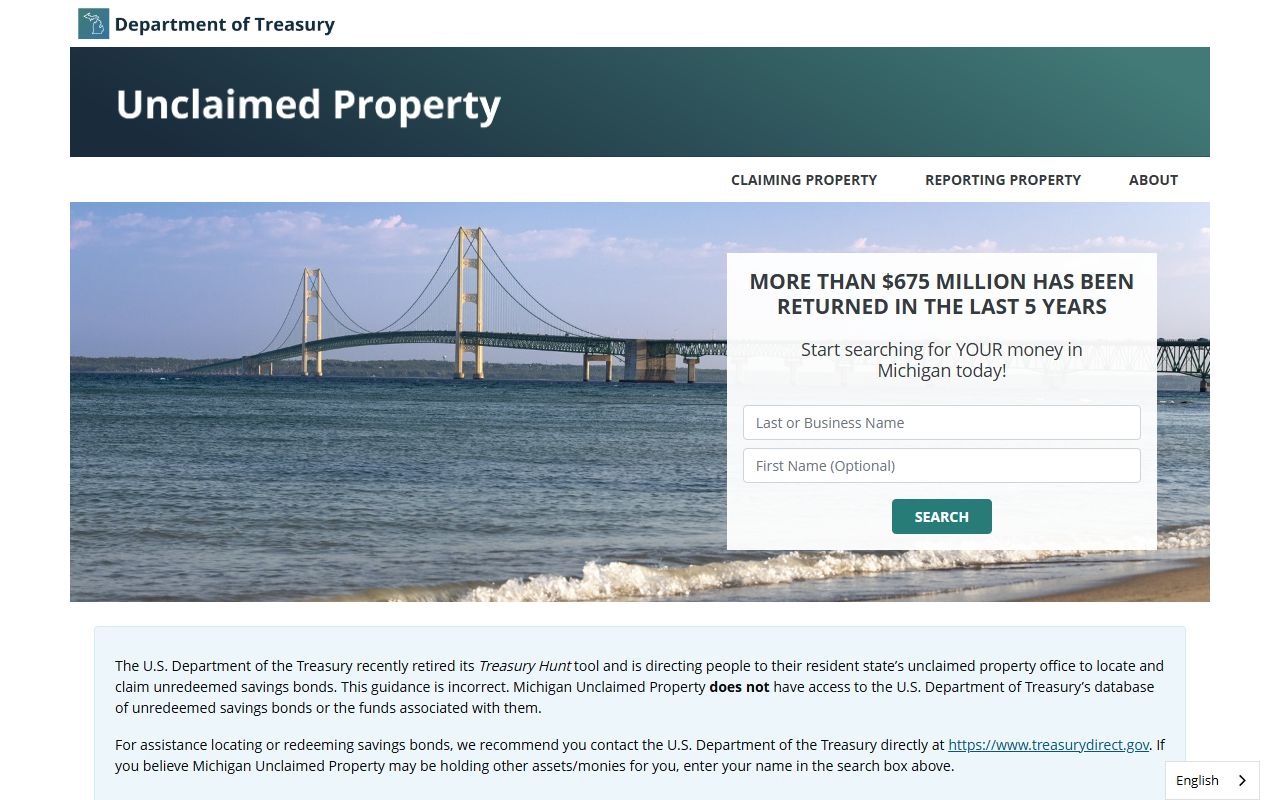
Washtenaw County has a particularly high potential for unclaimed funds given the transient nature of its population. The University of Michigan brings students, faculty, and staff from across the country who open bank accounts, earn wages, and pay deposits, then move away and lose track of accounts. Former University of Michigan employees or students, as well as anyone who lived in the area and relocated, should search by their name and any past addresses associated with this county.
Funds come from banks, insurers, employers, utilities, and any institution that loses contact with an account holder after a dormancy period. Common unclaimed property types include old checking balances, uncashed payroll or reimbursement checks, insurance proceeds, and utility deposits. The state holds everything indefinitely.
For help, call the Unclaimed Property Division at (517) 636-5320 or email TreasUPD@michigan.gov. The Washtenaw County Treasurer can also be reached at (734) 222-6600 or taxes@washtenaw.org for county-specific tax and foreclosure questions.
Washtenaw County Treasurer
The Washtenaw County Treasurer's office manages all property tax collection, delinquent accounts, and tax foreclosure activity throughout the county. The main phone number is (734) 222-6600 and the email is taxes@washtenaw.org. Their website is at washtenaw.org.
The county's main website provides access to the treasurer's office and all other county departments.
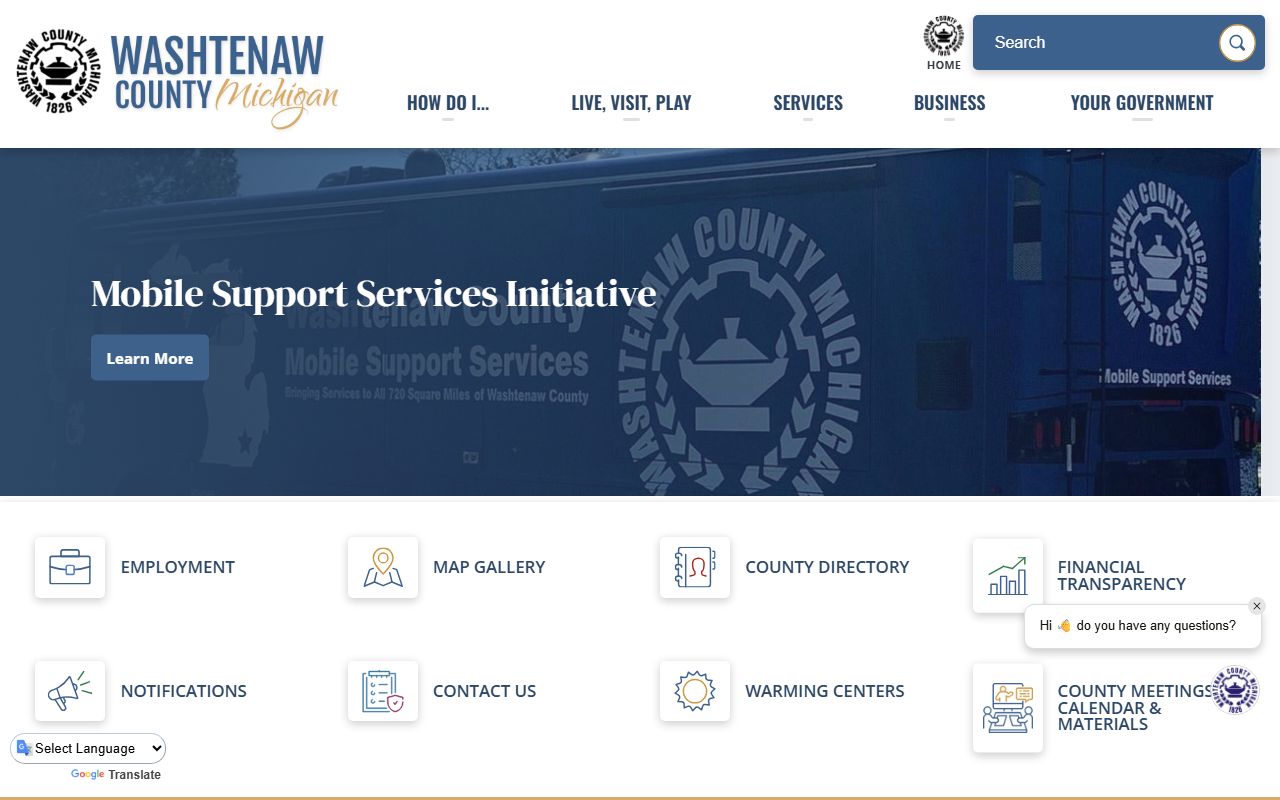
The county site is updated regularly and is the best source for current department contacts, hours, and procedures.
The treasurer's page gives direct access to tax account information, payment options, and surplus claim procedures.
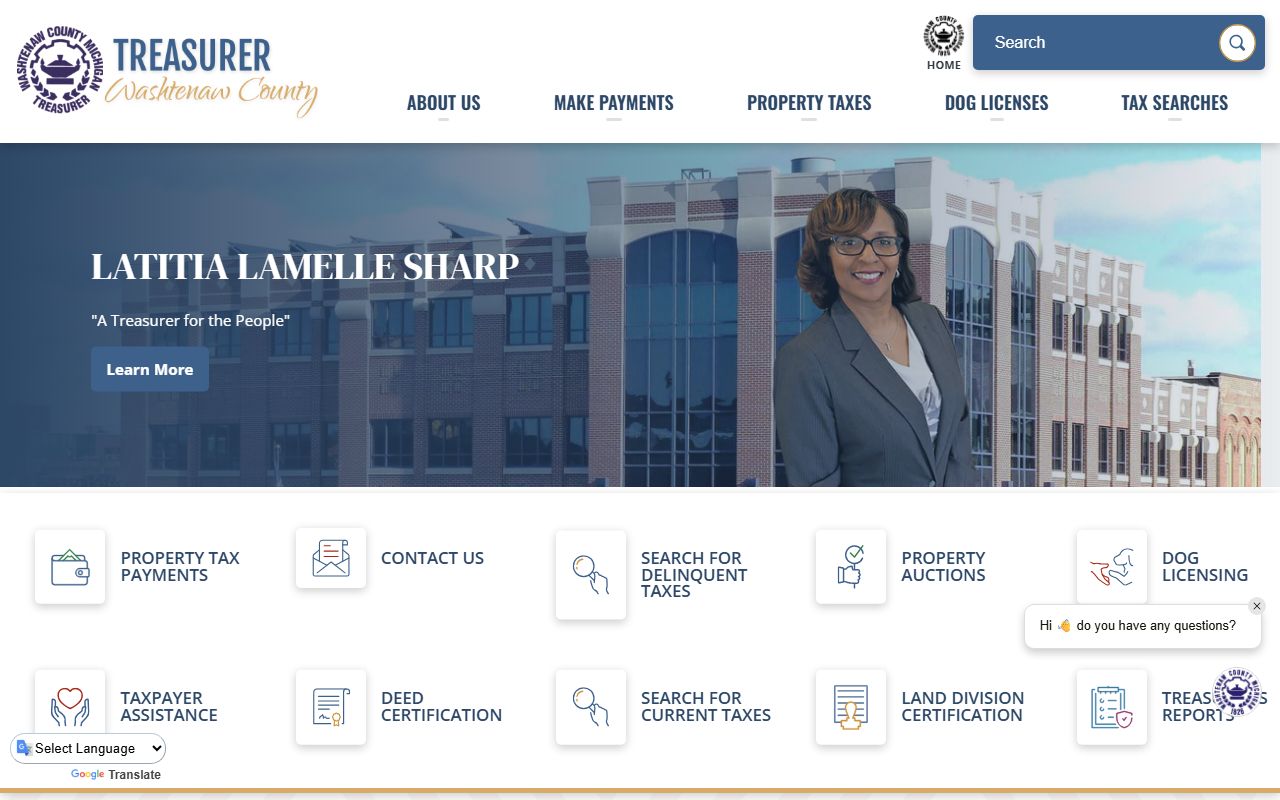
The treasurer maintains auction records for all tax foreclosure sales, which are essential for checking whether a surplus was generated on a specific property.
Washtenaw County was named in class action Docket No. 350406 alongside Monroe and Hillsdale counties. That case addressed tax foreclosure surplus fund practices and helped contribute to the statewide reform framework now in place under MCL 211.78t. For current foreclosures from 2021 onward, the standard surplus claim process applies.
Tax Foreclosure Surplus Funds
Michigan law under MCL 211.78t gives former property owners the right to claim surplus proceeds when a tax foreclosure auction generates more than the total debt owed. This law applies to foreclosures from 2021 onward, following the Michigan Supreme Court's July 17, 2020 decision in Rafaeli LLC v Oakland County. The Rafaeli ruling held that counties cannot keep proceeds beyond the taxes, interest, and fees legitimately owed.
The claim process works as follows. You file Form 5743 with the Washtenaw County Treasurer by July 1 of the year after the foreclosure sale. The form identifies you, your ownership interest, and the specific property. The treasurer then responds by January 31 using Form 5744, confirming the surplus amount or disputing your claim. If you get no response, or if you disagree with the county's position, you can file a circuit court motion between February 1 and May 15.
Given Washtenaw County's participation in class action Docket No. 350406, residents who owned property that was foreclosed before the Rafaeli ruling may have additional legal grounds to explore. If your foreclosure predates 2021, it is worth consulting an attorney about whether any pre-reform claims may still be viable under the terms of that litigation.
For any current or recent foreclosure, the first step is to contact the treasurer's office at (734) 222-6600 or taxes@washtenaw.org and ask whether a surplus exists on the property. They can pull the auction record and confirm the sale price and the total debt amount. This check costs nothing and tells you right away whether the claim is worth pursuing.
Michigan Tax Foreclosure Timeline
Michigan's tax foreclosure process runs over three years. Each stage has a key date and a different set of options for the property owner.
Year one: On March 1, unpaid taxes become delinquent. The county adds a 4% administration fee and begins charging 1% monthly interest. The owner can still resolve this by paying off the balance. This is the lowest-cost stage to address.
Year two: On the next March 1, the property is forfeited to the county. Interest increases to 1.5% per month. Redemption is still possible during year two, but the total debt is rising and some rights are already restricted. Payment plan options may still be available through the treasurer's office at this stage.
Year three: Foreclosure becomes final on April 1. The county takes title, all redemption rights end, and the property is scheduled for public auction. After the sale, the only remaining avenue for a former owner is a surplus claim if the auction price exceeded the debt. That is why acting early in the process, ideally in year one or early year two, is almost always better than trying to recover funds after the fact.
Local Housing and Legal Resources
Washtenaw County has a strong network of housing counselors, legal aid organizations, and social services that can help residents deal with unclaimed property, tax delinquency, and foreclosure-related issues.
MSU Extension Housing Counselors in Washtenaw County can be reached at (734) 222-9595. They provide guidance on housing stability, financial counseling, and navigating delinquency situations. This is a good first call if you are behind on taxes and want to understand your options before the situation worsens.
The Housing Bureau for Seniors at (734) 998-9339 serves older residents in Washtenaw County facing housing challenges. Senior homeowners are sometimes at greater risk of tax delinquency due to fixed incomes, and this office provides targeted assistance for that population.
Legal Services of South Central Michigan at (734) 665-6181 provides free civil legal help to income-eligible residents in Washtenaw County, including housing and property-related matters. If you need help filing a surplus claim, responding to a county dispute, or understanding your rights in a foreclosure case, this office is a strong resource.
Washtenaw County DHHS can be reached at (734) 681-8000 and provides social services that may help stabilize a housing situation. The Senior Resource Directory maintained at ccwcwashtenaw.org lists additional resources for older residents in the county.
The senior resources available through the county are extensive and well organized.
The directory at ccwcwashtenaw.org is searchable and covers housing, legal aid, financial assistance, and other services for seniors in the area.
Michigan Legal Help at michiganlegalhelp.org provides a free step-by-step guide to the surplus claims process. The State Bar of Michigan Lawyer Referral Service at (800) 968-0738 or lrs.michbar.org can connect you with an attorney for an initial consultation. And the Michigan Homeowner Assistance Fund (MIHAF) at michigan.gov/mihaf offers grants of up to $25,000 for eligible homeowners facing delinquent taxes and housing cost pressure.
Cities in Washtenaw County
Ann Arbor is the county seat and the largest city in Washtenaw County, with a population that qualifies it for a dedicated page on this site.
Nearby Counties
Washtenaw County is bordered by Livingston, Oakland, Monroe, Lenawee, and Jackson counties. If you have owned property or held accounts in any of these areas, it may be worth checking those pages as well.