
Find Unclaimed Money in Monroe County
Monroe County residents searching for unclaimed money have two main options: the free Michigan Department of Treasury database for general unclaimed property, and the tax foreclosure surplus fund process for former property owners whose land was sold at a county tax auction. Monroe County is named in class action Docket No. 350406 alongside Washtenaw, Hillsdale, and Lenawee counties, and surplus fund claims for Monroe County foreclosures from 2015 forward have been available under certain legal proceedings. A local law firm based in Monroe also handles surplus fund recovery for clients in this area. This page explains each path in detail.
Monroe County Overview
Michigan State Unclaimed Property Search
The Michigan Department of Treasury maintains a free unclaimed property search at unclaimedproperty.michigan.gov.
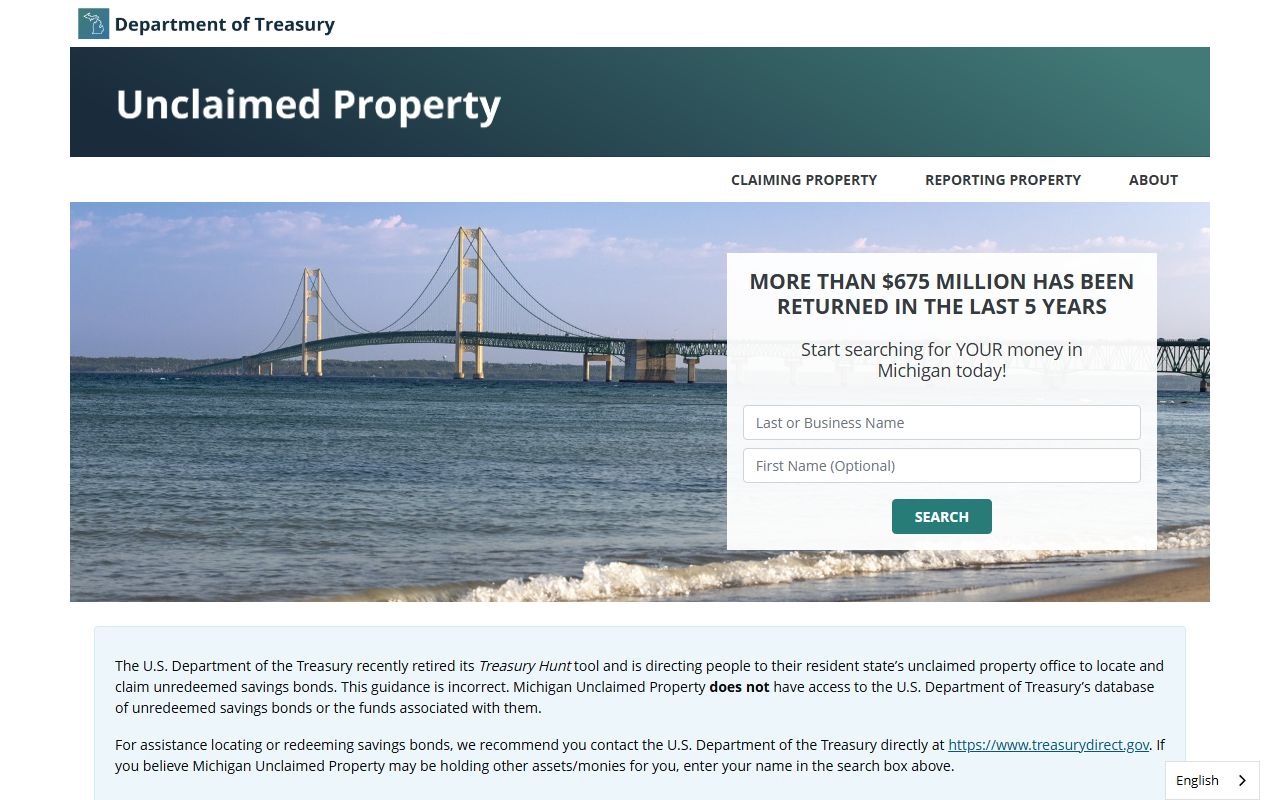
Anyone can search by name for free. No account needed.
More than $675 million in unclaimed funds sits in the Michigan Treasury database waiting for rightful owners. Dormant bank accounts, uncashed checks, old utility deposits, forgotten insurance payouts, and uncollected stock dividends are among the most common types. Michigan law requires businesses and financial institutions to turn over inactive accounts to the state after a dormancy period, typically three to five years. Funds remain available forever with no deadline to claim.
Call Treasury at (517) 636-5320 or email TreasUPD@michigan.gov if you need help confirming a match or understanding what documents to provide. Monroe County's location near the Ohio border means some residents may also have unclaimed funds in Ohio. Ohio has a separate unclaimed funds portal at com.ohio.gov/divisions/unclaimedfunds. It is worth checking both states if you or a family member lived near the Michigan-Ohio line.
Monroe County Website and Treasurer
The Monroe County official website at co.monroe.mi.us provides access to county departments and services including the treasurer's office.
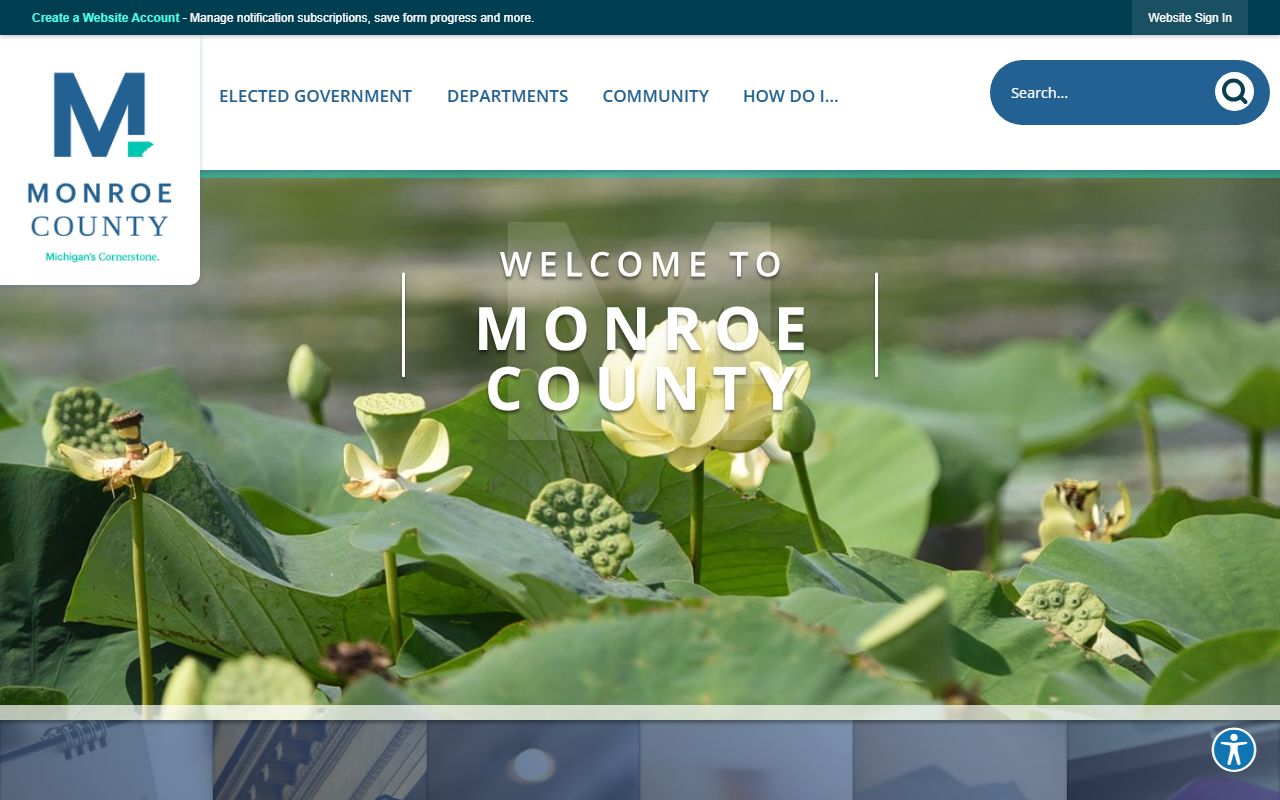
The site includes contact information for county offices, online payment options, and public records access for Monroe County residents.
| Treasurer | Monroe County Treasurer |
|---|---|
| Address | 125 E Second Street, Monroe, MI 48161 |
| Phone | (734) 240-7365 |
| Website | co.monroe.mi.us |
The treasurer's office handles all property tax billing, delinquent tax collection, and tax foreclosure proceedings in Monroe County. If you need to verify a delinquent balance, ask about a payment plan, or find out the status of a specific parcel, this is the right office to contact.
Class Action Docket No. 350406
Monroe County is named in class action Docket No. 350406 along with Washtenaw, Hillsdale, and Lenawee counties. This lawsuit is part of a broader wave of litigation following the 2020 Michigan Supreme Court decision in Rafaeli, LLC v. Oakland County, which found that keeping surplus proceeds from tax foreclosure sales violated the Michigan Constitution. The class actions focus on foreclosures that occurred before MCL 211.78t took effect, when there was no formal process for former owners to claim surplus funds.
If you had property foreclosed in Monroe County and believe the county kept proceeds beyond what it was owed, you should speak with an attorney who handles Michigan tax foreclosure claims. An attorney can review the current status of Docket No. 350406, assess your situation, and advise on whether the class action covers your case or whether a separate legal claim is more appropriate. Do not assume coverage without getting legal advice specific to your circumstances.
Foreclosure Surplus Claims from 2015 Forward
Monroe County has made surplus funds available for claims from foreclosures that occurred in 2015 and later. This is broader than the 2021 cutoff under MCL 211.78t, which applies statewide. The earlier availability of claims in Monroe County may be connected to the class action proceedings or separate county-level decisions regarding prior surpluses. If your Monroe County foreclosure happened between 2015 and 2020, it may be worth investigating whether surplus funds from that sale are available.
For foreclosures from 2021 forward, the standard MCL 211.78t process applies. File Form 5743 with the Monroe County Treasurer by July 1 in the year of the auction. The county responds with Form 5744 by January 31. You then file a court motion using form CC540 with the Monroe County Circuit Court between February 1 and May 15. The court issues an order and the county pays the surplus within 21 days. Payment must go through the court process; the county does not simply write a check without an order.
Boora Law Group
Boora Law Group, based in Monroe, Michigan, handles surplus fund recovery cases in Monroe County and surrounding areas. Their work focuses on helping former property owners identify and recover excess proceeds from tax foreclosure sales. You can reach them through their website at booralawgroup.com/foreclosure-and-surplus-funds.
Working with a law firm on a surplus claim can be helpful if your situation is complex, if the surplus amount is significant, or if you are navigating the pre-2021 claim process that does not fit neatly into the Form 5743 framework. Attorneys typically work on contingency for surplus claims, meaning you pay nothing up front and the fee comes out of any recovery. Ask about fee arrangements when you reach out.
Having a local firm familiar with Monroe County Circuit Court procedures can also speed up the process. The court motion step can involve scheduling delays, and an attorney who regularly files these motions knows how to move things along.
Michigan Tax Foreclosure Timeline
The three-year foreclosure cycle under MCL 211.78 is the same in Monroe County as everywhere in Michigan. March 1 of year one, taxes go delinquent with a 4% fee and 1% monthly interest. March 1 of year two, property is forfeited to the treasurer and interest rises to 1.5% per month. A show cause hearing happens in January or February of year two. March 31 of year three is the last day to pay and keep the property. April 1, title transfers to the county. The property then goes to auction.
If the auction generates more money than the total debt owed, the former owner may claim the surplus. For 2021 and later auctions, file Form 5743 by July 1. For earlier years, consult an attorney about the available options given Monroe County's 2015-forward claim availability and the pending class action.
Legal Help and Resources
Michigan Legal Help at michiganlegalhelp.org provides free step-by-step guides on the surplus claim process. The State Bar's Lawyer Referral Service is at (800) 968-0738 or lrs.michbar.org. The Michigan Homeowner Assistance Fund at michigan.gov/mihaf offers grants up to $25,000 for homeowners who fell behind on property taxes and may still be in the forfeiture stage. These are grants, not loans.
Cities in Monroe County
Monroe County has no cities that meet the 100,000-population threshold for a dedicated page on this site. The county seat and largest city is Monroe. Other communities include Flat Rock, Dundee, Luna Pier, and Erie. All unclaimed money searches and tax foreclosure surplus claims for any Monroe County address go through the treasurer's office at 125 E Second Street in Monroe.