
Dearborn Unclaimed Money Search
Dearborn residents can search for unclaimed money through Michigan's free statewide database and through Wayne County for any tax-related funds. Sources include dormant bank accounts, old insurance policies, uncashed refund checks, and forgotten security deposits. Dearborn has no city income tax. Wayne County handles delinquent property taxes and manages surplus funds from tax foreclosure sales using a process that differs from most Michigan counties.
Dearborn Overview
Michigan State Unclaimed Property
Michigan's Department of Treasury collects unclaimed funds from banks, insurance companies, employers, and other businesses when they lose contact with account owners. These funds are held indefinitely. There is no deadline for owners to file a claim. Searching is free.
The statewide database is at unclaimedproperty.michigan.gov. The program has returned more than $675 million to Michigan residents.
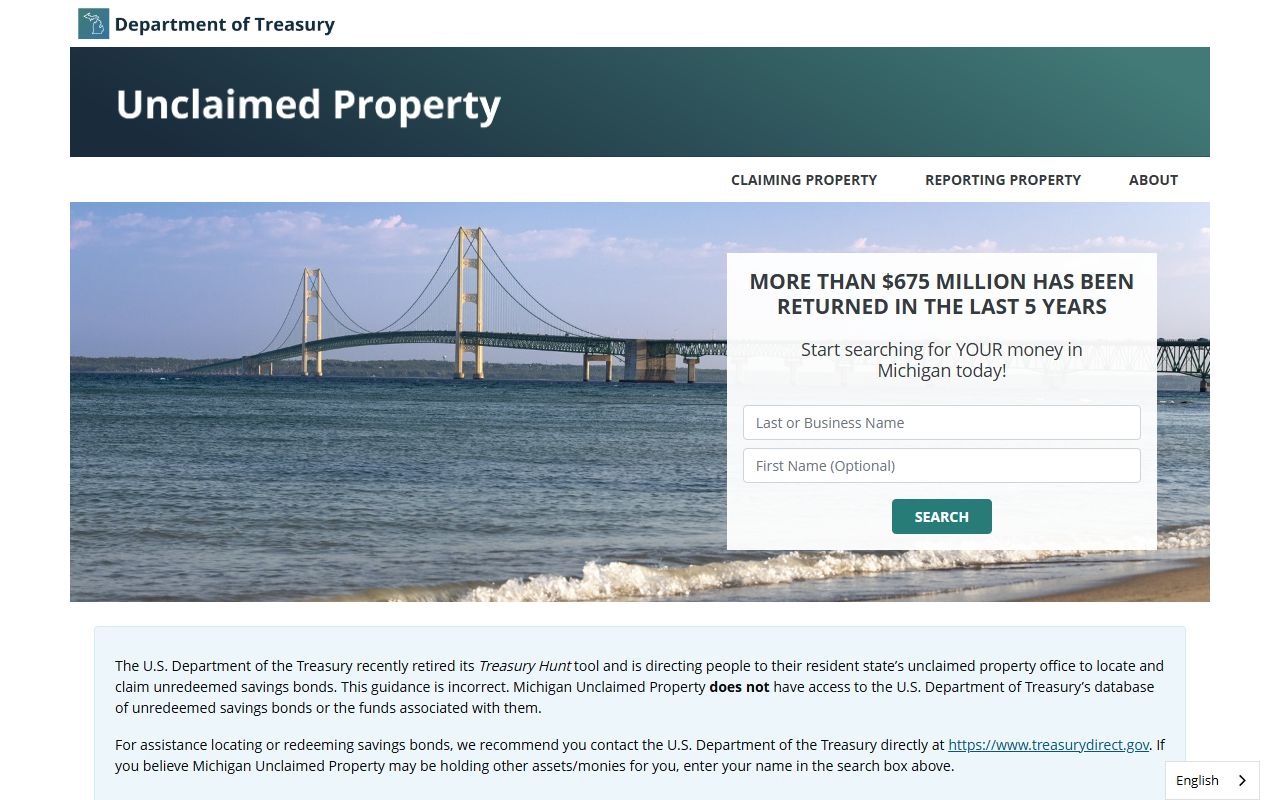
Enter your last name to search the database. If you find a match, click through to file a claim and verify your identity. For higher-value accounts, the state may ask for supporting documentation. Contact the state at (517) 636-5320 or TreasUPD@michigan.gov with questions. Dearborn is part of the Wayne County metro area, which generates a large share of Michigan's unclaimed property each year. It is worth searching even if you do not expect to find anything.
Common Fund Types
Banks report checking and savings accounts dormant for three years. Payroll checks, stock dividends, and security deposits are also reported. Life insurance proceeds come to the state after three years of no contact. Safe deposit box contents arrive after five years of no rental payment. Former residents who have since moved to other states can also file claims for Dearborn-area accounts.
Dearborn City Treasury Division
The City of Dearborn's Treasury Division handles property tax billing, collections, and city account payments. Dearborn does not levy a city income tax. The Treasury is located at the Dearborn Administrative Center on Michigan Avenue. Walk-in hours are Monday through Friday, 8:00 AM to 4:30 PM.
The city's website is at dearborn.gov.
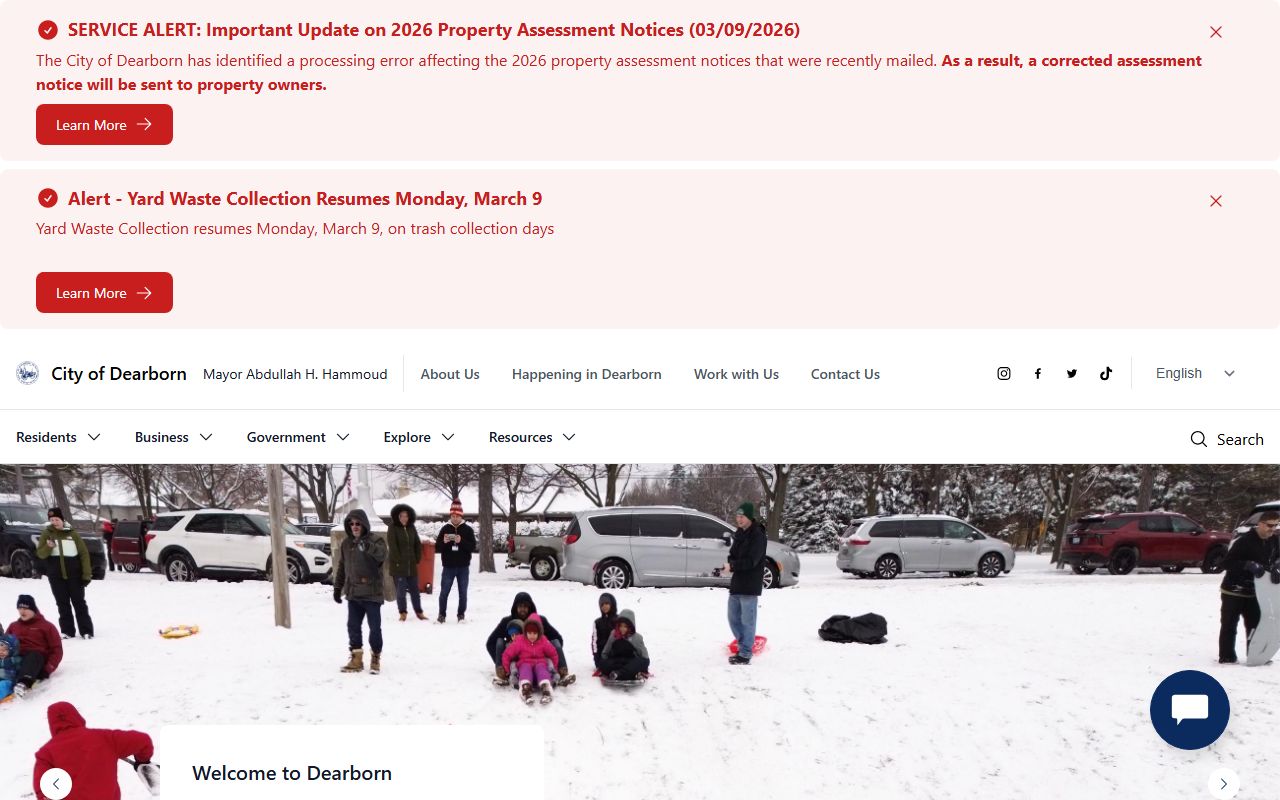
The Dearborn city site provides access to payment portals, tax billing details, and city financial contacts.
| Department | Treasury Division, City of Dearborn |
|---|---|
| Address | Dearborn Administrative Center, 16901 Michigan Ave, Dearborn, MI 48126 |
| Tax Mailing | City of Dearborn, Tax Dept. 3102, P.O. Box 30516, Lansing, MI 48909-8016 |
| Phone | (313) 943-2045 |
| Hours | Monday-Friday, 8:00 AM - 4:30 PM |
| Website | dearborn.gov |
Payment options include the DIVDAT Kiosk at the main entrance of the Administrative Center, which accepts credit and debit cards for a 3% convenience fee. There is also a 24-hour drop box in the parking lot across from the main doors for check or money order payments. In-person payments go to the Cashier's Counter. Mail payments go to the tax mailing address above. If you believe you have an overpayment or unclaimed refund on a city account, call the Treasury Division at (313) 943-2045 to request a review.
Wayne County Treasurer
Property taxes in Dearborn that go unpaid transfer to Wayne County Treasurer Eric R. Sabree's office after March 1. The county takes over collection and adds interest and fees. Properties with three years of unpaid taxes can be foreclosed under MCL 211.78.
Wayne County's delinquent tax portal is at pta.waynecounty.com. Search any parcel by address or parcel ID. For questions, call (313) 224-5990. See the full Wayne County unclaimed money page for more details.
Dearborn residents who are behind on taxes and facing foreclosure should contact Wayne County as early as possible. The county may have payment plan options, and the Michigan Homeowner Assistance Fund may provide grants of up to $25,000 to help with delinquent taxes and other housing costs.
Tax Foreclosure Surplus Funds: Wayne County Form 6156
Wayne County uses a different form and a different deadline than most Michigan counties for surplus fund claims. If your Dearborn property was foreclosed and sold at auction for more than the taxes owed, you need to follow Wayne County's specific process, not the standard statewide process.
The 2020 Michigan Supreme Court ruling in Rafaeli LLC v Oakland County, decided July 17, 2020, confirmed that former owners have a right to surplus proceeds from tax foreclosure sales. But you must file on time to collect.
Wayne County Surplus Claim Steps
- Obtain Form 6156 from Wayne County. Wayne County uses Form 6156 instead of the standard Form 5743 used elsewhere in Michigan.
- The form must be notarized before you submit it.
- Submit the completed, notarized Form 6156 to Wayne County by March 31. This deadline is earlier than most other counties.
- Wayne County will notify you by July 1 whether surplus funds from your former property's sale are available.
- If funds are available, file a motion with the 3rd Circuit Court by October 1.
The March 31 deadline is not flexible. If you miss it, you lose your claim for that cycle. Do not wait to check whether a surplus exists. Call Wayne County at (313) 224-5990 and ask them to pull the sale record for your parcel number.
Free help with Form 6156 is available from the United Community Housing Coalition. Their Tax Foreclosure Hotline is (313) 725-4560. They serve the entire Wayne County area, including Dearborn, and can help you fill out and file the form at no cost.
Michigan Tax Foreclosure Timeline
Michigan uses a three-year process before a property can be foreclosed for unpaid taxes. Understanding the timeline is important whether you are trying to avoid foreclosure or recover surplus funds afterward.
- Year 1, March 1: Taxes become delinquent. The county adds a 4% administration fee plus 1% per month in interest.
- Year 2, March 1: The property enters forfeiture status. Formal proceedings begin and options to redeem become more limited.
- Year 3, April 1: Foreclosure is finalized. The county takes title and can sell the property at auction.
The owner can pay the full balance at any stage before the final foreclosure date to stop the process. Once the property sells, the only option is a surplus claim if the sale exceeded the debt.
Legal Aid Resources
Dearborn residents have access to several free and low-cost resources for help with unclaimed money and tax foreclosure surplus claims.
- Michigan Legal Help: michiganlegalhelp.org has free guides on unclaimed property, delinquent taxes, and surplus fund claims.
- State Bar of Michigan Lawyer Referral Service: Call (800) 968-0738 or visit lrs.michbar.org to find a local attorney for property or tax matters.
- Michigan Homeowner Assistance Fund (MIHAF): Visit michigan.gov/mihaf for grants up to $25,000 for homeowners who fell behind on taxes due to pandemic hardship.
- United Community Housing Coalition (UCHC): (313) 725-4560. Free assistance with Wayne County's Form 6156 process specifically.
For larger claims, a private attorney who handles tax foreclosure surplus cases may be worth consulting. Many take these cases on contingency, so no upfront cost.