
Saginaw County Unclaimed Money
Saginaw County residents may have unclaimed funds waiting through Michigan's state unclaimed property program or through tax foreclosure surplus claims. This page covers both sources, the local resources available to help you file, and what you need to know about Saginaw County's role in statewide surplus fund litigation.
Saginaw County Overview
Michigan State Unclaimed Property
The Michigan Department of Treasury runs the state unclaimed property program at unclaimedproperty.michigan.gov. The search is free. Anyone can look up a name at any time, and there is no fee to file a claim. The state has returned more than $675 million to Michigan residents over the life of the program.
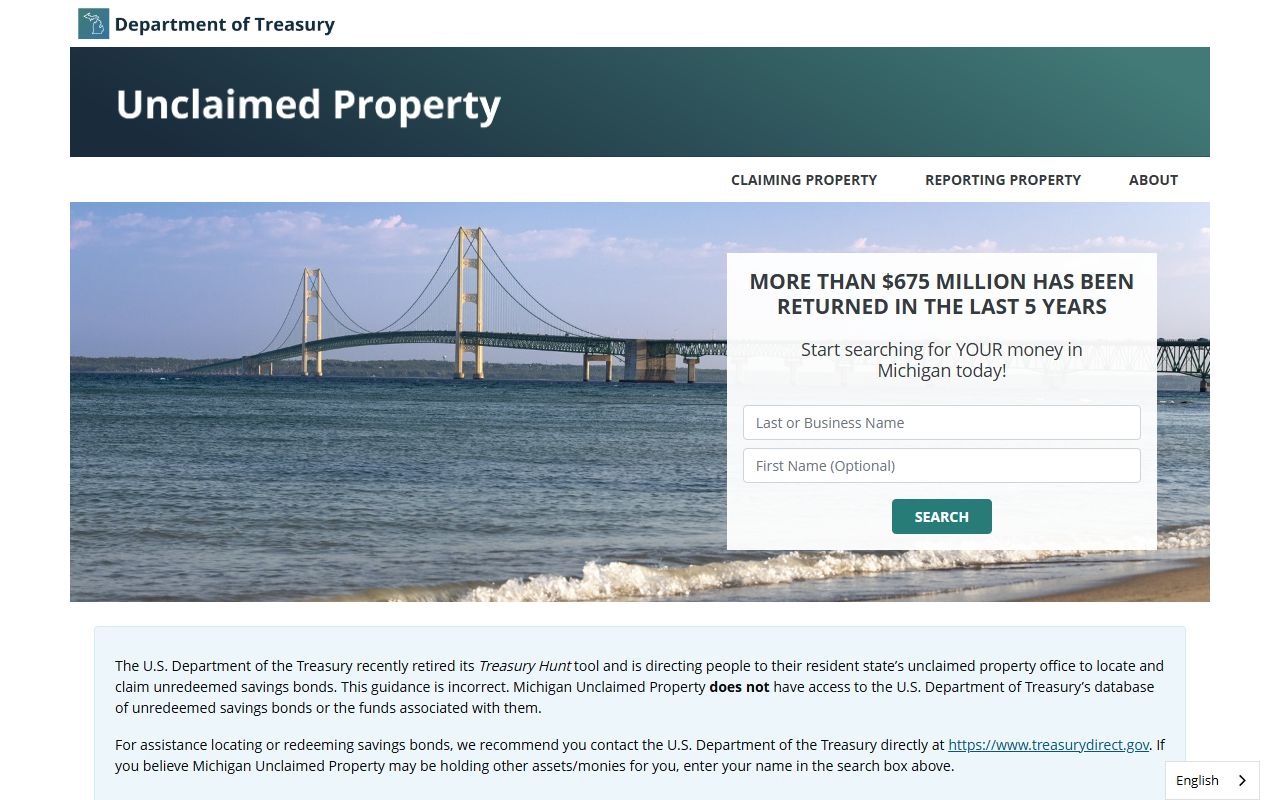
Unclaimed property reaches the state when banks, insurance companies, utilities, and other businesses lose contact with account holders. After a dormancy period that varies by property type, the holder must turn those funds over to the state. The state holds them indefinitely until the rightful owner files a claim. There is no deadline to claim your money.
Common types include savings and checking account balances, uncashed payroll checks, insurance proceeds, utility deposits, and stock dividends. You do not need to pay anyone to search or claim. If someone charges a fee just to look up your name, that is not the state program. Use the Treasury website directly.
For questions, contact the Michigan Unclaimed Property Division at (517) 636-5320 or by email at TreasUPD@michigan.gov. Staff can help with claim status and documentation requirements. The program runs at the state level, so Saginaw County does not keep a separate unclaimed property database. Search the state site first.
Saginaw County Treasurer
The Saginaw County Treasurer handles property tax collection, delinquent tax accounts, and tax foreclosure proceedings for all properties in the county. The office is located in Saginaw and maintains official records for all tax foreclosure activity. Their website is saginawcounty.com/treasurer.
The county's main website is the starting point for all department contacts, including the treasurer's office.
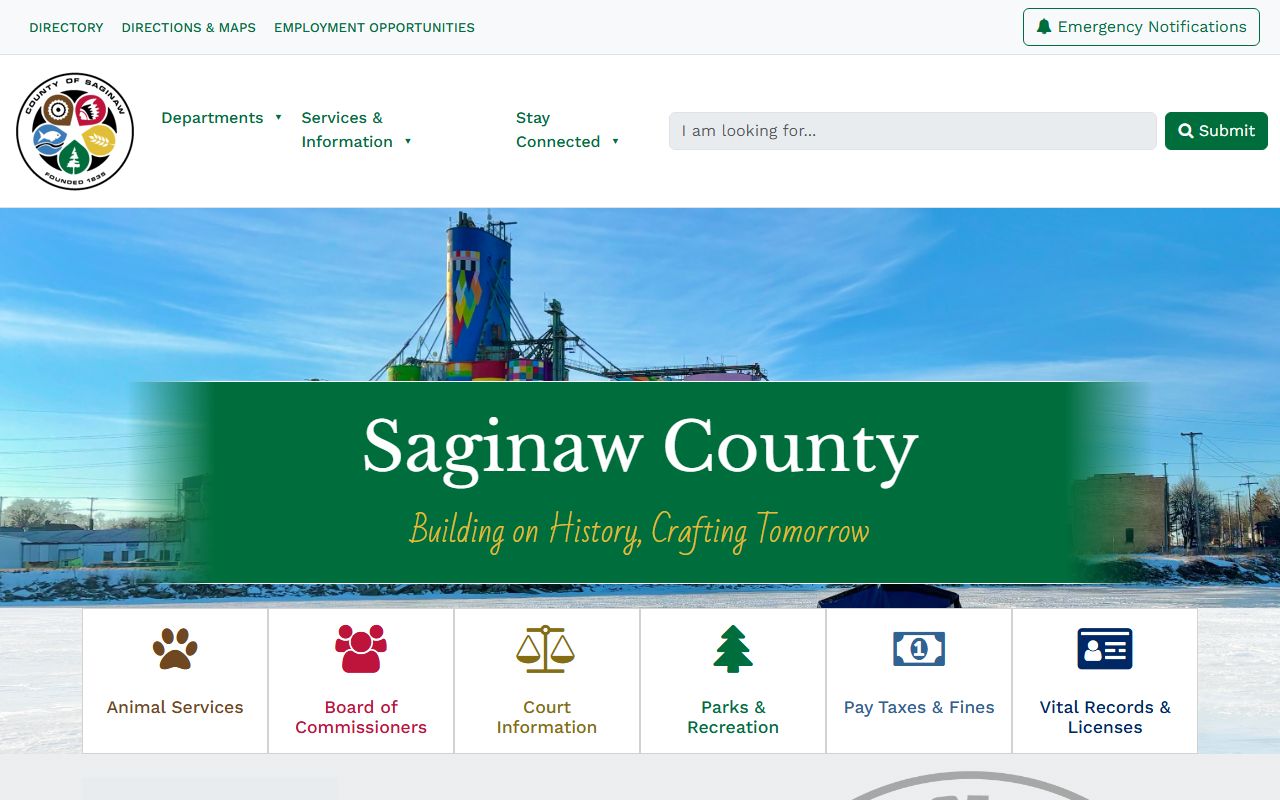
The county site links to all departments including the treasurer, tax records, and court information.
The treasurer manages tax foreclosure surplus funds under Michigan law. If you owned property in Saginaw County that was foreclosed for unpaid taxes, and the property later sold at auction for more than the taxes owed, you may have the right to claim the difference. The treasurer's office keeps records of those sales and the surplus amounts tied to each one.
The treasurer's page provides current contact details and any forms related to tax payment plans or foreclosure processes.
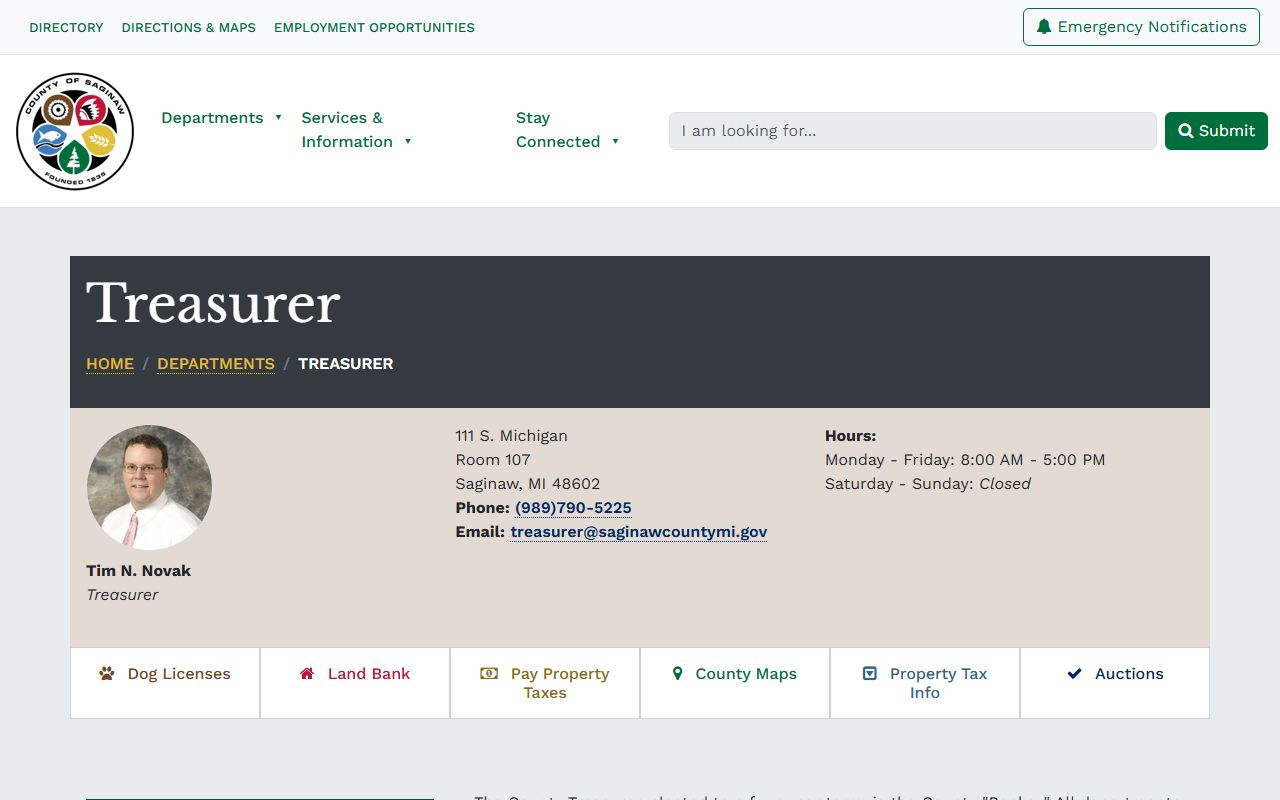
Calling or visiting the treasurer's office directly is often the fastest way to confirm whether surplus funds exist on a specific parcel.
Beyond surplus claims, the Saginaw County Treasurer manages delinquent tax repayment plans. If you are behind on taxes, asking about a payment plan before the March 1 forfeiture date can keep you out of the foreclosure process entirely. Many residents do not realize that option exists until it is too late to use it.
Tax Foreclosure Surplus Funds
Michigan law under MCL 211.78t gives former property owners the right to claim any surplus remaining after a tax foreclosure sale. This applies to foreclosures from 2021 onward, following the Michigan Supreme Court's ruling in Rafaeli LLC v Oakland County on July 17, 2020. That decision held that counties cannot keep excess sale proceeds beyond what was owed in taxes, interest, and fees.
Here is how the process works. The county forecloses on the property and puts it up for auction. If the auction price exceeds the total debt, those extra funds belong to the former owner. To claim them, you file Form 5743 with the county treasurer by July 1 of the year after the foreclosure sale. The county then has until January 31 to respond using Form 5744, either confirming the surplus or disputing the amount. If the county does not respond, or if you disagree with their response, you can file a motion in circuit court between February 1 and May 15.
Saginaw County holds specific legal significance in the development of this area of Michigan law. The case Proctor v Saginaw County Board of Commissioners, 340 Mich App 1; 985 NW2d 193 (2022), was decided by the Michigan Court of Appeals and has since been cited in surplus fund cases across the state. This decision helped clarify procedural questions about how former owners can pursue these claims.
Saginaw County was also named in a broader class action, Docket No. 349557, which included Tuscola, Bay, Midland, Gratiot, and Isabella counties as co-defendants. That case involved claims by former property owners who lost homes to tax foreclosure before the Rafaeli decision changed the law. The litigation helped shape how Michigan handles surplus fund claims today, so Saginaw County's history with this issue is deeper than most.
If you are not sure whether a surplus exists on your former property, start by contacting the county treasurer's office with the property address and the year of foreclosure. They can look up auction records and tell you whether any surplus was generated.
Michigan Tax Foreclosure Timeline
Michigan moves properties through a set three-year process from delinquent taxes to full foreclosure. Understanding these dates matters because early action can stop a foreclosure before it reaches the final stage.
Year one begins on March 1, when unpaid taxes become officially delinquent. The county adds a 4% administration fee and charges 1% interest per month from that point forward. The property owner still has time to pay and clear the account.
Year two starts on the next March 1, when the property is forfeited to the county. Interest increases to 1.5% per month during this period. Redemption is still possible, but the total amount owed is growing fast. Some rights are lost at forfeiture, and the clock is moving quickly.
Foreclosure is final on April 1 of year three. At that point, the county takes legal ownership, all redemption rights end, and the property gets scheduled for auction. Once the auction happens, the only path left for a former owner is filing a surplus claim if the sale price exceeded the debt. That is why catching the problem in year one or year two is so much better than getting to year three.
Legal Aid Resources
Saginaw County residents who need help with surplus claims or tax foreclosure have access to several free resources.
Legal Services of Eastern Michigan (LSEM) serves Saginaw County through its Saginaw office. LSEM provides free civil legal help to income-eligible residents and handles housing and property matters including tax foreclosure cases. Call LSEM at (800) 322-4512. This number reaches the Saginaw regional service line. If you are facing foreclosure or trying to recover surplus funds and cannot afford an attorney, this is a strong first call to make.
Michigan Legal Help at michiganlegalhelp.org has a detailed, step-by-step guide for claiming leftover money after a tax foreclosure. The guide walks through Forms 5743 and 5744, explains what to do if the county does not respond, and covers how to file a circuit court motion. It is free to use and written in plain language that most people can follow without a legal background.
The State Bar of Michigan Lawyer Referral Service connects you with a licensed attorney for an initial consultation. Call (800) 968-0738 or visit lrs.michbar.org. The upfront fee is low, and attorneys with property experience can give you a quick read on whether your claim is worth pursuing further.
The Michigan Homeowner Assistance Fund (MIHAF) at michigan.gov/mihaf provides grants of up to $25,000 per household to help with delinquent property taxes, mortgages, land contracts, and certain housing costs. If you are behind on taxes and at risk of entering the foreclosure timeline, MIHAF may let you stop the process before it starts. Eligibility is based on household income relative to your area's median income and a COVID-19 related financial hardship on or after January 21, 2020.
Cities in Saginaw County
The city of Saginaw is the county seat and the largest community in the county, but its population does not currently meet the threshold for a dedicated city page on this site. Residents of Saginaw and other communities in the county can use all county-level resources listed on this page to search for unclaimed funds and file claims.
Nearby Counties
Saginaw County borders eight counties across mid-Michigan. Residents who live near a county line or who have owned property in neighboring counties may want to check those pages as well.