
Shiawassee County Unclaimed Money Search
Shiawassee County residents can search for unclaimed money through the Michigan state unclaimed property program or by filing a tax foreclosure surplus claim with the county treasurer. This page explains both processes, covers the MIHAF housing assistance program, and lists local resources that can help you at no cost.
Shiawassee County Overview
Michigan State Unclaimed Property
The Michigan Department of Treasury operates the statewide unclaimed property program at unclaimedproperty.michigan.gov. Searching is free. Filing a claim is free. The state has returned over $675 million to rightful owners, and funds are held indefinitely with no deadline to claim.
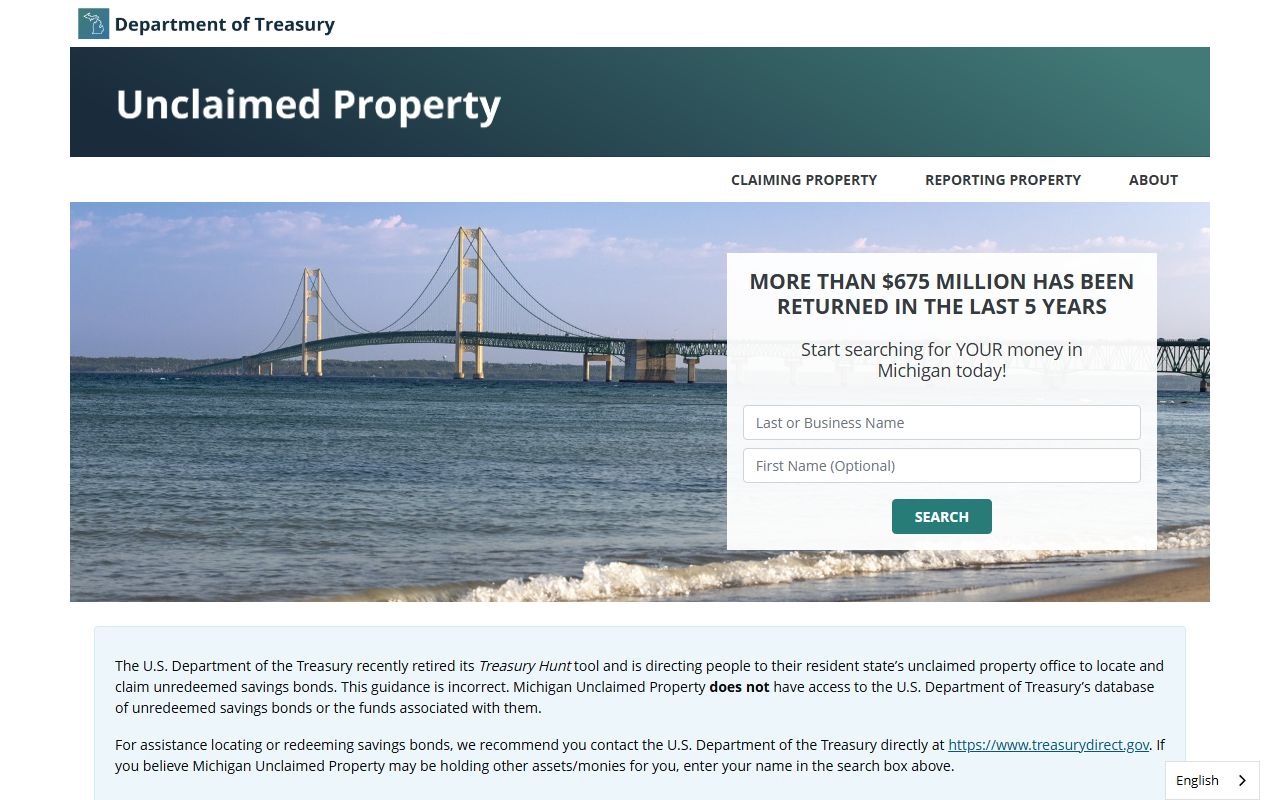
Unclaimed property comes from many sources. Banks, credit unions, insurance companies, utilities, and employers all report lost accounts and uncashed payments to the state after a set dormancy period. Common types include checking and savings balances, uncashed checks, insurance proceeds, security deposits, and dividends. Once reported, the state holds the funds and makes them searchable by name.
Shiawassee County does not run a separate unclaimed property program. All funds are reported to the state, so searching at the Treasury website is the right starting point. If you have changed your name, moved frequently, or had accounts under a business name, try multiple search variations to make sure you are not missing anything.
For help, call the Unclaimed Property Division at (517) 636-5320 or email TreasUPD@michigan.gov. Staff can answer questions about the claims process and help with documentation if the online system does not resolve your question.
Shiawassee County Treasurer
The Shiawassee County Treasurer is Julie Sorenson, located at the Circuit Courthouse, 208 North Shiawassee Street, 2nd Floor, Corunna, MI 48817. The treasurer's website is shiawassee.net/county-treasurer.
The treasurer's office page shows current contact details, tax payment information, and resources related to foreclosure and surplus fund procedures.
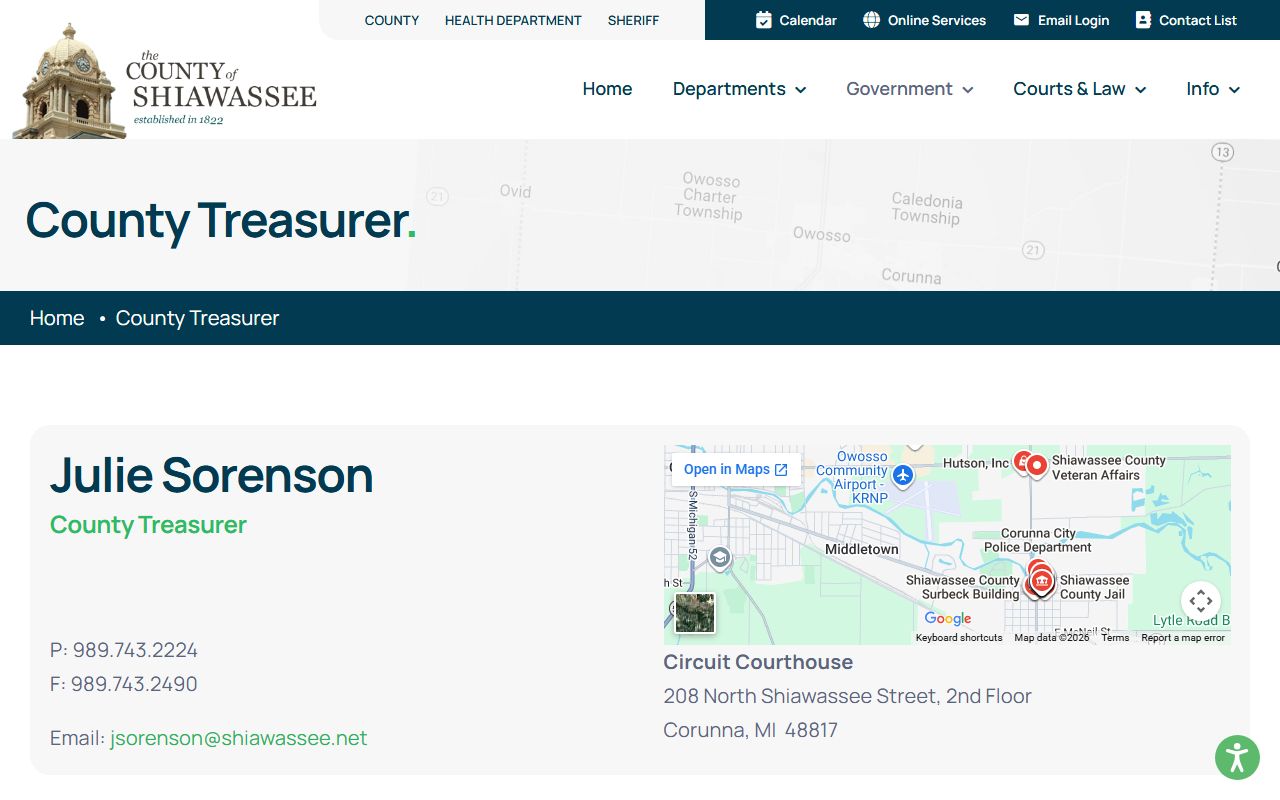
The office handles all delinquent tax collections and is the point of contact for surplus fund claims tied to local foreclosure sales.
The treasurer distributes collected tax funds to schools, townships, cities, and villages across Shiawassee County. This distribution role makes the office a central hub for county financial activity. Treasurer Sorenson also serves on the County Election Commission and the Plat Board, reflecting the broad responsibilities carried by this office.
Delinquent tax information for properties in Shiawassee County is available through bsaonline.com, a platform used by many Michigan counties to give residents online access to tax account data. You can look up a specific parcel to check whether taxes are current or delinquent. This is useful for anyone tracking a property they once owned or want to research before filing a claim.
The county's main website provides access to all departments and services.
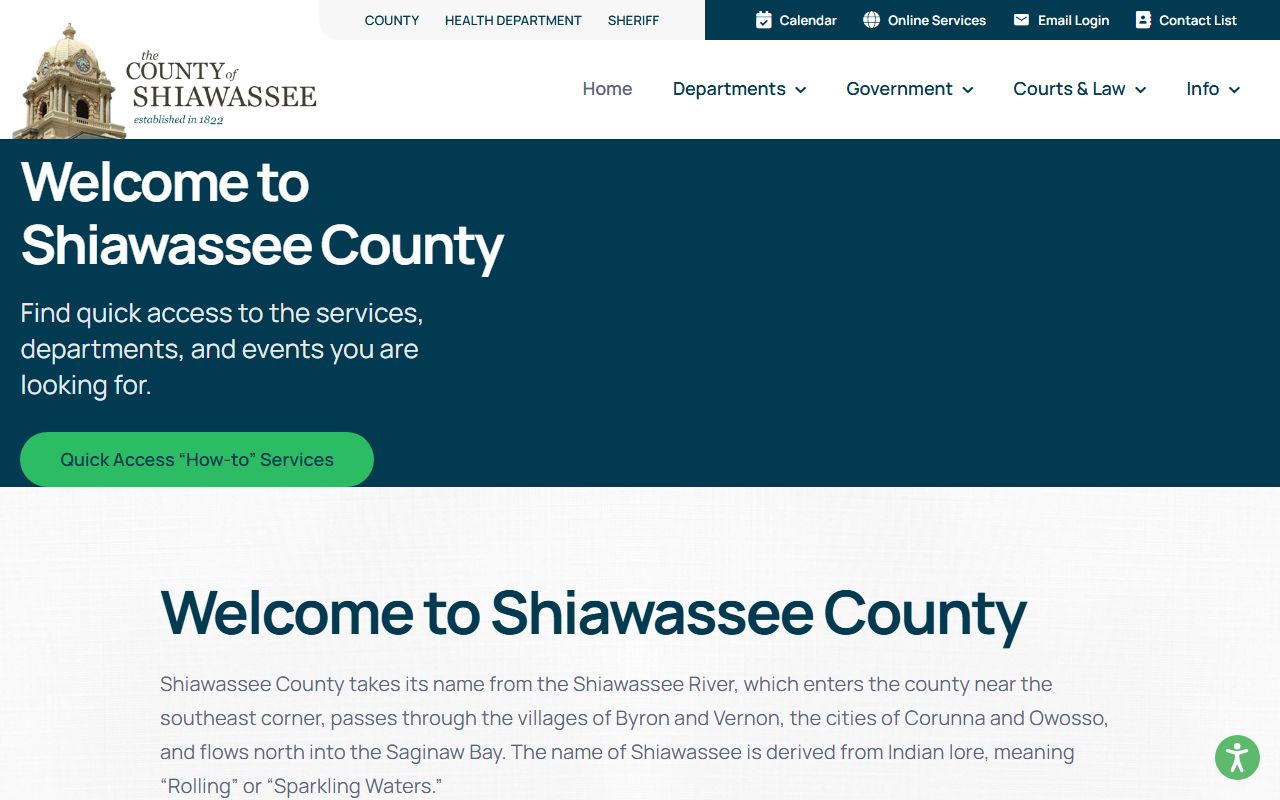
The county site is the best place to find current department contact information and any updates to local procedures.
Tax Foreclosure Surplus Funds
Michigan law under MCL 211.78t gives former property owners the right to claim surplus proceeds left over after a tax foreclosure auction. This law applies to foreclosures from 2021 forward, following the Michigan Supreme Court's July 17, 2020 decision in Rafaeli LLC v Oakland County, which held that counties cannot keep proceeds beyond what was legitimately owed.
To start a surplus claim, you file Form 5743 with the Shiawassee County Treasurer by July 1 of the year after the foreclosure sale. The form requires basic information about you, your ownership interest, and the property. The county then has until January 31 to respond with Form 5744, either confirming the surplus amount or contesting the claim. If the county does not respond at all, or if you disagree with their position, you have a window from February 1 through May 15 to file a motion in circuit court to have a judge resolve the dispute.
The surplus amount is the difference between the auction sale price and the total debt owed at the time of foreclosure. That debt includes taxes, interest, penalties, and administrative fees. If the property sold for exactly what was owed, there is no surplus. But if the auction generated more, that extra money belongs to you, not the county.
For Shiawassee County specifically, it is worth contacting the treasurer's office directly to ask whether a surplus was recorded for your former property. Auction records are public, and the treasurer can confirm what the property sold for and what the outstanding debt was at the time. This check costs nothing and gives you a clear answer before you invest time filing paperwork.
Michigan Tax Foreclosure Timeline
Michigan's tax foreclosure process runs over three years. Each year has a critical date that changes your options and costs.
Year one: On March 1, unpaid taxes become delinquent. The county adds a 4% administration fee and begins charging 1% interest per month. The owner still has time to pay and remove the property from the delinquency list. This is the easiest stage to resolve.
Year two: On March 1 of the following year, the property is forfeited to the county. Interest increases to 1.5% per month. You can still redeem the property during year two, but the debt is growing quickly and some rights have already been lost. This is also when the county may begin offering formal repayment plans.
Year three: On April 1, foreclosure is final. The county takes title, all redemption rights end, and the property gets scheduled for public auction. After the auction, the only remaining option for a former owner is filing a surplus claim if the sale price exceeded the total debt. The three-year clock moves fast, especially when interest is compounding each month.
Michigan Homeowner Assistance Fund (MIHAF)
The Michigan Homeowner Assistance Fund (MIHAF) is one of the most useful programs for Shiawassee County residents facing property tax delinquency. MIHAF opened February 14, 2022, and provides grants of up to $25,000 per household. Unlike a loan, a grant does not need to be repaid. The program is administered at the state level at michigan.gov/mihaf.
To qualify, your household income must be less than 150% of your area's median income, you must own and occupy the home as your primary residence, and you must have experienced a financial hardship related to COVID-19 on or after January 21, 2020. The hardship does not need to be recent, but you do need to document it as part of your application.
MIHAF covers a wide range of housing-related costs. Eligible expenses include delinquent mortgage payments, delinquent property taxes, land contract payments, condominium or HOA fees, homeowner's insurance premiums, and utility costs including gas, electric, water, and sewer. Internet broadband service is also covered. This broad coverage makes MIHAF relevant even for homeowners who are current on taxes but struggling with other housing costs that could put them at risk.
For Shiawassee County residents in the delinquency process, MIHAF can pay outstanding taxes directly to the county treasurer, stopping the foreclosure clock before it reaches the forfeiture or foreclosure stage. If you think you might qualify, apply as early as possible.
Legal Aid Resources
Several free resources are available to Shiawassee County residents dealing with unclaimed property or tax foreclosure issues.
Michigan Legal Help at michiganlegalhelp.org has a clear, step-by-step guide to claiming surplus money after a tax foreclosure. It covers the Form 5743 and 5744 process, explains your rights if the county does not respond, and walks through how to file a circuit court motion. The guide is free and written in plain terms.
The State Bar of Michigan Lawyer Referral Service can connect you with an attorney for an initial consultation. Call (800) 968-0738 or visit lrs.michbar.org. This is useful if you want a professional review of your specific situation before filing a claim or court motion.
Tax-Sale.info (800-259-7470) lists Michigan tax foreclosure auction results and upcoming sales. If you need to find out what a specific property sold for at auction, this is another resource to check alongside the county treasurer's records.
Cities in Shiawassee County
Corunna is the county seat of Shiawassee County, and Owosso is the largest city. Neither currently meets the population threshold for a dedicated city page on this site. Residents of all communities in Shiawassee County can use the county-level resources on this page to search for unclaimed money and file claims.
Nearby Counties
Shiawassee County sits in mid-Michigan and is bordered by Clinton, Ingham, Livingston, Genesee, and Saginaw counties. Residents near a county line or who have owned property elsewhere may find those county pages helpful.