
Find Unclaimed Money in Tuscola County
Tuscola County residents have two main paths to unclaimed money: the Michigan state unclaimed property program and tax foreclosure surplus fund claims processed through the county treasurer. This page covers both, explains Tuscola County's unique role as the lead plaintiff in statewide surplus litigation, and points to free help if you need it.
Tuscola County Overview
Michigan State Unclaimed Property
The Michigan Department of Treasury runs the state unclaimed property program at unclaimedproperty.michigan.gov. Searching is free. Filing a claim is free. No deadline applies. The state has returned more than $675 million to Michigan residents and continues to hold additional funds for those who have not yet claimed them.
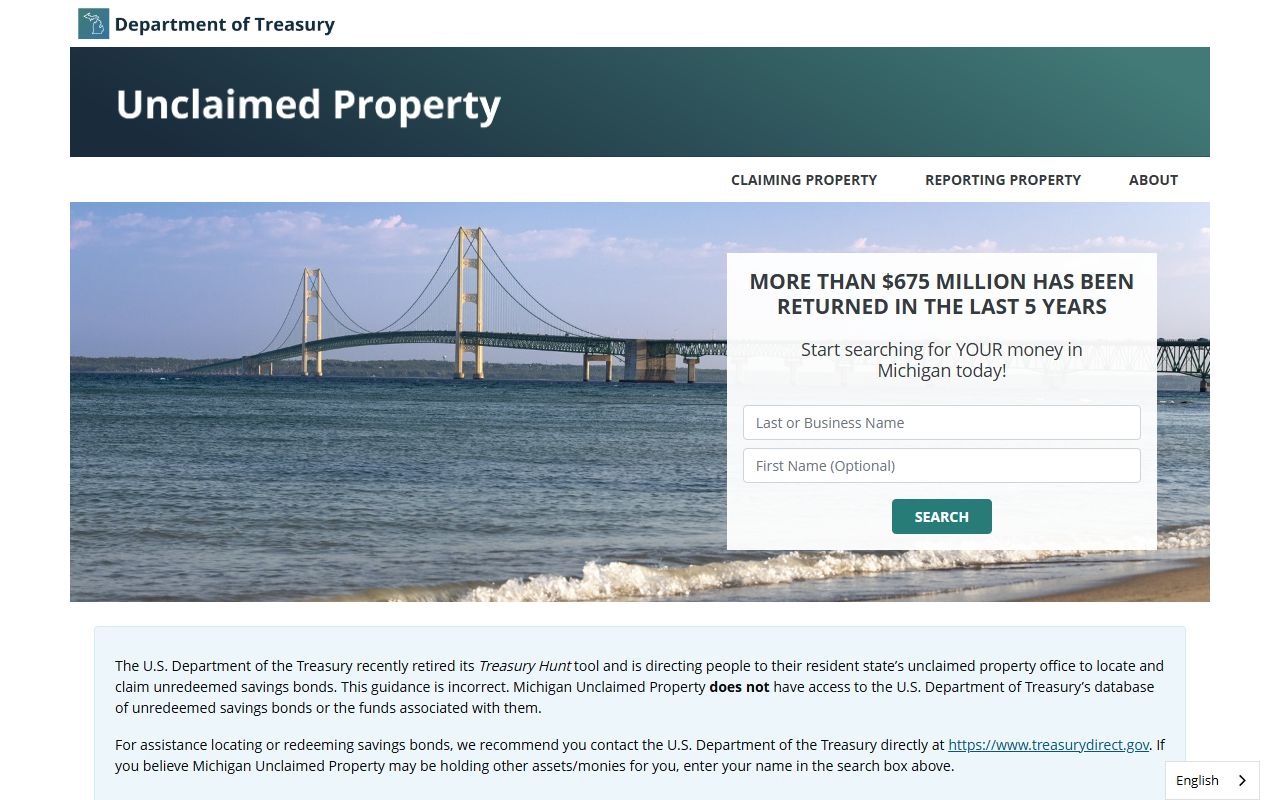
Unclaimed property originates from businesses and institutions that lose contact with account holders. Banks, insurers, utilities, and employers must report dormant accounts and uncashed payments to the state after a specified period. The funds then sit in the state's care until the rightful owner comes forward. Common property types include old checking or savings balances, uncashed payroll or insurance checks, stock dividends, and utility refund deposits.
Tuscola County does not maintain a separate unclaimed property database. All unclaimed funds from this area are held at the state level. To search, go to the Treasury website and enter your name. Try variations including maiden names, former business names, or names of deceased relatives whose estate you may have an interest in. The search is instant.
Questions can go to the Unclaimed Property Division at (517) 636-5320 or TreasUPD@michigan.gov. If the online system does not resolve your question or your claim gets flagged for documentation, Treasury staff can walk you through next steps.
Tuscola County Treasurer
The Tuscola County Treasurer's office in Caro manages all property tax collection, delinquent accounts, and tax foreclosure activity in the county. Their website is tuscolacounty.org/treasurer. For surplus claims tied to tax foreclosure sales, the treasurer is the first contact to make.
The county's main government portal shows the full scope of Tuscola County services and links to all departments.
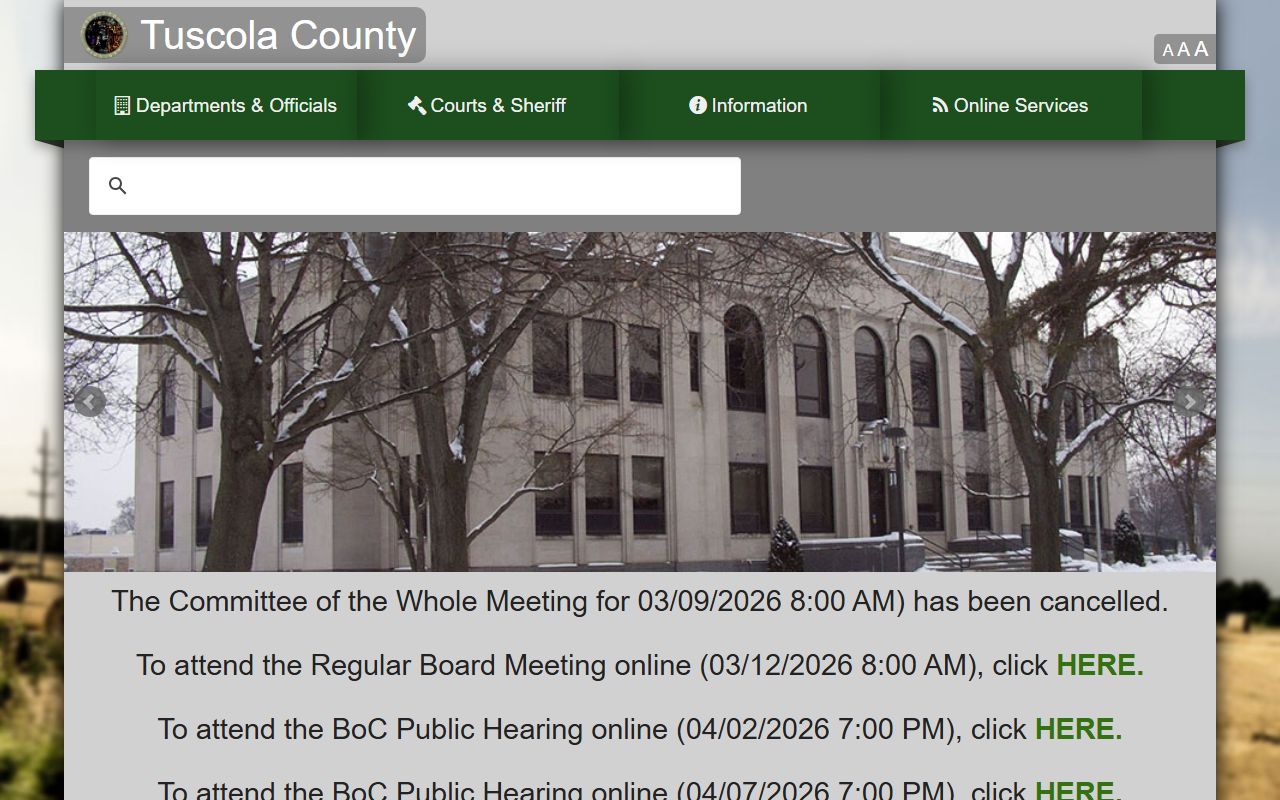
The county site is the main hub for finding current contact information and any updates to county procedures.
The treasurer holds the auction records for all tax foreclosure sales. If you want to know whether a property you once owned sold at auction and for how much, the treasurer's office can provide that information. Call or visit with the property address and the approximate year of foreclosure to get a quick answer.
The treasurer's page provides direct access to tax payment options, delinquency information, and surplus claim procedures.
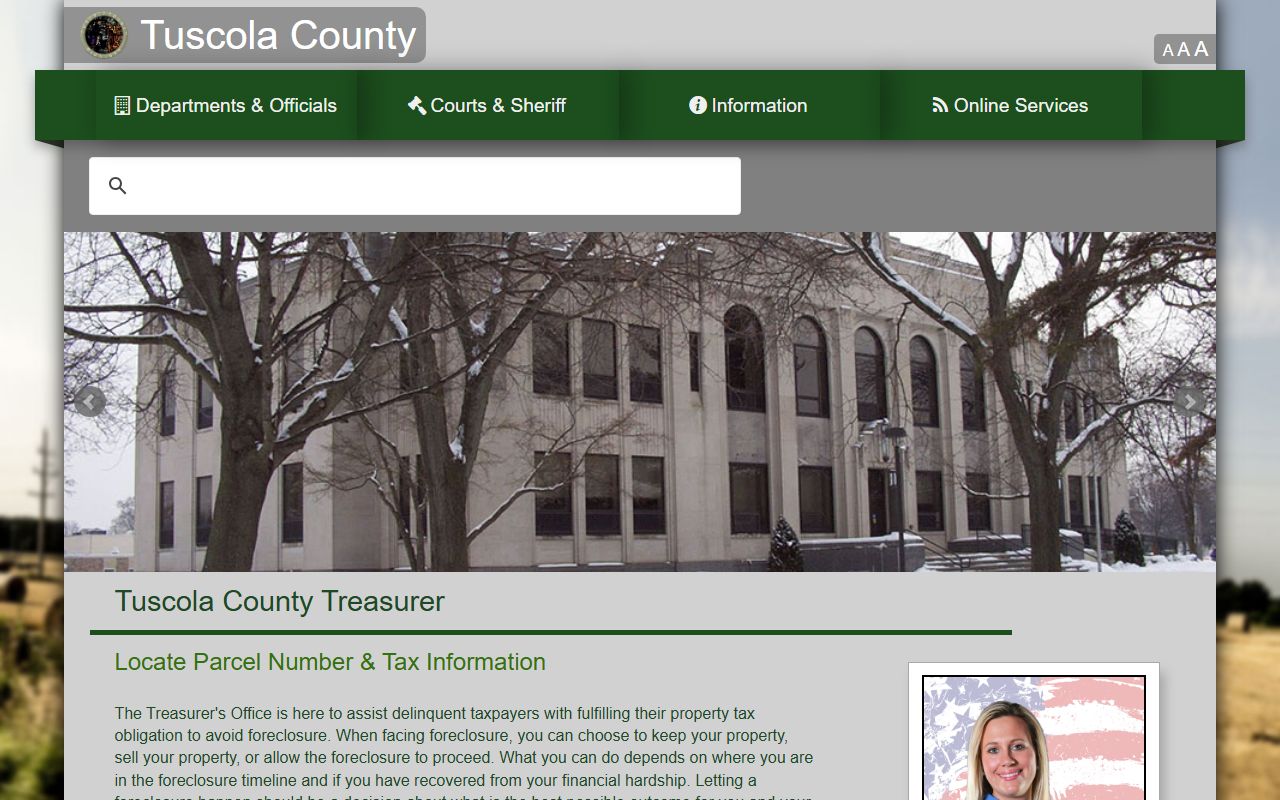
If you are currently delinquent on property taxes, the treasurer's office is also the place to ask about repayment plans before the situation escalates to forfeiture.
Tax Foreclosure Surplus Funds
Michigan law under MCL 211.78t entitles former property owners to claim any surplus generated when their property sells at tax foreclosure auction for more than the total debt owed. This law applies to 2021 and later foreclosures, a result of the Michigan Supreme Court's landmark ruling on July 17, 2020, in Rafaeli LLC v Oakland County. That decision held that counties keeping proceeds beyond what taxes, interest, and fees required was unconstitutional.
Tuscola County holds a distinctive place in this area of Michigan law. The county served as the lead plaintiff in class action Docket No. 349557, a case that also named Bay, Midland, Gratiot, Saginaw, and Isabella counties. This class action addressed claims by former property owners who lost homes to tax foreclosure before the Rafaeli ruling changed the legal landscape. As the lead plaintiff, Tuscola County was at the center of statewide litigation that influenced how Michigan processes surplus fund claims today.
The standard process under MCL 211.78t works as follows. You file Form 5743 with the county treasurer by July 1 of the year after the foreclosure sale. That form identifies you as a potential claimant and specifies the property. The county then responds by January 31 using Form 5744, confirming the surplus or contesting your claim. If the county does not respond, or if you dispute their response, you can file a circuit court motion between February 1 and May 15 to have a judge resolve it.
Because Tuscola County went through this process as a named party in major litigation, the treasurer's office may have more direct experience with surplus claims than most counties of similar size. That experience can work in your favor when you file. The staff will likely know the process well and can answer procedural questions clearly. Still, if the amount at stake is significant, having an attorney review your claim before you file is always a good idea.
Michigan Tax Foreclosure Timeline
Michigan's tax foreclosure process takes three years from delinquency to completed foreclosure. Each year has a key date that changes what options are available.
Year one starts March 1, when unpaid taxes become delinquent. A 4% administration fee is added, plus 1% interest per month. The owner can still pay off the balance and clear the account. This is the least costly point to resolve the problem.
Year two starts March 1 of the next year, when the property is formally forfeited to the county. Interest rises to 1.5% per month. Redemption is still possible but the debt is growing. Some rights are already restricted at this stage, and the timeline for making things right is getting shorter.
Year three brings final foreclosure on April 1. The county takes ownership, all redemption rights end, and the property moves to auction. After the sale, if the property sold for more than was owed, the former owner has the right to claim that surplus. But the three-year clock has run. The best outcome is always avoiding foreclosure in the first place, either through payment, a repayment plan, or a grant like MIHAF.
Legal Aid Resources
Tuscola County residents can access several free resources for help with unclaimed money and tax foreclosure issues.
Michigan Legal Help at michiganlegalhelp.org walks through the entire surplus claim process step by step. It covers Form 5743, Form 5744, how to handle a non-response from the county, and how to file in circuit court. The guide is free and written in plain language.
The State Bar of Michigan Lawyer Referral Service connects residents with licensed attorneys for an initial consultation. Call (800) 968-0738 or go to lrs.michbar.org. For larger surplus amounts or disputed claims, getting a legal review before filing in court can be worth the upfront cost.
The Michigan Homeowner Assistance Fund (MIHAF) at michigan.gov/mihaf offers grants up to $25,000 per household for delinquent property taxes, mortgage payments, and other housing costs. MIHAF eligibility requires income below 150% of the area median income, primary residence ownership, and a COVID-19 related financial hardship on or after January 21, 2020. If you are in the delinquency phase, MIHAF can stop the foreclosure process before it moves further.
Tax-Sale.info (800-259-7470) lists Michigan tax foreclosure auction data. If you want to verify what a specific property sold for at auction, this is a useful reference alongside the county treasurer's records.
Cities in Tuscola County
Caro is the county seat of Tuscola County, and other small communities are spread across the county. None currently meet the population threshold for a dedicated city page on this site. All residents of Tuscola County can use the county-level resources on this page to search for unclaimed property and pursue surplus fund claims.
Nearby Counties
Tuscola County borders Saginaw, Bay, Huron, and Sanilac counties along Michigan's Thumb region. If you have connections to any of these neighboring areas, checking their pages may uncover additional unclaimed funds.