
Kalamazoo Unclaimed Money
Kalamazoo residents may have unclaimed money held by Michigan Treasury, Kalamazoo County, or the city itself. Sources include dormant bank accounts, insurance payouts, security deposits, and uncashed refund checks. This page covers where to search and how to claim what belongs to you.
Kalamazoo Overview
Michigan State Unclaimed Property
Michigan Treasury's unclaimed property program holds funds turned over by banks, employers, insurers, and other businesses that lose contact with their account holders. The money stays on file indefinitely. You can search for free at any time. Michigan has already returned more than $675 million to residents statewide. Kalamazoo residents often find forgotten accounts from prior jobs, old banks, or past insurance policies.
Search the free database at unclaimedproperty.michigan.gov. Enter your full name or business name to search. Deceased relatives can be searched too. If you find a match, the site walks you through filing. For questions, call (517) 636-5320 or email TreasUPD@michigan.gov.
Try several name variations to be thorough. An old middle name or a maiden name might turn up funds you did not know were there. The search takes just a few minutes and costs nothing.
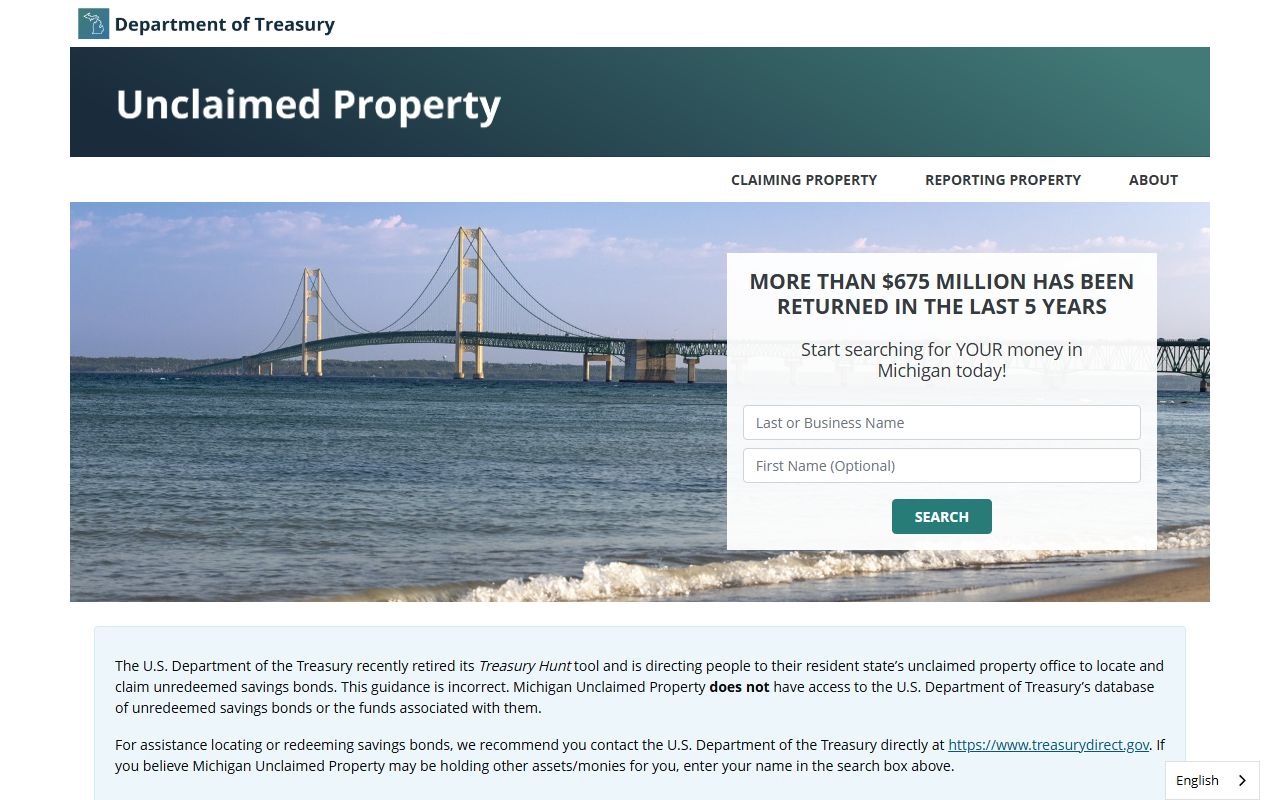
The state database is updated regularly as businesses report new property across Michigan.
City of Kalamazoo Finance Department
The City of Kalamazoo Finance Department manages the city's financial operations, including local tax billing and collection. Kalamazoo does not levy a city income tax, so property taxes are the main local obligation for residents. If you have a question about a city tax account, a credit, or a refund, contact the Finance Department through the city's main website.
| Department | City of Kalamazoo Finance Department |
|---|---|
| Website | kalamazoocity.org |
The official city site is at kalamazoocity.org. City offices are at City Hall in downtown Kalamazoo. Use the contact directory on the website to reach the Finance Department directly.
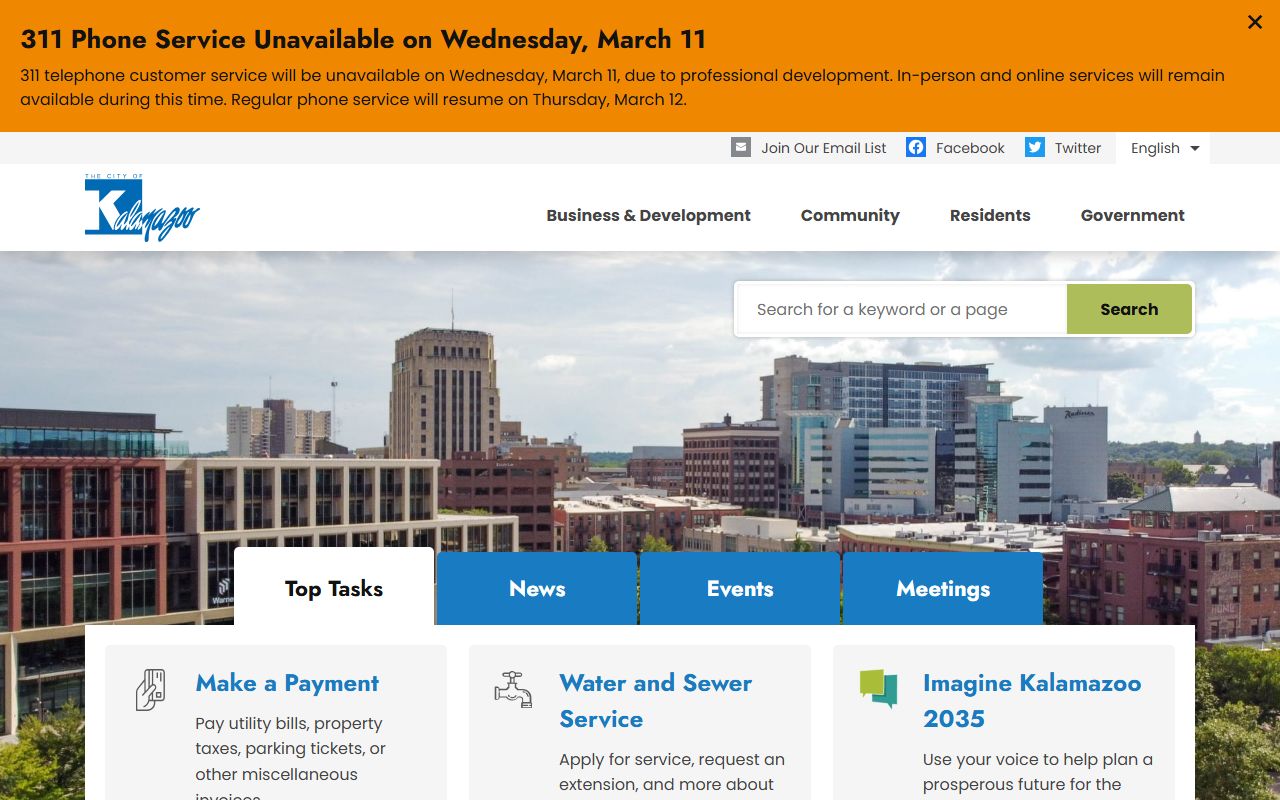
The city website above has department contacts, services, and resources for residents and businesses in Kalamazoo.
If you believe you are owed a refund or credit on a city tax account, call or email the Finance Department during business hours. Have your parcel number or account number ready to speed up the review.
Kalamazoo County Treasurer
When Kalamazoo city property taxes go unpaid, the accounts move to Kalamazoo County for collection. County Treasurer Thomas Whitener handles delinquent tax accounts and oversees the foreclosure process for the entire county. One thing that sets this office apart is its proactive approach: the Treasurer actively reaches out to residents who may qualify for property tax reductions to make sure homeowners are not paying more than they legally owe.
| Office | Kalamazoo County Treasurer |
|---|---|
| Treasurer | Thomas Whitener |
| Phone | 269-384-8124 |
| Treasurer@kalcounty.com | |
| Address | 201 W. Kalamazoo Ave., Kalamazoo, MI 49007 |
| Website | kalcounty.gov/treasurer |
The Kalamazoo County Treasurer page is at kalcounty.gov/treasurer.
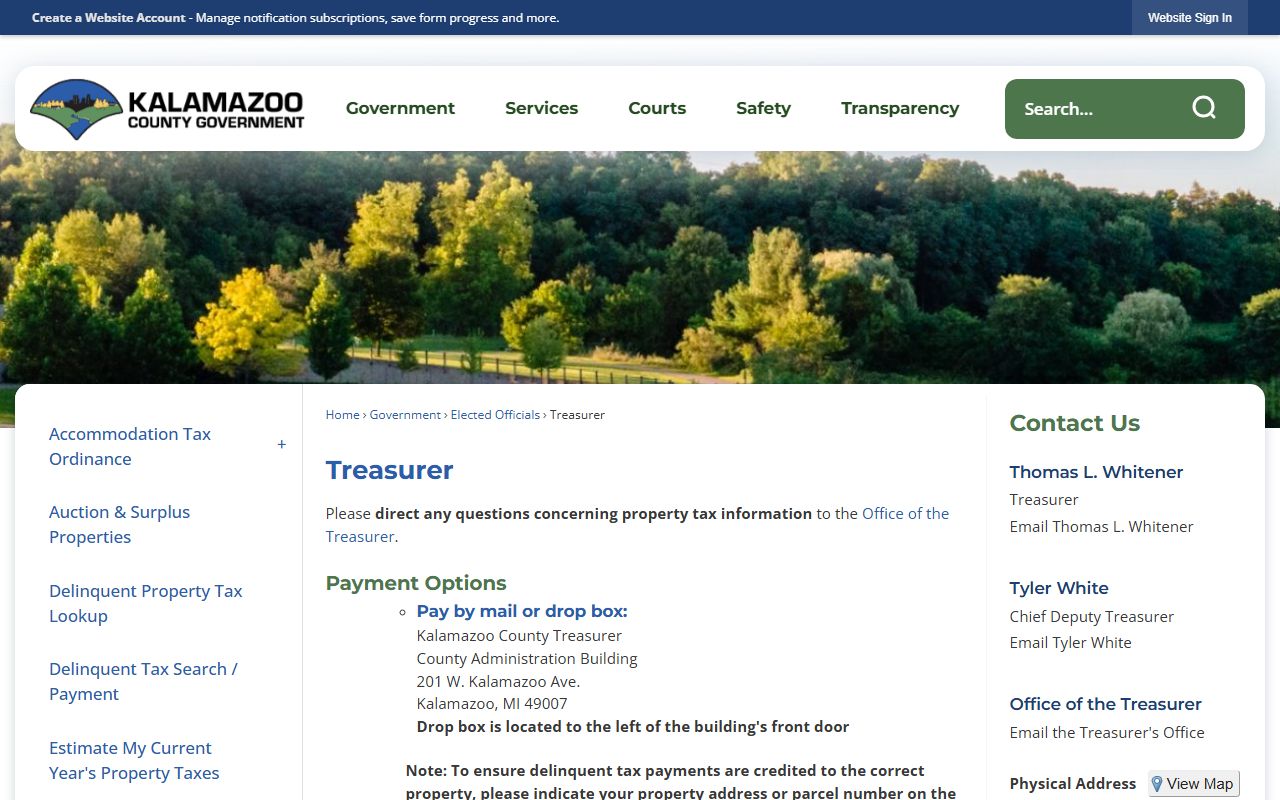
The Treasurer's page above has tax payment options, foreclosure information, and contact details for residents with delinquent tax questions.
To pay delinquent taxes, you can use the drop box at the front left of the building (include your parcel number on the check), or pay online through the county website. County staff can walk you through your options if you call during business hours.
More details on Kalamazoo County resources are at the Kalamazoo County unclaimed money page.
Tax Foreclosure Surplus Funds
Kalamazoo County follows the standard Michigan MCL 211.78t process for tax foreclosure surplus funds. When the county sells a foreclosed property at auction for more than the unpaid taxes and fees, the prior owner has a right to claim the surplus. This right comes from the 2020 Michigan Supreme Court ruling in Rafaeli v. Oakland County and applies statewide.
To claim surplus funds from a Kalamazoo County foreclosure sale, file Form 5743 (Motion to Claim Remaining Proceeds) with the Kalamazoo County Circuit Court. The deadline is July 1 of the year following the foreclosure sale. File before that date. After July 1, the right to claim is forfeited.
Kalamazoo County uses Tax-Sale.info to run its real property foreclosure auctions. The list of properties set for auction typically becomes available around July 1 of each year. If you want to check whether a property you formerly owned is on the auction list, monitor Tax-Sale.info or call the County Treasurer's office directly.
Keep your parcel number and ownership records handy when you file Form 5743. The filing must show you were the owner at the time of foreclosure. If the surplus is significant, consulting with an attorney before filing is a smart step.
Michigan Tax Foreclosure Timeline
Michigan's three-year delinquency process works the same in Kalamazoo County as it does across the rest of the state.
| Stage | When | What It Means |
|---|---|---|
| Delinquent | March 1, Year 1 | Unpaid taxes move to county. A 4% penalty plus 1% per month starts. |
| Forfeiture | March 1, Year 2 | Property forfeited to county. More fees apply. Owner can still redeem. |
| Foreclosure | April 1, Year 3 | Title moves to county. Right to redeem ends. Property may go to auction. |
Once a property sells at auction, file Form 5743 before July 1 of that year to claim any surplus. The Kalamazoo County Treasurer's proactive outreach means you may be contacted if you qualify for a tax reduction. But don't wait for a letter. If you think you may be overpaying, call the Treasurer's office and ask.
Legal Aid Resources
Kalamazoo residents can access free resources for unclaimed property and tax foreclosure matters.
Michigan Legal Help at michiganlegalhelp.org has guides on claiming surplus funds, responding to foreclosure, and filing for unclaimed property. Free to use.
State Bar Lawyer Referral connects you with a local attorney. Call (800) 968-0738 or visit lrs.michbar.org. First consultations are typically low cost.
Michigan Homeowner Assistance Fund (MIHAF) provides support for homeowners facing financial hardship. Visit michigan.gov/mihaf to see if you qualify.