
Kalamazoo County Unclaimed Money Search
Kalamazoo County residents may have unclaimed money held by the State of Michigan or as surplus funds from tax foreclosure sales managed by the County Treasurer. The Michigan Department of Treasury holds over $675 million statewide in dormant accounts, insurance proceeds, uncashed checks, and other abandoned property. Searching is free. Kalamazoo County uses Tax-Sale.info for foreclosure auctions and a list of foreclosed properties is available from the Treasurer's office each year starting around July 1. Treasurer Thomas Whitener has also been active in reaching out to residents who may be eligible for property tax reductions.
Kalamazoo County Overview
Michigan State Unclaimed Property Search
The Michigan Department of Treasury holds dormant funds from banks, insurance companies, utilities, employers, and other businesses across the state. Once an account goes inactive past the dormancy period, the business must report it to the state. The state holds those funds indefinitely, waiting for the owner or an heir to file a claim. Over $675 million is held statewide right now.
Search for free at unclaimedproperty.michigan.gov. Enter your name and the site shows any property held in your name. File the claim online if you find a match. Most claims are paid within 90 days. Call (517) 636-5320 or email TreasUPD@michigan.gov if you need help.
The Michigan Unclaimed Property portal is shown below. This is the first place any Kalamazoo County resident should look.
Visit unclaimedproperty.michigan.gov to start a free search for unclaimed property in your name.
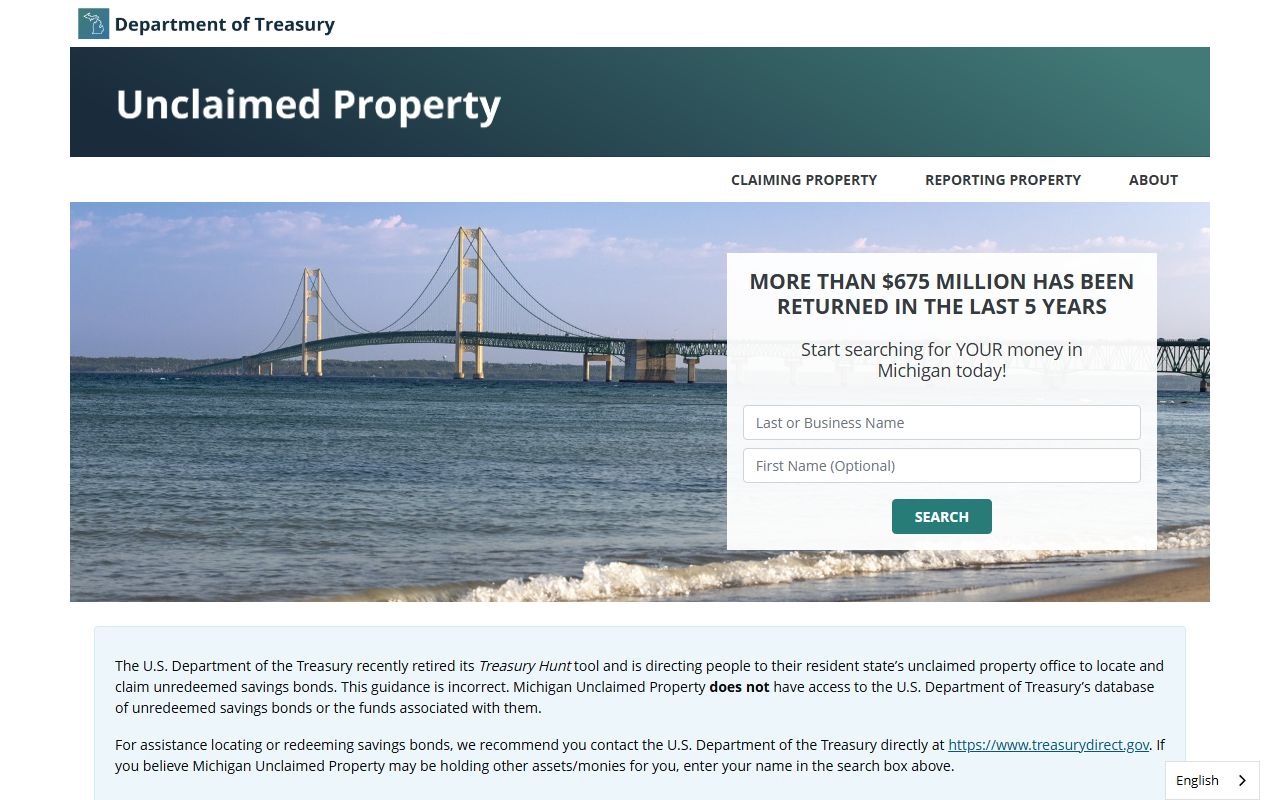
Search all names you've used. Search for family members too. The state holds funds for deceased owners, and heirs can often file claims for relatives.
Common Sources of Unclaimed Property
Old bank accounts are the most common type. But there are others. Insurance payouts, stock dividends, payroll checks that were never cashed, security deposits, utility refunds, and safe deposit box contents all end up with the state over time. None of it reflects any wrongdoing. It just happens. In a county as large as Kalamazoo, with major employers, universities, and hospitals, the odds of finding something in your name are real.
Kalamazoo County Treasurer
The Kalamazoo County Treasurer manages property tax collection, safeguards public funds, and handles tax foreclosure proceedings when taxes go unpaid. The Treasurer's office is focused on responsible fiscal management and has been actively working to identify residents who may be eligible for property tax reductions on overtaxed homesteads. If you think your property may be overtaxed, contact the Treasurer's office directly.
The screenshot below shows the official Kalamazoo County Treasurer page, where you can view contact information, payment options, and delinquent tax details.
See the official Kalamazoo County Treasurer page at kalcounty.gov for current contact information, payment options, and tax deadlines.
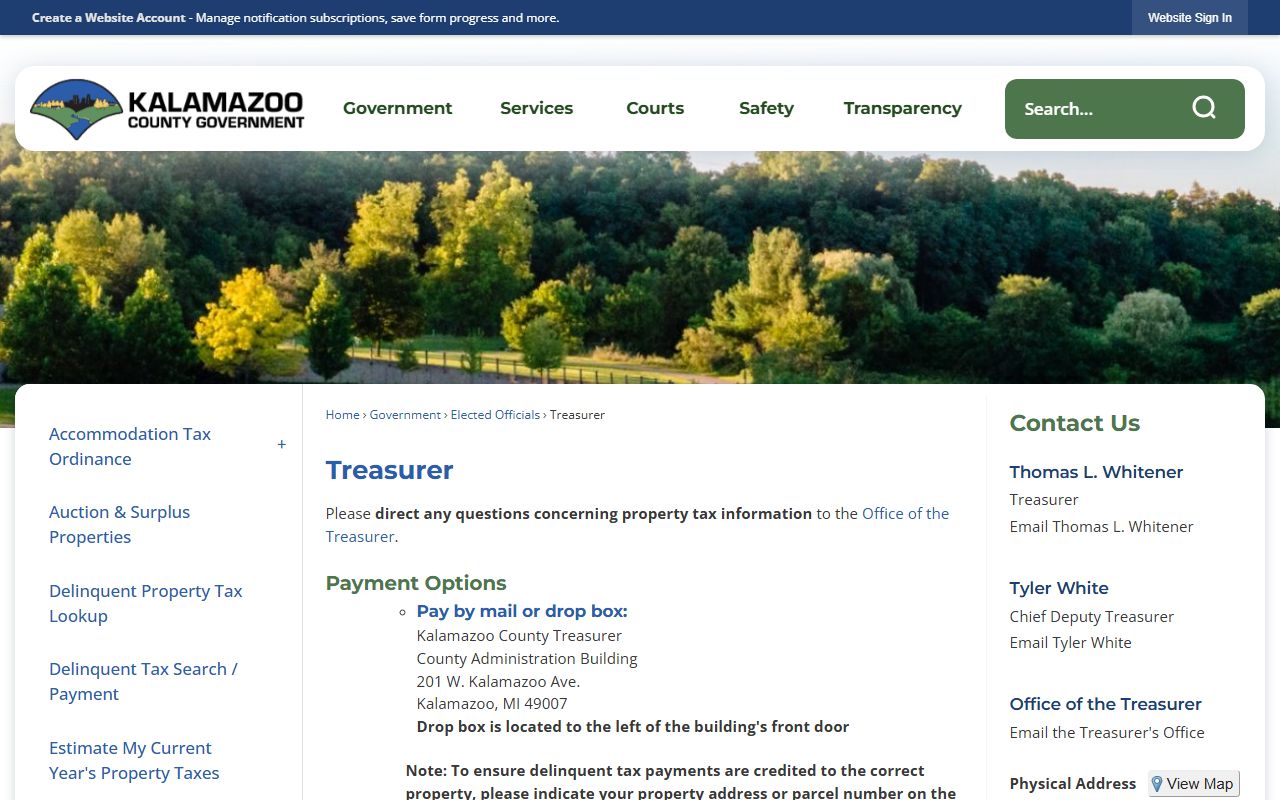
The Treasurer's office accepts payments by mail or drop box. The drop box is located to the left of the front door at the County Administration Building. Include your property address or parcel number on your check when using the drop box. Online payment is also available through the county's tax records search tool.
| Treasurer | Thomas Whitener |
|---|---|
| Address | County Administration Building, 201 W. Kalamazoo Ave., Kalamazoo, MI 49007 |
| Phone | 269-384-8124 |
| Treasurer@kalcounty.com | |
| Website | kalcounty.gov - Treasurer |
The main Kalamazoo County website offers a full directory of county departments and services. The screenshot below shows a general view of the county's web presence.
Browse the full list of Kalamazoo County services at kalcounty.gov.
The county site links to all major departments, including the Treasurer, Register of Deeds, Circuit Court, and others that may be relevant if you're searching for unclaimed funds or filing a surplus claim.
Tax Foreclosure Auctions
Kalamazoo County uses Tax-Sale.info for real property foreclosure auctions. A list of foreclosed properties is available from the Treasurer's office starting approximately July 1 each year. If you are a former property owner, check the auction results to see whether the sale price exceeded what you owed. A surplus may be available to claim.
The Tax-Sale.info platform used by Kalamazoo County is shown below. This is where foreclosure auction listings and results are posted publicly.
Check the current Kalamazoo County foreclosure auction listings at tax-sale.info.
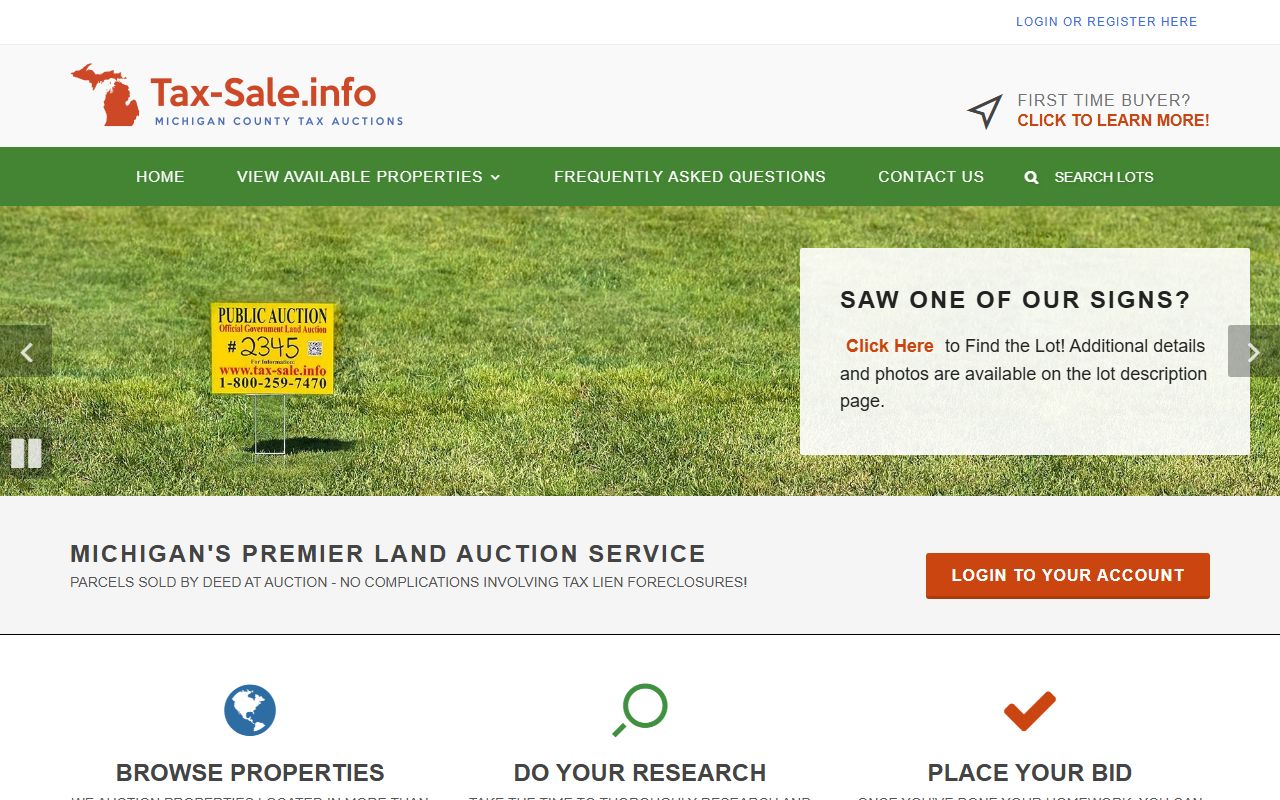
Former owners can use the platform to look up past sales and verify whether a surplus was generated after their property was sold.
Tax Foreclosure Surplus Funds in Kalamazoo County
When a foreclosed property sells at auction for more than the amount owed in taxes, fees, and costs, the leftover money is called a surplus. Michigan Compiled Laws section 211.78t gives the former property owner the right to claim that surplus. The claim process has firm deadlines. Many people lose their right to claim simply because they didn't know they had one.
Claim Forms and Deadlines
Two forms are used for surplus claims:
- Form 5743 - Notice of intention to claim surplus proceeds. Must be filed by July 1 of the foreclosure year.
- Form 5744 - Petition to claim surplus proceeds. File by January 31 after the sale.
If you missed those windows, there is a court motion option. Form CC540 can be filed from February 1 through May 15. This goes to the Kalamazoo County circuit court. A judge reviews the claim and orders payment if everything checks out. This is a fallback, not the preferred route, but it keeps the door open.
Rafaeli v. Oakland County (2020)
The Michigan Supreme Court ruled in 2020 in Rafaeli v. Oakland County that former property owners are entitled to surplus proceeds from tax foreclosure sales. The government cannot keep the excess. This ruling applies statewide, including Kalamazoo County. If your property was foreclosed and sold through Tax-Sale.info for more than what you owed, there may be a surplus waiting for you to claim.
Michigan Tax Foreclosure Timeline
Michigan requires three years before a property can be finally foreclosed. Here's what happens at each step:
- Year 1: Taxes go unpaid. After March 1, the county treasurer takes over and a lien attaches. Interest begins. The owner can still pay and stop the process.
- Year 2: The property is listed as delinquent. Notices go to the owner and lienholders. Redemption rights remain. Formal foreclosure proceedings start.
- Year 3: If still unpaid, the circuit court enters a foreclosure judgment. The property is sold through Tax-Sale.info, usually in late summer or early fall.
After the sale, the debt, fees, and costs are paid from the auction proceeds. Whatever remains is the surplus. Former owners have a legal right to it under MCL 211.78t, but only within the filing windows. The Kalamazoo County Treasurer acts as the Foreclosing Governmental Unit (FGU) and oversees the entire process.
Legal Aid Resources for Kalamazoo County Residents
Free and low-cost help is available for residents who need guidance on surplus claims, tax foreclosure, or unclaimed property.
Michigan Legal Help
Visit michiganlegalhelp.org for free step-by-step guides on filing surplus fund claims, dealing with tax foreclosure, and finding unclaimed property. The site walks through the forms, deadlines, and what to do if you missed an earlier window. It also has guides for self-representation in court.
State Bar of Michigan Lawyer Referral Service
Call (800) 968-0738 or visit lrs.michbar.org to be connected with an attorney in the Kalamazoo area. The referral service covers property law, tax matters, and probate. First consultations are often low-cost or free.
Michigan Homeowner Assistance Fund
If you're behind on property taxes right now, check the Michigan Homeowner Assistance Fund at michigan.gov/mihaf. The program can pay off delinquent tax balances and stop a foreclosure. Preventing the foreclosure is always better than filing a surplus claim after the property is gone.
Deadlines are firm. July 1 and January 31 are the main form dates. May 15 closes the court motion window. If you've missed one deadline, check whether another option is still open before giving up on what may be owed to you.
Cities in Kalamazoo County
The City of Kalamazoo is the county seat and largest city in the county, and it has a dedicated page on this site.
Other communities in Kalamazoo County include Portage, Comstock, Parchment, and several townships. Residents of those communities can use the state portal and county resources on this page for unclaimed property searches and surplus claims.