
Find Unclaimed Money in Lansing
Lansing residents can search for unclaimed money through Michigan's statewide database and through local city and county sources. Lansing collects a local income tax, which makes overpaid city income taxes a real and common source of unclaimed funds. The Michigan Department of Treasury runs the statewide program from its offices here in Lansing, and Ingham County handles delinquent property taxes and any surplus from foreclosure sales.
Lansing Overview
Michigan State Unclaimed Property
The Michigan Department of Treasury operates the statewide unclaimed property program from its offices right here in Lansing. Banks, insurance companies, utilities, and other businesses must report dormant accounts to the state. Once reported, the state holds the funds indefinitely with no deadline for owners to claim. Over $675 million has been returned to Michigan residents to date.
The statewide database is at unclaimedproperty.michigan.gov. Searching is free.
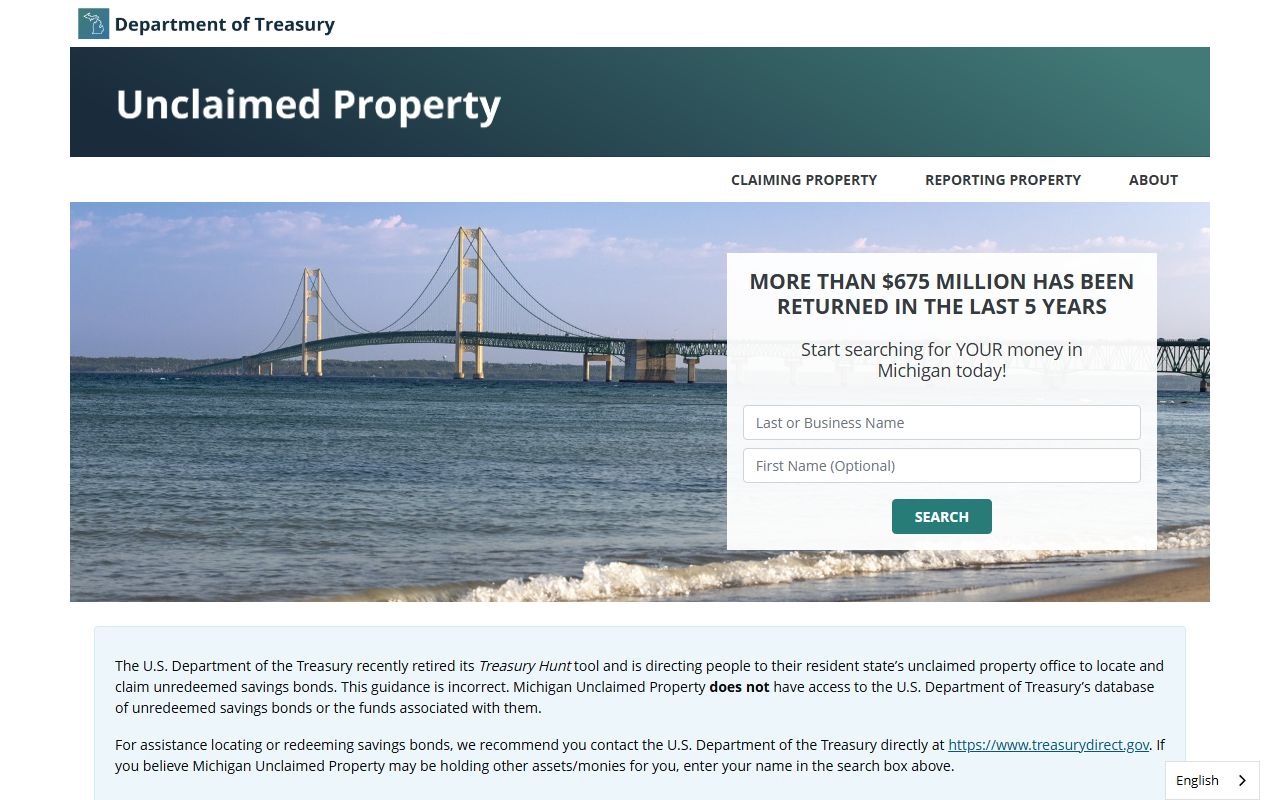
Enter your last name to search the database. If you find a match, file a claim directly on the site and verify your identity. For larger claims, supporting documents may be required. Questions can go to (517) 636-5320 or TreasUPD@michigan.gov.
Lansing is home to state government and a large public sector workforce. There are often government-related accounts that go unclaimed for various reasons. It is worth searching under both personal and former employer accounts. Lansing residents can also visit the Treasury Building at 430 W. Allegan Street, Lansing, MI 48922, in person during business hours to ask questions directly.
What Gets Reported
Businesses report property dormant for three years. This covers checking and savings accounts, payroll checks, stock dividends, security deposits, and more. Life insurance proceeds are reported after three years of no contact with the beneficiary. Safe deposit box contents come to the state after five years of no payment on the box rental.
Lansing City Treasurer
The City of Lansing Treasurer's office handles property tax billing, local income tax collection, and city financial account management. Lansing charges a local income tax: residents pay 1.0% and non-residents who work in the city pay 0.5%. If you worked in Lansing or lived there and overpaid city income taxes, you may have a refund pending. If that check was mailed but never cashed, it may now appear in Michigan's unclaimed property database.
The Lansing city website is at lansingmi.gov.

The Lansing city site provides access to tax accounts, payment options, and city financial contacts for residents.
| Department | City Treasurer's Office, City of Lansing |
|---|---|
| Address | 124 W. Michigan Ave., Lansing, MI 48933 |
| Website | lansingmi.gov |
| Treasurer Page | lansingmi.gov/departments/treasurer |
| Resident Tax Rate | 1.0% |
| Non-Resident Rate | 0.5% |
The Lansing Treasurer's page has details on tax deadlines, payment methods, and refund procedures for income and property taxes.

If you believe the city owes you an income tax refund, call the Treasurer's office directly. Have your Social Security number and the tax year in question ready when you call.
Lansing does not have a separate city unclaimed property database. Any unclaimed refunds or credits that go unresolved are eventually reported to the Michigan state database. Check the state site if you believe a refund was issued but you never received it.
Ingham County Treasurer
Property taxes in Lansing that go unpaid transfer to Ingham County Treasurer's office after March 1. The county charges interest on delinquent balances. If taxes remain unpaid for three years, the property can enter foreclosure under MCL 211.78.
See the full Ingham County unclaimed money page for county-level resources. If you have a delinquent balance on a Lansing property, contact the county treasurer's office to ask about the amount owed and any payment plan options. Interest builds monthly, so acting quickly saves money.
The Ingham County Treasurer's website is at ingham.org. Residents who are behind on taxes and worried about foreclosure should also ask the county about any available hardship programs.
Tax Foreclosure Surplus Funds
When a Lansing property sells at an Ingham County tax foreclosure auction for more than the taxes and fees owed, the former owner has a right to the surplus. This right was confirmed by the 2020 Michigan Supreme Court ruling in Rafaeli LLC v Oakland County, decided July 17, 2020.
Ingham County follows the standard Michigan process under MCL 211.78t. Here are the steps:
- Get Form 5743 (Notice of Intention to Claim Interest in Foreclosure Sale Proceeds) from the Ingham County Treasurer or download it from the state website.
- Submit the completed form to the Ingham County Treasurer by July 1 of the year following the foreclosure sale.
- Use Form 5744 to respond and assert your claim by January 31.
- If the county does not resolve the claim, file a motion with the Ingham County Circuit Court between February 1 and May 15.
The July 1 deadline is firm. Do not miss it. If you are unsure whether your former property sold at auction or what the sale price was, contact the Ingham County Treasurer and ask them to pull up the sale record for your parcel. Even if you did not expect a surplus, it is worth checking. Property values fluctuate and auctions can produce results above the tax debt.
Michigan Tax Foreclosure Timeline
Michigan uses a three-year process before a property is foreclosed. Knowing where you stand in this timeline is key to protecting your rights.
- Year 1, March 1: Taxes become delinquent. A 4% administration fee is charged, plus 1% per month in interest.
- Year 2, March 1: The property enters forfeiture. Formal proceedings begin and the owner's options to redeem become more limited.
- Year 3, April 1: Foreclosure is finalized. The county takes title and can sell the property at auction.
At any point before foreclosure is finalized, the owner can pay the full amount owed to stop the process. Once the property sells, a surplus claim is the only remaining remedy. Early action is always better.
Legal Aid Resources
Lansing residents have strong access to free and low-cost help. Because Lansing is the state capital, some state-level resources are particularly easy to reach here.
- Michigan Legal Help: michiganlegalhelp.org has free guides on unclaimed property, delinquent taxes, and surplus fund claims in plain language.
- State Bar of Michigan Lawyer Referral Service: Call (800) 968-0738 or visit lrs.michbar.org to get matched with a local attorney for property or tax matters.
- Michigan Homeowner Assistance Fund (MIHAF): Visit michigan.gov/mihaf for grants of up to $25,000 for homeowners who fell behind on taxes or mortgages due to hardship.
- Legal Services of South Central Michigan: Serves the Lansing area and provides free civil legal help to qualifying residents.
- Michigan Department of Treasury Unclaimed Property Division: 430 W. Allegan Street, Lansing, MI 48922, (517) 636-5320. Lansing residents can visit in person during business hours.