
Flint Unclaimed Money Search
Flint residents may have unclaimed money held by Michigan Treasury, Genesee County, or the City of Flint's finance department. Sources include dormant bank accounts, insurance proceeds, old utility deposits, uncashed payroll checks, and city income tax refunds. This page covers all key sources and explains how to search and file a claim.
Flint Overview
Michigan State Unclaimed Property
The Michigan Department of Treasury collects unclaimed funds from businesses across the state. When a company can no longer reach an account holder, Michigan law requires it to turn over the funds after a dormancy period. Treasury holds the money until the rightful owner files a claim. There is no deadline. The search is free. Michigan has returned more than $675 million and still holds hundreds of millions more.
Search the free database at unclaimedproperty.michigan.gov. Enter your name or a former business name. Deceased relatives can be searched too. If a match comes up, follow the steps to file online. For questions, call (517) 636-5320 or email TreasUPD@michigan.gov.
Try multiple name variations. Old addresses sometimes show up under different records. It costs nothing and takes just a few minutes. Many Flint residents find old savings accounts, insurance proceeds, or uncashed paychecks they had no idea were sitting with the state.
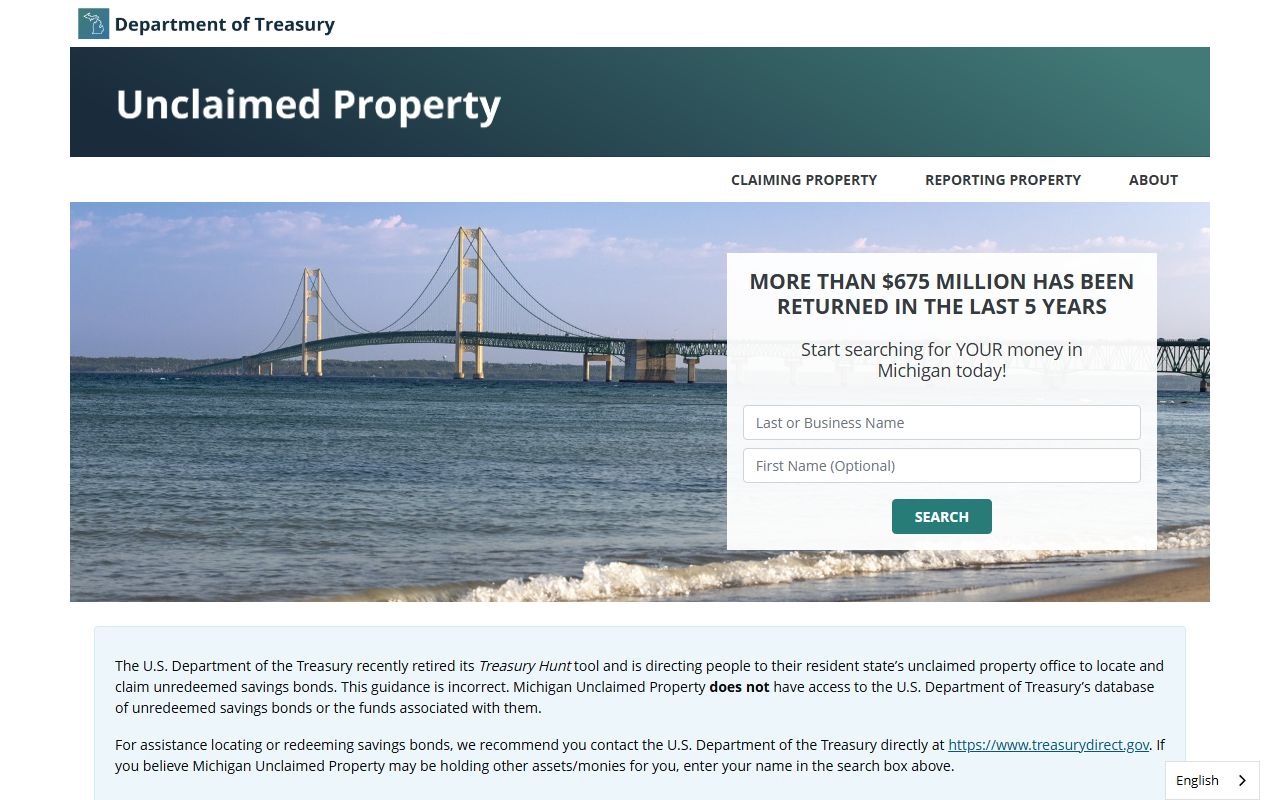
The state database is updated regularly as new property is reported by businesses statewide.
City of Flint Finance Department
The City of Flint Finance Department manages financial operations including local tax billing and collection. Flint levies a local income tax: residents pay 1.0% and nonresidents who work in the city pay 0.5%. If you worked in Flint or lived there and think you may have an overpayment or refund on file, the Finance Department is the right starting point.
| Department | City of Flint Finance Department |
|---|---|
| Address | 1101 South Saginaw Street, Flint, MI 48502 |
| Income Tax Rate | Resident 1.0%, Non-Resident 0.5% |
| Website | cityofflint.com |
| Finance Page | cityofflint.com/finance |
The official Flint city website is at cityofflint.com. It has links to department contacts, services, and online resources for residents.
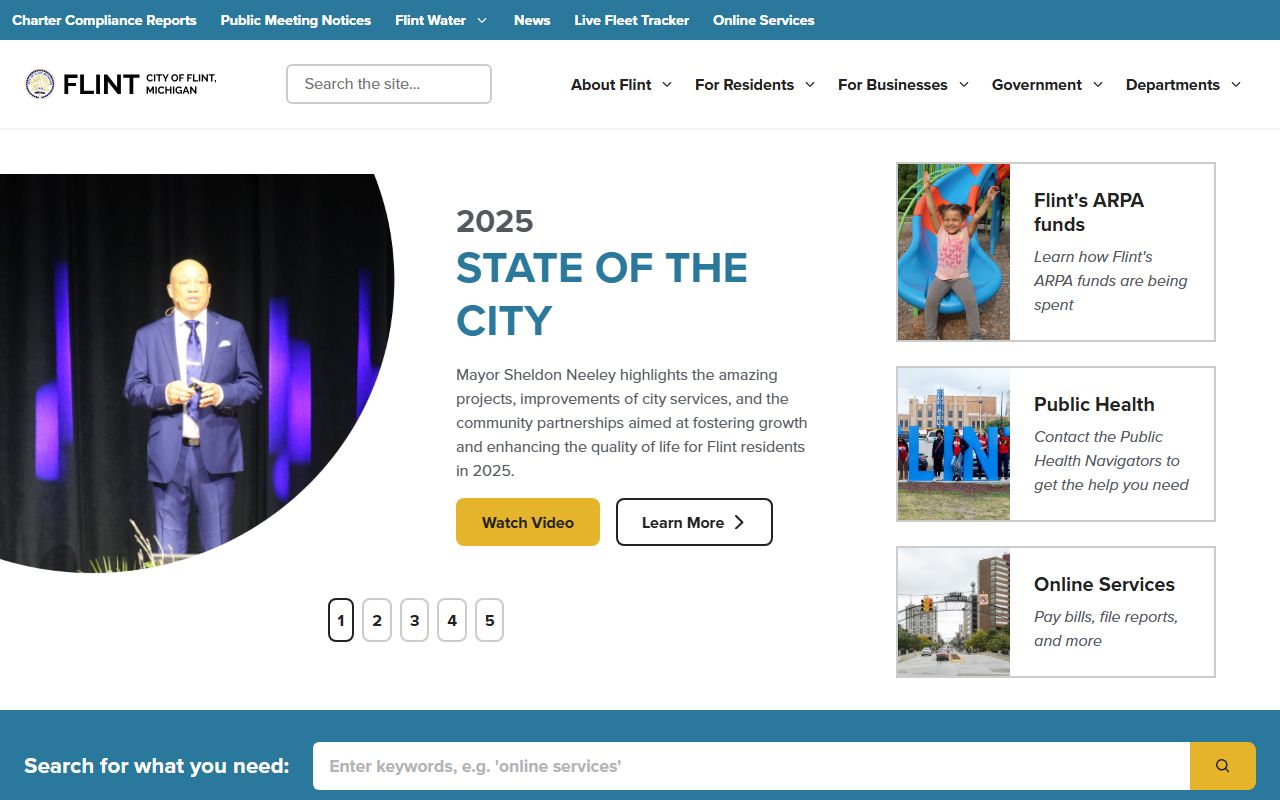
The city's main site above shows department directories and resources for residents dealing with tax or financial questions.
The Finance Department page has staff contacts, tax forms, and payment instructions for city income and property taxes.
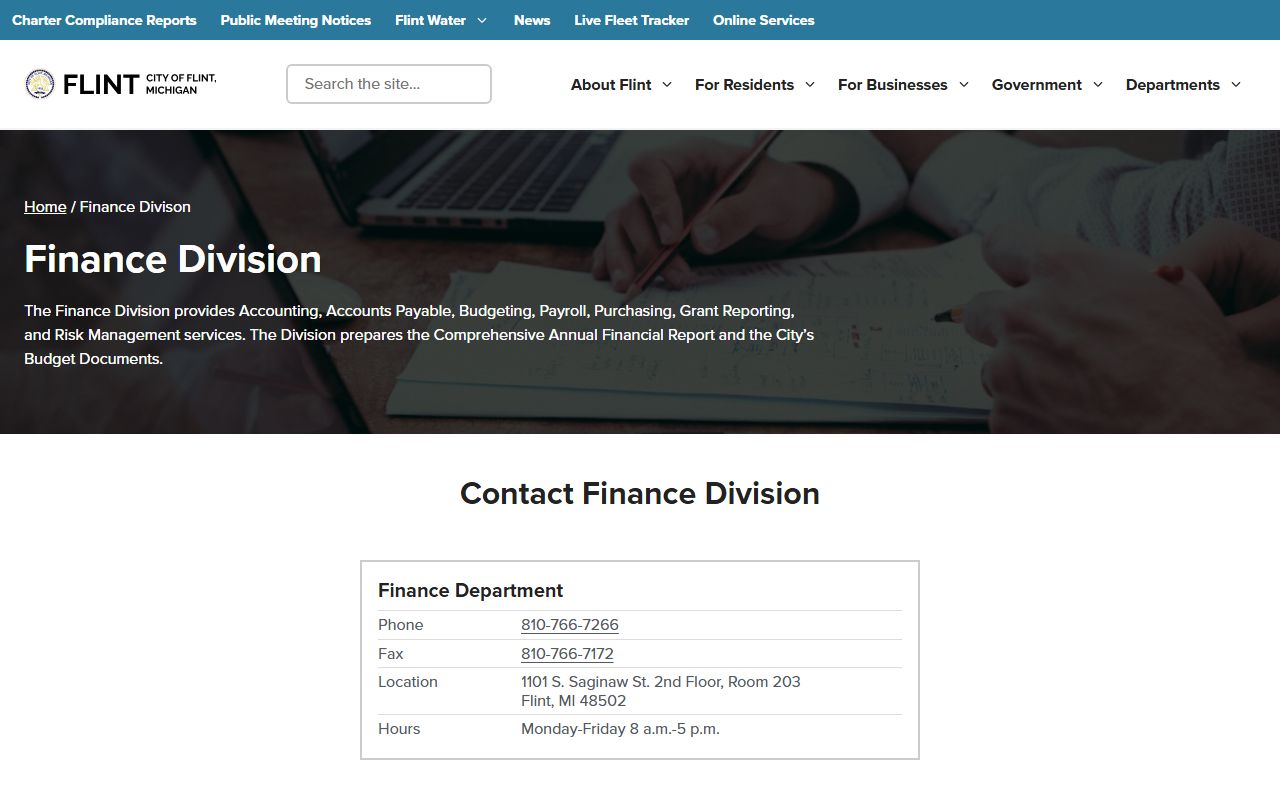
The Finance Department page above has the forms and contact details you need for city income tax refund requests.
If you filed a Flint city income tax return and believe you are owed a refund, contact the Finance Department. Have your prior returns and W-2s ready. Refunds from past years may still be claimable depending on the city's rules.
Genesee County Treasurer
Flint properties with unpaid taxes are forwarded to Genesee County for collection. The county handles delinquent accounts and foreclosure proceedings for the entire county, including Flint. The county office is open Monday through Friday, 8:00 AM to 4:00 PM. Payment options include mail, online, and an automated phone line.
| Office | Genesee County Treasurer |
|---|---|
| Phone | (810) 257-3054 |
| Address | 1101 Beach Street, Flint, MI 48502 |
| Hours | Monday-Friday, 8:00 AM - 4:00 PM |
| Automated Pay Line | 1-877-805-2856 (fees apply) |
More details on Genesee County processes are at the Genesee County unclaimed money page.
Tax Foreclosure Surplus Funds
Genesee County's process for tax foreclosure surplus funds depends on when the foreclosure happened. The form and court motion you need differs based on the year of the sale.
For foreclosures in 2021 or later, use Form 5743 (Motion to Claim Remaining Proceeds) and file by July 1 following the sale. This is the standard MCL 211.78t process used across most of Michigan after the 2020 Rafaeli v. Oakland County ruling.
For foreclosures that took place between 2015 and 2020, the county may require Form 6156 instead. The court motion forms also differ: CC540 applies to post-July 2020 matters and CC541 applies to pre-July 2020 proceedings. If you are unsure which applies to your situation, contact the Genesee County Treasurer's office or a legal aid organization before you file.
Genesee County also has a Land Bank that takes ownership of some foreclosed properties. If a property went to the Land Bank rather than a public auction, the surplus process may work differently. Ask the Treasurer's office about your specific parcel.
Do not guess which form to use. Using the wrong one can delay or void your claim. Get help from Legal Services of Eastern Michigan or Michigan Legal Help before you file anything.
Michigan Tax Foreclosure Timeline
Michigan uses the same three-year process in Genesee County as it does statewide. Knowing the timeline helps you act before you lose your options.
| Stage | When | What It Means |
|---|---|---|
| Delinquent | March 1, Year 1 | Unpaid taxes move to county. A 4% penalty plus 1% per month starts. |
| Forfeiture | March 1, Year 2 | Property forfeited to county. More fees apply. Owner can still redeem. |
| Foreclosure | April 1, Year 3 | Title moves to county. Right to redeem ends. Property may go to auction. |
Genesee County has added resources in recent years, including a grant from the Rocket Community Fund to help residents facing tax delinquency and foreclosure. More help may be available than in prior years.
Legal Aid Resources
Flint residents can get free legal help for unclaimed property and foreclosure surplus issues through several organizations.
Legal Services of Eastern Michigan (LSEM) serves Flint and Genesee County residents at 436 S. Saginaw Street, Suite 101, Flint, MI 48502. Call (800) 322-4512 for income-qualified assistance. LSEM also serves Lapeer, St. Clair, Huron, and Tuscola counties from its Flint office.
Michigan Legal Help at michiganlegalhelp.org has self-help guides covering surplus claims, foreclosure defense, and unclaimed property. Free and available statewide.
State Bar Lawyer Referral can connect you with a local attorney. Call (800) 968-0738 or visit lrs.michbar.org. First consultations are typically low cost.
Michigan Homeowner Assistance Fund (MIHAF) helps homeowners at risk of foreclosure. Check eligibility at michigan.gov/mihaf.
Given Genesee County's dual-form process, getting help from a local organization before filing is strongly recommended. Legal Services of Eastern Michigan is a good first call for Flint residents who qualify based on income.