
Roscommon County Unclaimed Money Search
Roscommon County residents can search for unclaimed money through Michigan's free state portal and can pursue tax foreclosure surplus claims through the county treasurer's office in Roscommon. This county was named as the lead defendant in a significant multi-county class action lawsuit related to tax foreclosure surplus funds, making it a key jurisdiction in the development of current Michigan surplus law.
Roscommon County Overview
Michigan State Unclaimed Property
The Michigan Department of Treasury runs the state unclaimed property program at unclaimedproperty.michigan.gov. The search is free, fast, and requires no account. Michigan has returned over $675 million in unclaimed funds since the program began. The database covers dormant bank accounts, uncashed payroll or insurance checks, unreturned security deposits, and stock or brokerage assets that were abandoned over time.
Once a business or financial institution reports an asset to the state, the funds stay available indefinitely. There is no deadline to file a claim with the state program. Roscommon County residents can search under their own name, a spouse's name, or a deceased family member's name. Old addresses do not matter for the search since the database is name-based.
Reach the state treasury office at (517) 636-5320 or email TreasUPD@michigan.gov for help with a pending claim or questions about documentation.
The screenshot below shows the Roscommon County official website at roscommoncounty.net, which includes links to county departments and the treasurer's office.
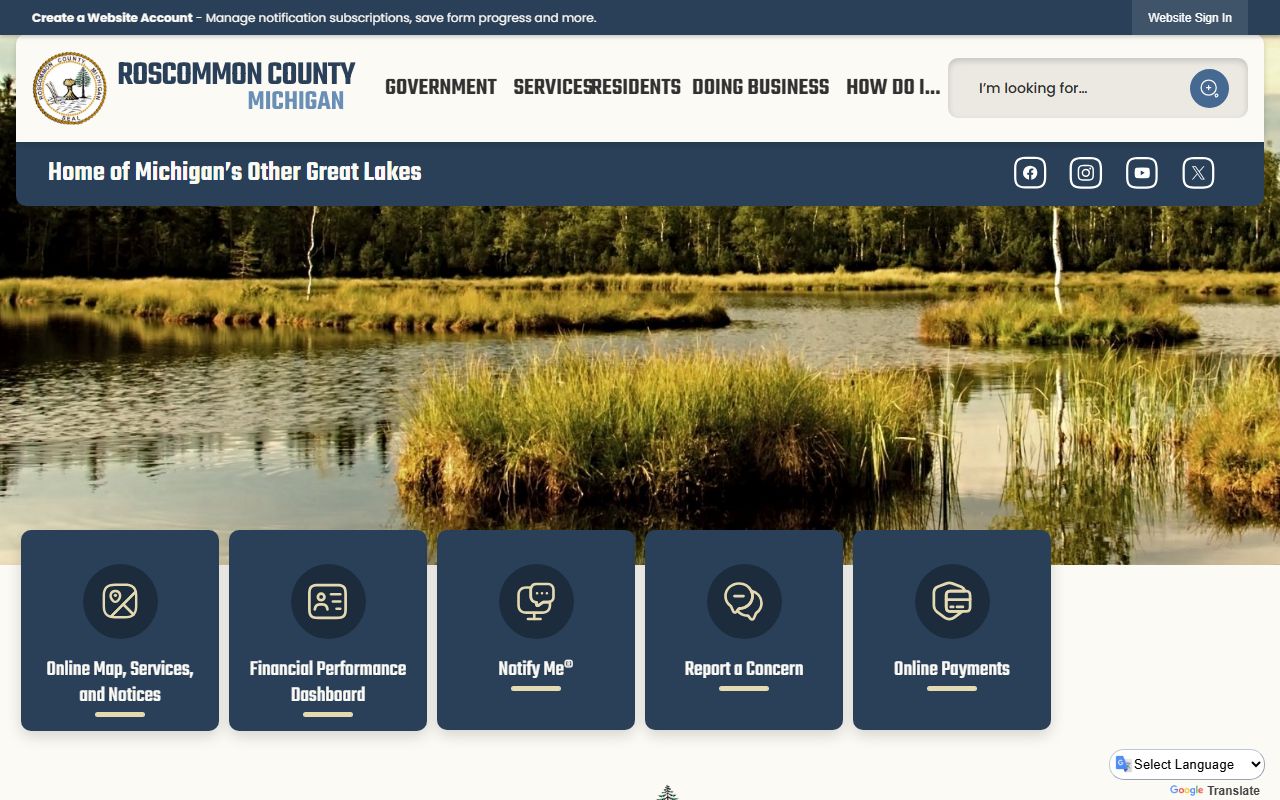
The county homepage at roscommoncounty.net is the starting point for finding the treasurer's contact information and any notices about upcoming tax foreclosure auctions.
Roscommon County Treasurer
The Roscommon County Treasurer's Office is located in Roscommon, the county seat. The office handles property tax collection, delinquent tax accounts, and the county's tax foreclosure process. The treasurer's website at roscommoncounty.net/treasurer provides contact details, office hours, and information about the delinquent tax and foreclosure process.
If you owned a property in Roscommon County that was foreclosed after July 17, 2020, the treasurer's office is the first place to contact about surplus funds. Provide the parcel number and ask what the property sold for at auction and what the total amount owed was at the time of foreclosure. If the sale price is higher than the debt, a surplus may exist. Whether you can claim it depends on whether Form 5743 was filed by July 1 of the applicable year.
The treasurer's office also processes poverty exemption applications and can direct you to payment plan options if you are behind on taxes but have not yet reached forfeiture. Early contact with the office gives you the most options for resolving delinquent taxes before the foreclosure clock runs out.
The screenshot below is from the treasurer's specific page at roscommoncounty.net/treasurer, showing the resources available for property tax and foreclosure matters.
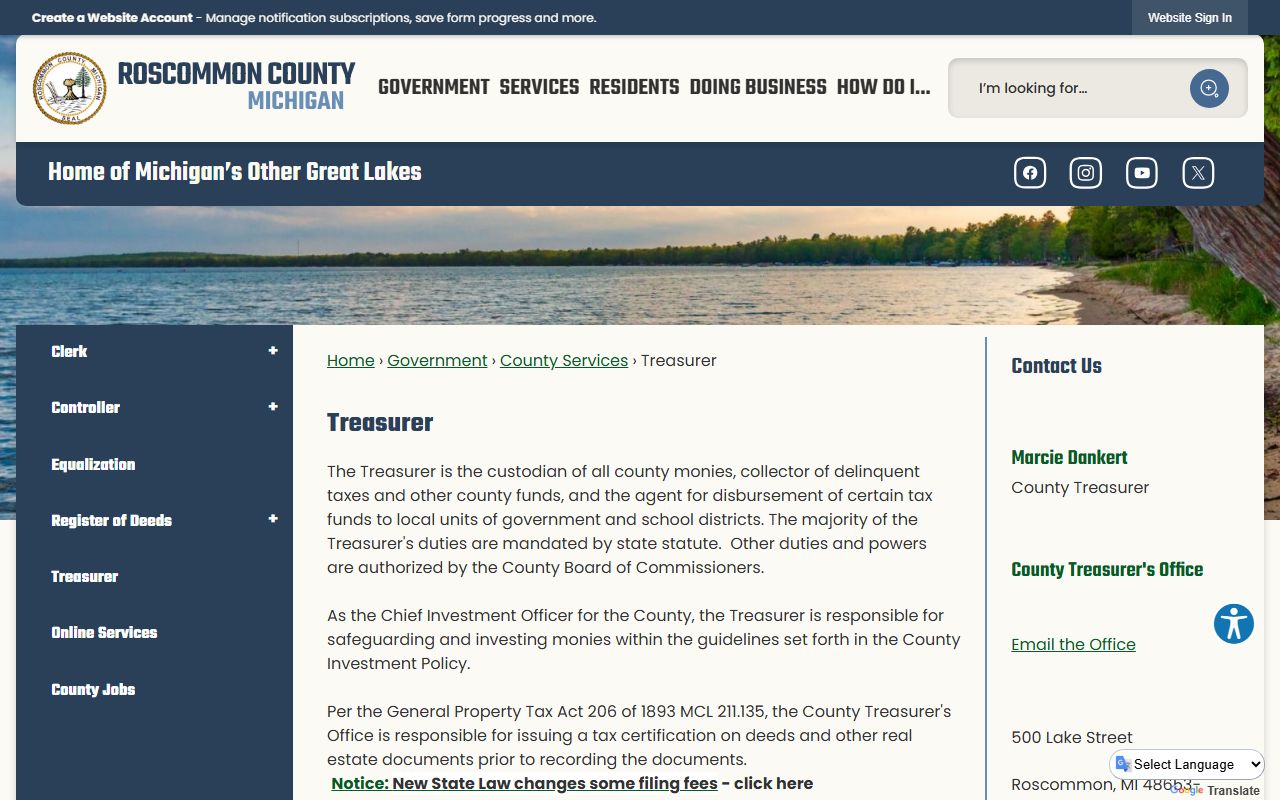
The treasurer's page is the best source for current forms, contact details, and instructions for filing surplus claims in Roscommon County.
Tax Foreclosure Surplus Funds
When a Roscommon County property sells at tax foreclosure auction for more than the total owed, the former owner has the right to claim that surplus under MCL 211.78t. This law applies to foreclosures on or after July 17, 2020, following the Michigan Supreme Court's ruling in Rafaeli LLC v. Oakland County.
Docket No. 349636: Roscommon as Lead County in Multi-County Class Action
Roscommon County was named as the lead defendant in a major class action lawsuit, Docket No. 349636. This case was brought on behalf of former property owners across nine Michigan counties who had their properties taken through tax foreclosure and did not receive compensation for surplus value above the tax debt. The nine counties named in the litigation were Roscommon, Montmorency, Alpena, Oscoda, Alcona, Arenac, Ogemaw, Clare, and Gladwin.
The class action was part of the broader wave of litigation that followed the Rafaeli LLC v. Oakland County ruling on July 17, 2020. Once the Michigan Supreme Court established that former owners have a constitutional right to surplus proceeds, former owners in smaller counties across Michigan began pursuing similar claims. Roscommon County, as the lead case in this multi-county action, became central to how the new MCL 211.78t framework was applied in rural northern Michigan counties.
The litigation highlighted a key reality about small Michigan counties: many former property owners in Roscommon and the other eight named counties had lost significant property value to the government before the law required surplus proceeds to be returned. The class action sought to address those past losses while MCL 211.78t established the forward-looking process for future claims.
With MCL 211.78t now in full effect, all future surplus claims in Roscommon County go through the standard Form 5743 process. The class action period is separate from the current statutory process. If you had a property foreclosed in Roscommon County before July 17, 2020, consult an attorney about any remaining options from the litigation era. If your foreclosure occurred after that date, MCL 211.78t is the applicable law.
Michigan Tax Foreclosure Timeline
Roscommon County follows Michigan's three-year tax foreclosure timeline. Here is how each stage works and what fees and deadlines apply.
Year One - Delinquency: Property taxes become delinquent on March 1 and transfer to the county treasurer. A 4% administrative fee is added along with 1% per month interest. Certified mail notices go out in June and September. A $15 notification fee is added October 1.
Year Two - Forfeiture: On March 1 of the second year, the property is forfeited to the county treasurer if taxes remain unpaid. A minimum $235 fee is added and the interest rate rises to 1.5% per month retroactive to March 1 of the prior year. Additional fees for property visits, lienholder notification, and newspaper publication build up through the year. A show cause hearing is scheduled before a judicial foreclosure hearing proceeds.
Year Three - Foreclosure: March 31 is the final day to pay and prevent foreclosure. On April 1, title transfers to the Roscommon County Treasurer. The property is scheduled for auction. If the auction price exceeds the total debt, the surplus claim process begins, and the July 1 Form 5743 deadline applies to former owners who want to claim those funds.
How to File a Surplus Claim
The MCL 211.78t process in Roscommon County follows the same steps as every other Michigan county.
Step one is to file Form 5743, the Notice of Intention to Claim Proceeds, with the Roscommon County Treasurer by July 1 of the year following foreclosure. Do not miss this deadline. Courts have consistently rejected late filings. You must file this form before the auction happens and before you know whether a surplus will be generated.
After the property sells at auction, the county prepares Form 5744 and notifies valid claimants of the results by January 31. If a surplus exists and your Form 5743 was timely filed, you then have from February 1 through May 15 to file Form CC540, a motion in the Roscommon County Circuit Court. The court reviews all claims, sets priorities, and issues an order. The county remits payment within 21 days.
Roscommon County properties that go to auction vary in type, including lakefront vacation properties, cabins, undeveloped lots, and residential homes. Lakefront property in particular can sell for amounts well above the tax debt, meaning the surplus in some cases is substantial. Do not assume a surplus will be small. File Form 5743 whenever a foreclosure has occurred and you had an ownership interest in the property.
Tax Sale Auctions in Roscommon County
Roscommon County uses Tax-Sale.info for its tax foreclosure auctions. Tax-Sale.info handles auctions for more than 74 Michigan counties and can be reached at (800) 259-7470. Auction listings are posted on the platform before each sale date, and bidders register through the site.
Roscommon County is known for its lakes and recreational properties. County annual auctions sometimes include lakefront parcels and seasonal properties that draw competitive bids. If a property sold at a high price relative to the tax debt, the surplus can be meaningful. To check what a past auction property sold for, search the Tax-Sale.info results database using the property address or parcel number.
Legal Aid Resources
Roscommon County residents can use several free and low-cost resources for unclaimed money questions and foreclosure surplus claims.
Michigan Legal Help at michiganlegalhelp.org provides step-by-step guidance on filing Form 5743 and pursuing a circuit court surplus motion. The guides are free, written in plain language, and walk you through each stage of the process.
State Bar of Michigan Lawyer Referral Service connects you with an attorney who handles property and foreclosure matters. Call (800) 968-0738 or visit lrs.michbar.org. Given Roscommon County's history as the lead county in the Docket No. 349636 class action, local attorneys may be especially familiar with surplus fund issues in this area.
Michigan Homeowner Assistance Fund (MIHAF) at michigan.gov/mihaf offers financial assistance for homeowners facing foreclosure because of pandemic-related financial hardship. Check the current eligibility rules on the site.
Northeast Michigan Community Service Agency also serves Roscommon County and can provide referrals to housing counselors and legal aid programs. For residents dealing with both delinquent taxes and financial hardship, their services may help identify additional assistance options beyond what is available through the treasurer's office alone.
Cities in Roscommon County
No cities in Roscommon County currently meet the population threshold for a dedicated city page on this site. Roscommon is the county seat and the largest municipality in the county. For unclaimed money searches related to any location in Roscommon County, use the state portal at unclaimedproperty.michigan.gov and contact the Roscommon County Treasurer's Office at roscommoncounty.net/treasurer for questions about tax foreclosure surplus funds.
Nearby Counties
Roscommon County is surrounded by several counties in central Michigan. Many of these counties were co-defendants in the Docket No. 349636 class action and all follow the same MCL 211.78t surplus process today.