
Missaukee County Unclaimed Property Lookup
Missaukee County residents can search for unclaimed money through the free Michigan Treasury database and may also have rights to tax foreclosure surplus funds through the county treasurer in Lake City. The Missaukee County Treasurer manages delinquent tax collection, property tax foreclosure, and the surplus claim process under MCL 211.78t. Missaukee County is also named in a multi-county class action lawsuit over surplus funds from past foreclosures. This page covers both the state search tool and the local processes you need to know about.
Missaukee County Overview
Michigan State Unclaimed Property Search
The Michigan Department of Treasury maintains a free unclaimed property search at unclaimedproperty.michigan.gov.
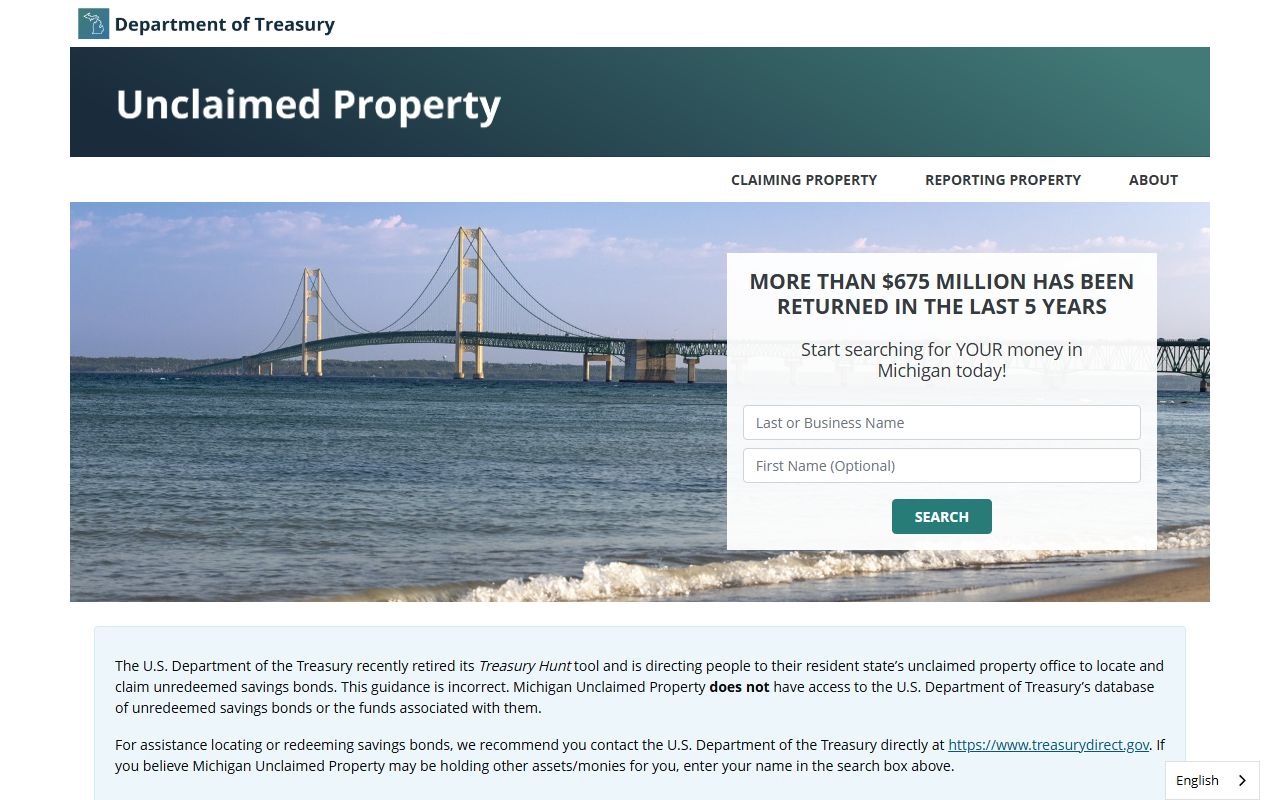
Anyone can search by name for free. No account needed.
Michigan Treasury holds more than $675 million in unclaimed funds. The types of property range from old bank accounts and uncashed checks to forgotten insurance proceeds, utility deposits, and uncollected dividends. Financial institutions and businesses are required by Michigan law to transfer inactive accounts to the state after a set dormancy period. Funds stay in the system until claimed. There is no deadline and no fee to file.
For help from a live staff member, call (517) 636-5320 or email TreasUPD@michigan.gov. Staff can confirm whether a database result is yours and explain what documentation is needed to submit a claim. If you are filing on behalf of a deceased relative, staff can walk you through the estate documentation required.
Missaukee County Treasurer
The Missaukee County Treasurer's office in Lake City handles all delinquent property tax matters, foreclosure proceedings, and surplus fund claims. Key functions include collection of delinquent real property taxes, oversight of the tax reversion process, and management of redemption deadlines. The treasurer's page at missaukee.org/departments/treasurer has information about property tax foreclosure procedures and the available forms.
| Treasurer | Missaukee County Treasurer |
|---|---|
| Address | 111 S Canal Street, Lake City, MI 49651 |
| Phone | (231) 839-4967 |
| Website | missaukee.org/departments/treasurer |
The county offers a 2025 Tax Auction Foreclosure Pamphlet that explains the current foreclosure and auction process for Missaukee County. Contact the treasurer's office to request a copy or check the website. One important point noted in county materials: personal property that happens to be located on a foreclosed parcel does not automatically belong to the auction buyer. The sale covers the land and structures, not personal belongings left behind by the former owner.
Missaukee County Redemption Deadline
Missaukee County follows Michigan's standard three-year delinquency and foreclosure cycle, but county materials note that the redemption window is two years from when a property becomes delinquent before it is sold at auction approximately 2.5 years after the initial delinquency. This is consistent with Michigan's statutory framework under MCL 211.78, where the last redemption date falls on March 31 of the third year. After that date, the county takes title and the property can be sold. Understanding where your property sits in this cycle is important, because once the April 1 foreclosure date passes, ownership cannot be reclaimed.
If you are currently in the delinquency or forfeiture stage, you still have time to act. Contact the Missaukee County Treasurer to find out the total amount owed, including fees and interest, and ask whether a payment plan is available. You can also ask the treasurer to explain the show cause hearing process, which is a formal step that happens in year two and gives property owners an opportunity to dispute the delinquency before it becomes final.
Tax Foreclosure Surplus Funds in Missaukee County
MCL 211.78t gives former owners the right to claim money left over after a tax foreclosure sale, for auctions in 2021 and later. The process requires filing Form 5743 with the Missaukee County Treasurer by July 1 in the year of the auction. This deadline cannot be extended. Missing it means losing the right to surplus funds from that particular sale cycle.
After you file Form 5743, the county sends Form 5744 by January 31. That document shows how much the property sold for, how much was applied to the debt, and what surplus remains. You then have from February 1 to May 15 to file a motion with the Missaukee County Circuit Court using form CC540. The court sets a hearing, issues an order, and the county pays within 21 days of the order. No surplus is paid without a court order, so the motion step is required even if the county agrees that a surplus exists.
Forms 5743, 5744, and CC540 are available through the Missaukee County Treasurer's office and from the state court website. Michigan Legal Help at michiganlegalhelp.org has step-by-step guidance for completing and filing each form without a lawyer.
Class Action Docket No. 349633
Missaukee County is one of nine counties named in class action Docket No. 349633. The other counties in this lawsuit are Newaygo, Benzie, Manistee, Wexford, Mason, Lake, Osceola, and Oceana. This class action follows from the Rafaeli ruling and deals with surplus funds that may have been kept by county treasurers from foreclosures before MCL 211.78t was in effect. If you had property foreclosed in Missaukee County and believe surplus proceeds were not returned to you, this class action may apply to your situation.
Consult an attorney who handles Michigan tax foreclosure cases to get advice specific to your circumstances. An attorney can check the status of the docket, assess whether your situation qualifies, and advise on whether to pursue a class action claim or another route. Do not assume the class action automatically covers your loss without getting legal advice first.
Legal Help and Resources
Michigan Legal Help at michiganlegalhelp.org is a free resource with plain-language instructions on filing surplus claims and understanding the foreclosure process. The State Bar of Michigan's Lawyer Referral Service is at (800) 968-0738 or lrs.michbar.org. You can use this service to find an attorney in northern Lower Michigan who handles tax foreclosure matters.
The Michigan Homeowner Assistance Fund at michigan.gov/mihaf offers grants up to $25,000 to help homeowners who fell behind on property taxes. These funds do not need to be repaid. If your Missaukee County property is still in the delinquency or forfeiture stage, check whether you qualify before the foreclosure is finalized. Funding is limited and availability changes.
Michigan Tax Foreclosure Timeline
Under MCL 211.78, the process is the same in every Michigan county. March 1 of year one, prior taxes go delinquent with a 4% fee and 1% per month interest. March 1 of year two, property is forfeited to the county treasurer and interest rises to 1.5% per month. A show cause hearing is held in January or February of year two. March 31 of year three is the final redemption deadline. April 1, the county takes title by court order. The property then goes to auction. Any sale proceeds beyond the debt owed belong to the former owner, but only if Form 5743 was filed by the prior July 1.
Cities in Missaukee County
Missaukee County has no cities that meet the 100,000-population threshold for a dedicated page on this site. The county seat is Lake City. Other communities include McBain and Falmouth. All unclaimed money matters and tax foreclosure surplus claims for any address in Missaukee County are handled through the treasurer's office at 111 S Canal Street in Lake City.