
Troy Unclaimed Money
Troy residents can search for unclaimed money through Michigan's free statewide database and through the City of Troy Treasury for any local tax refunds or credits. Unclaimed property in Troy includes dormant bank accounts, forgotten insurance payouts, uncashed payroll checks, utility deposits, and more. Oakland County manages delinquent taxes for Troy properties and was at the center of the landmark Rafaeli Supreme Court ruling that changed how tax foreclosure surplus funds are handled statewide.
Troy Overview
Michigan State Unclaimed Property
Michigan Treasury holds unclaimed funds on behalf of residents statewide. Businesses that lose contact with a customer or employee must report the funds to the state after a dormancy period. Once reported, the money stays on file until you come forward. The program is free to use. No attorney is needed. Michigan has already returned over $675 million and continues to hold more.
The statewide search is at unclaimedproperty.michigan.gov.
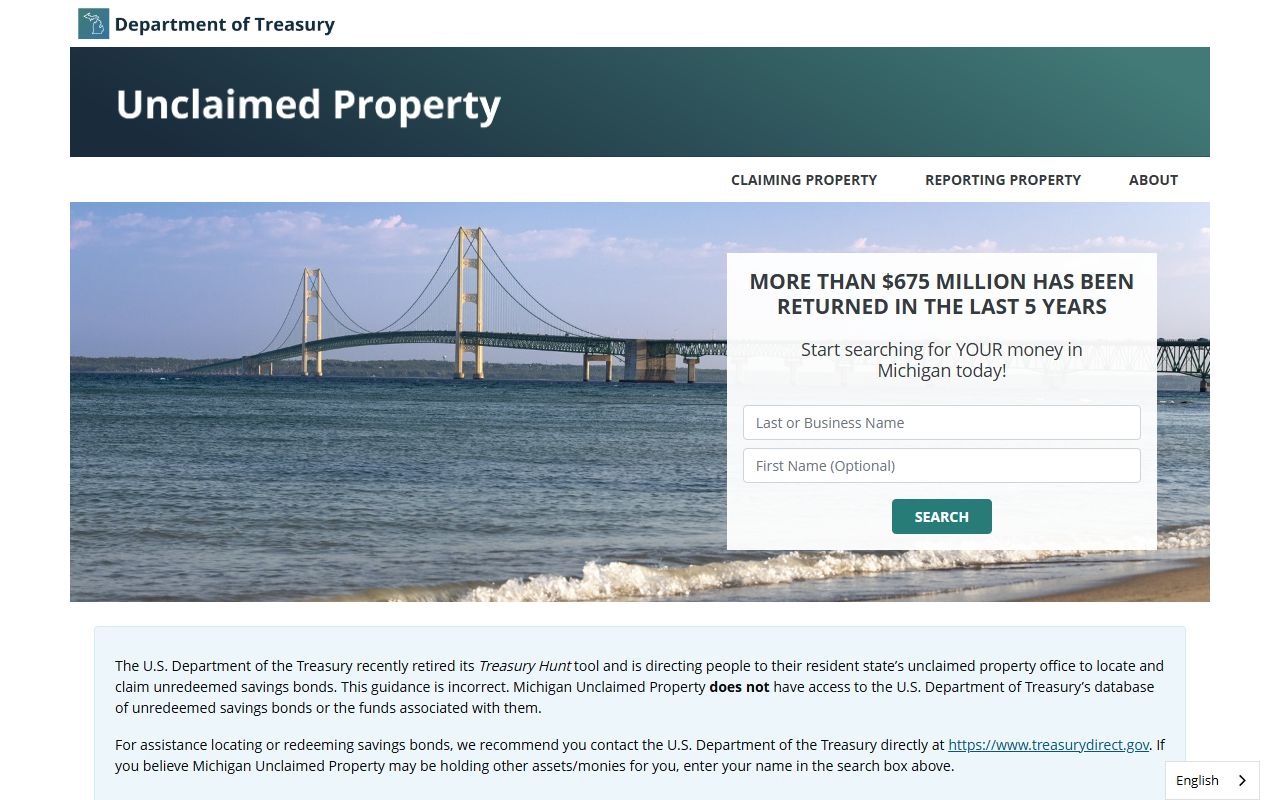
Search by name at no cost. The state has returned over $675 million to Michigan residents statewide.
Enter your last name to search. You can also search for deceased family members. If there is a match, the site guides you through filing a claim online. For help, call (517) 636-5320 or email TreasUPD@michigan.gov. Troy is a large commercial and residential city with many corporate offices, and uncashed payroll checks, retirement account funds, and stock dividends are common types of unclaimed property held by the state. Search multiple name variations including maiden names and former business names.
What Gets Reported
Businesses report accounts dormant for three years. This covers checking and savings accounts, payroll checks, stock dividends, security deposits, and insurance proceeds. Safe deposit box contents arrive at the state after five years of no payment on box rental. Life insurance benefits are reported after three years of no contact with the beneficiary.
Troy City Treasury Department
Troy's Treasury Division handles property tax billing and collection for city residents. Troy does not charge a city income tax. Summer taxes are billed July 1 and due September 1. A 4% penalty applies after that date. Winter taxes are billed December 1 and due February 14. After that deadline, a 3% penalty applies. If you overpaid taxes or have an uncashed refund check from the city, contact the Treasury Division to request a review.
You can look up your tax account at troymi.gov/bsaonline.
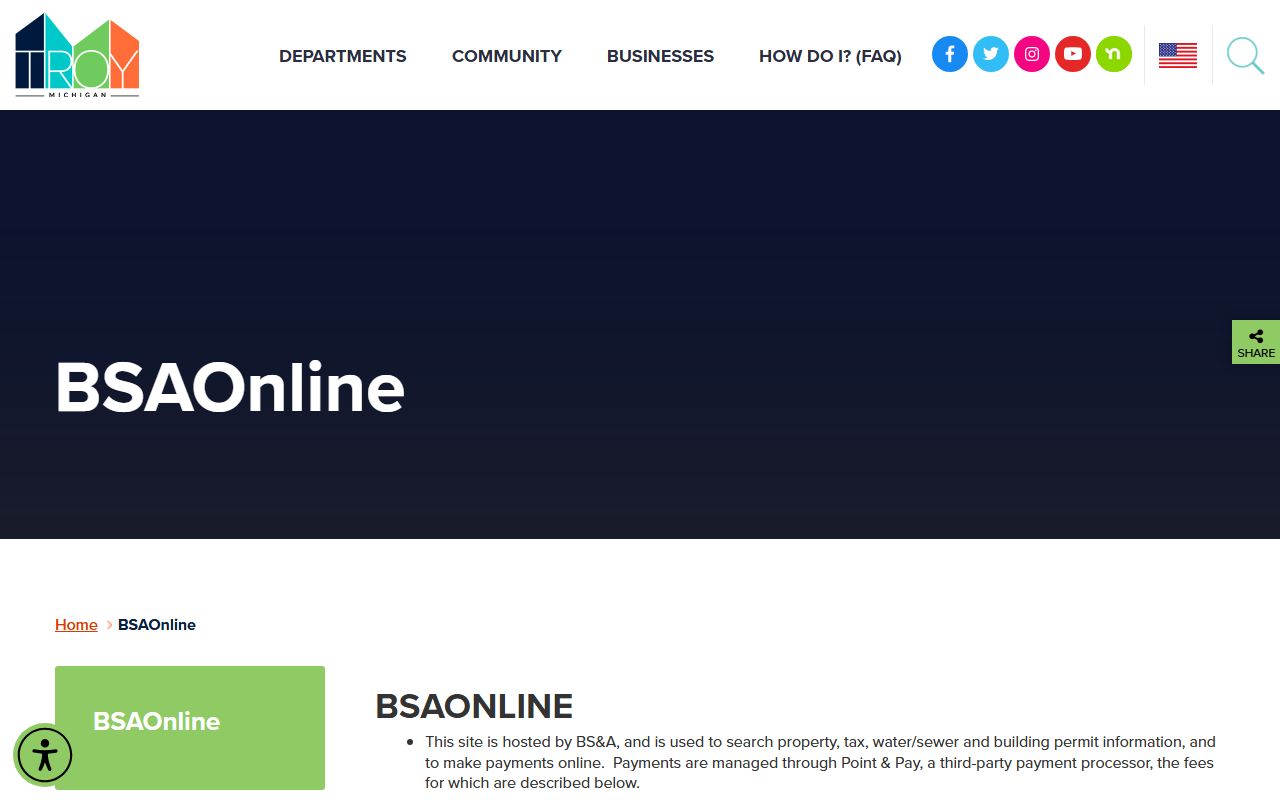
The BSA Online tool shows your balance, payment history, and current tax status without needing to call the office.
| Department | City of Troy Treasury |
|---|---|
| Address | 500 W Big Beaver, Troy, MI 48084 |
| Phone | 248.524.3333 |
| Treasury@troymi.gov | |
| Tax Mailing | City of Troy Tax, P.O. Box 554754, Detroit, MI 48255-4754 |
| Hours | Monday-Friday, 8:00 AM - 4:30 PM |
| Website | troymi.gov |
The city's online payment portal is at troymi.gov/onlinepayments.
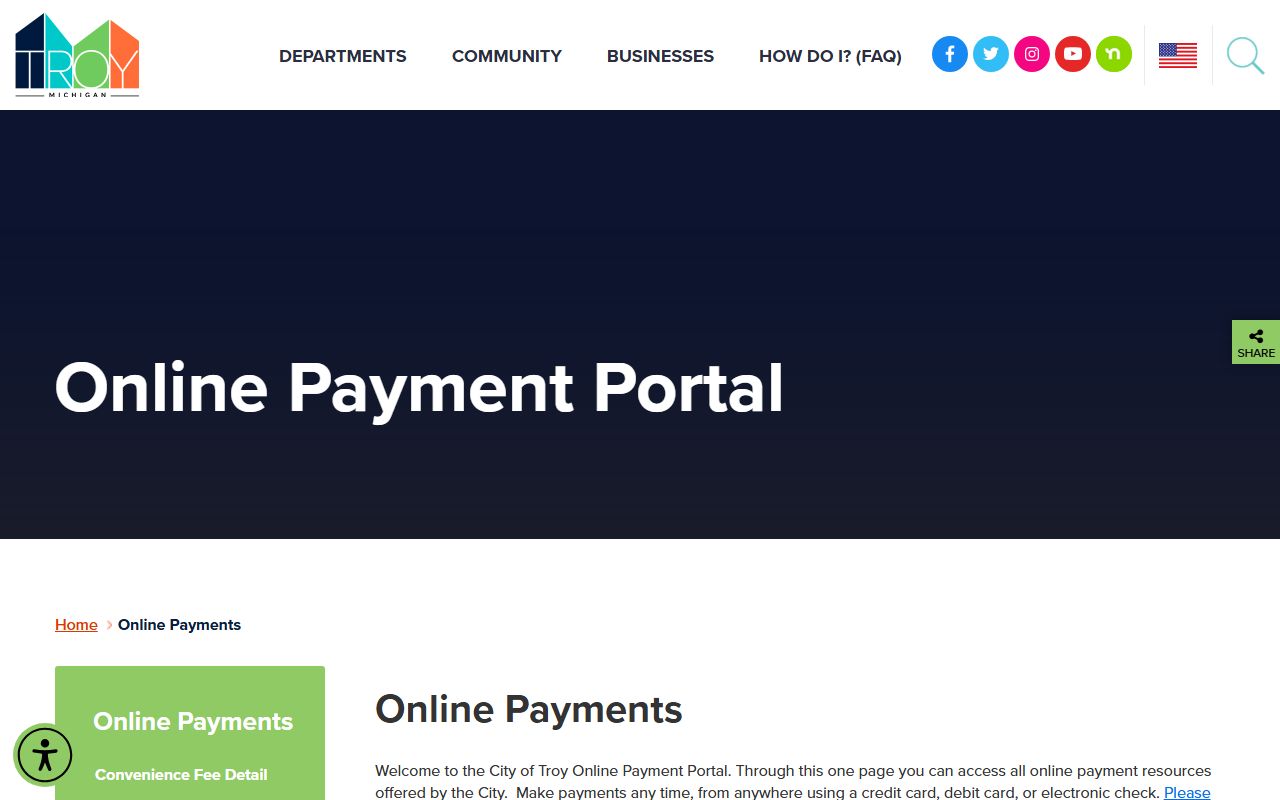
The online payment portal accepts credit and debit cards. A phone payment line is also available at 855.375.7381 for those who prefer to pay by phone.
If you prefer to pay by mail, send checks to the tax mailing address listed above. Drop boxes are at both the east and west entrances to City Hall. Payments can also be made in person Monday through Friday from 8:00 AM to 4:30 PM.
Oakland County Treasurer
Troy property owners who fall behind on taxes have their accounts forwarded to Oakland County each March 1. From that point, Oakland County Treasurer Robert Wittenberg handles collection. The county can offer payment plans and explain options to help avoid foreclosure. If you owe back taxes on a Troy property, contact Oakland County directly.
| Treasurer | Robert Wittenberg |
|---|---|
| Phone | 248.858.0611, Option 7 |
| Address | 1200 N Telegraph Rd, Dept 479, Pontiac, MI 48341 |
| Website | oakgov.com |
See the full Oakland County unclaimed money page for more details on county-level tax and surplus resources.
Tax Foreclosure Surplus Funds in Oakland County
Oakland County is well known in Michigan legal circles when it comes to tax foreclosure surplus funds. The 2020 Michigan Supreme Court case Rafaeli LLC v Oakland County, decided July 17, 2020, held that when a county sells a foreclosed property for more than the taxes owed, the previous owner has a right to the surplus. Oakland County was the named defendant in this case, which changed how Michigan handles tax foreclosure proceeds statewide.
Under MCL 211.78t, if Oakland County sells a foreclosed Troy property at auction for more than the amount owed in taxes and fees, the former owner can claim the difference. Here is how:
- Get Form 5743 (Notice of Intention to Claim Interest in Foreclosure Sale Proceeds) from the Oakland County Treasurer or download it from the state website.
- Submit the completed form to the Oakland County Treasurer by July 1 of the year following the foreclosure sale.
- Use Form 5744 to respond and assert your claim by January 31.
- If a surplus exists and the county does not resolve it, file a motion with the Oakland County Circuit Court between February 1 and May 15.
The July 1 deadline is firm. Missing it forfeits your right to the surplus for that sale cycle. If you are not sure whether a surplus exists, contact Oakland County at 248.858.0611 and ask about the specific parcel. You do not need a lawyer to file Form 5743, but many people find legal help useful for larger claims.
This only applies to former owners at the time of foreclosure. Tenants and others do not have standing to claim under MCL 211.78t.
Michigan Tax Foreclosure Timeline
Michigan runs a three-year process before a property can be foreclosed. Here is the timeline:
- Year 1, March 1: Taxes become delinquent. A 4% administration fee is added, plus 1% per month in interest.
- Year 2, March 1: The property enters forfeiture status. Formal proceedings begin and the owner's options to redeem become limited.
- Year 3, April 1: Foreclosure is finalized. The county takes title to the property and can sell it at auction.
At any stage before the final foreclosure date, the owner can pay the full balance owed to stop the process. Once the property sells, a surplus claim is the only remaining path. If you receive a notice from Oakland County about delinquent taxes, act immediately. Interest compounds monthly.
Legal Aid Resources
Troy residents who need help with unclaimed property claims or tax foreclosure surplus filings have several free options.
- Michigan Legal Help: michiganlegalhelp.org has step-by-step guides for claiming surplus funds, responding to foreclosure, and understanding your rights. Free.
- State Bar Lawyer Referral Service: Call (800) 968-0738 or visit lrs.michbar.org to get connected to a local attorney for a low-cost consultation.
- Michigan Homeowner Assistance Fund (MIHAF): Visit michigan.gov/mihaf for grants up to $25,000 for homeowners at risk of foreclosure due to tax debt or other housing costs.
These resources are especially useful for Oakland County residents dealing with post-Rafaeli surplus claims or delinquent tax issues on Troy properties.