
Search Hillsdale County Unclaimed Money
Hillsdale County residents may have unclaimed money held by the State of Michigan, including dormant bank accounts, uncashed checks, insurance proceeds, and tax foreclosure surplus funds. The Michigan Department of Treasury holds over $675 million in unclaimed property statewide, and the search is free. If you or a family member owned property in Hillsdale County that went through tax foreclosure, surplus funds from the auction may be available to claim through the county court system.
Hillsdale County Overview
Michigan State Unclaimed Property Search
The Michigan Department of Treasury runs the state's unclaimed property program. They hold funds from banks, credit unions, insurance companies, utilities, and other businesses that lost contact with their customers. The total held statewide tops $675 million, and that number keeps growing as more accounts go dormant each year.
The search is free. You don't need to hire anyone to look up your name. Go to unclaimedproperty.michigan.gov and type in your name. If something comes up, you file a claim online. Most claims are paid within 90 days. You can also call (517) 636-5320 or email TreasUPD@michigan.gov if you have questions about the process or need help with a claim.
The Michigan Treasury portal below is where Hillsdale County residents can run a free search for their name. Start at the official state site before going anywhere else.
Run your free search at unclaimedproperty.michigan.gov, the official Michigan Unclaimed Property portal.
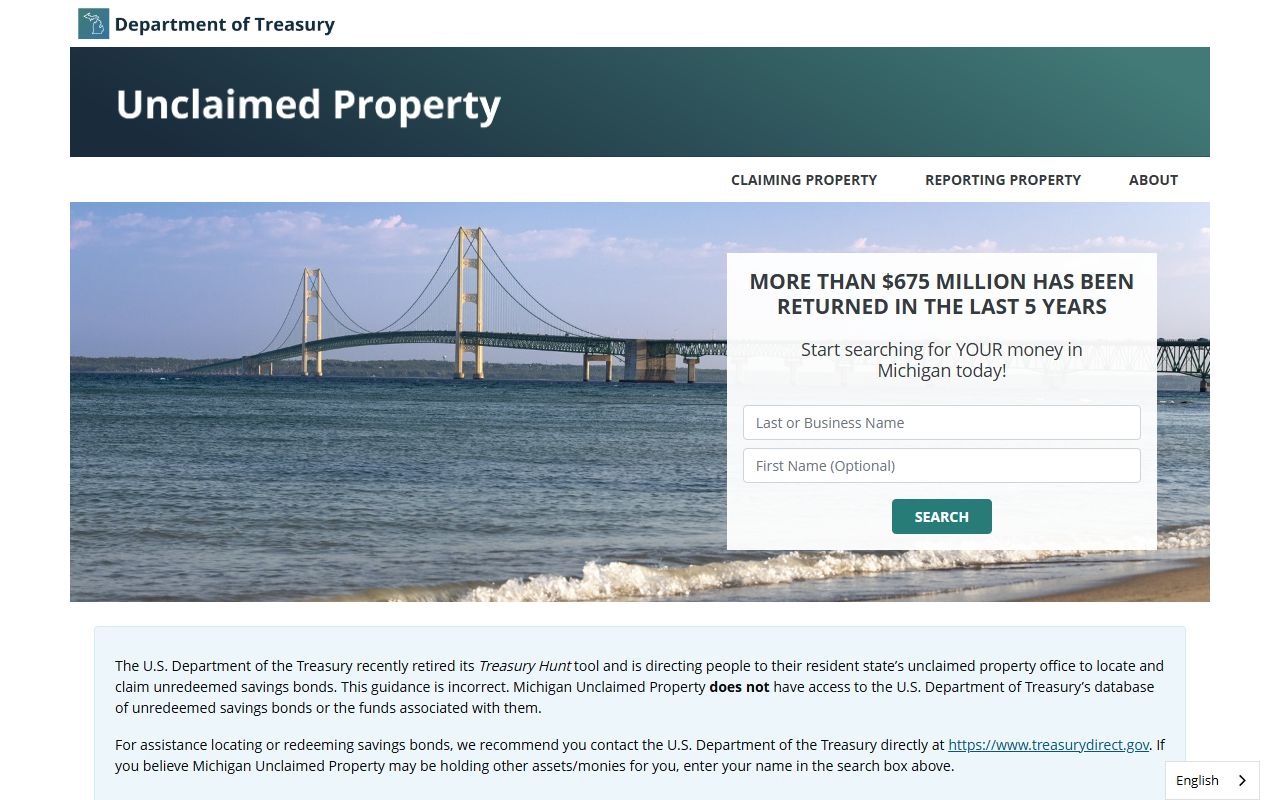
The portal covers all types of unclaimed property. Old utility deposits, forgotten payroll checks, and safe deposit box contents may all be listed under your name.
Tips for Searching
Try every name you have used. Maiden names, nicknames, and business names all matter. Search for deceased relatives too. Spouses, parents, and children can each have separate claims. If you find a match, the claim form asks for basic ID and proof of your connection to the account. You don't need a lawyer for most standard claims. The state processes them directly and at no charge.
Hillsdale County Treasurer
The Hillsdale County Treasurer collects delinquent property taxes and manages the tax foreclosure process when taxes go unpaid. On March 1 each year, any taxes that went unpaid from prior years are formally turned over to the County as delinquent. From that point, the Treasurer takes over collection. The office accepts credit card payments and partial payments. Hours are Monday through Friday, 8:30 a.m. to 5:00 p.m.
The Hillsdale County Treasurer's official page is shown below. It covers payment options, forms, and tax due dates.
Visit the Hillsdale County Treasurer page for current contact details, deadlines, and deferment application information.
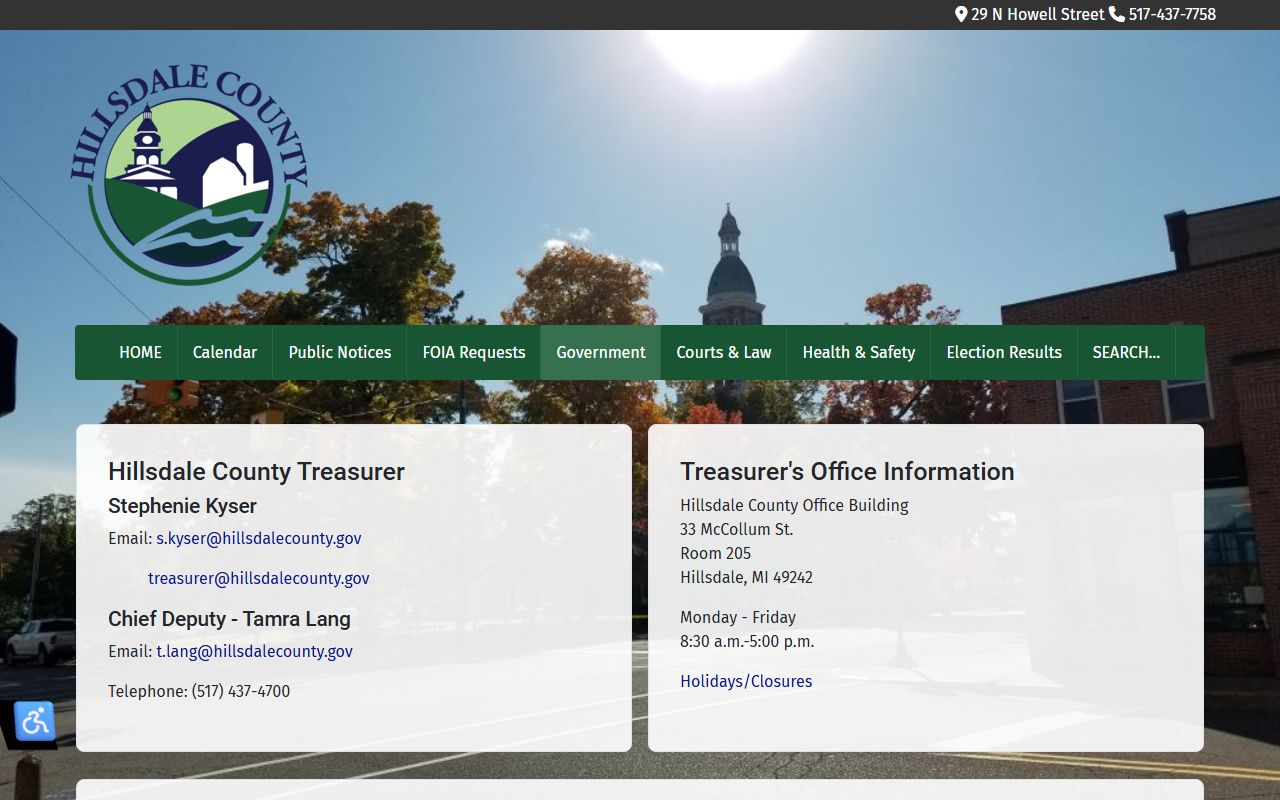
The Treasurer's office can also help with questions about delinquent tax accounts and the steps to avoid foreclosure. If you're behind on taxes, contact them early.
| Treasurer | Stephenie Kyser |
|---|---|
| Chief Deputy | Tamra Lang |
| Address | Hillsdale County Office Building, 33 McCollum St., Room 205, Hillsdale, MI 49242 |
| Phone | (517) 437-4700 |
| Hours | Monday-Friday, 8:30 a.m. to 5:00 p.m. |
| Website | hillsdalecounty.gov - Treasurer |
Tax Payment Deadlines
Summer taxes are due without penalty from July 1 through August 31. Winter taxes run December 1 through February 14 without penalty. After those windows close, interest and fees start adding up. An Application for Deferment of Summer Taxes is available for seniors and low-income residents who qualify. Ask the Treasurer's office for that form if you think you may be eligible.
City of Hillsdale Treasurer
The City of Hillsdale has its own separate treasurer's office. It is not the same as the county office. The city office handles city-level tax collection. Summer taxes run July 1 to August 31. Winter taxes run December 1 to March 1. From September 1 through November 30, city treasurer hours are 9 a.m. to noon. Contact the City of Hillsdale Treasurer at (517) 437-6454.
The city treasurer's page at cityofhillsdale.org/treasurer lists current schedules and payment options.
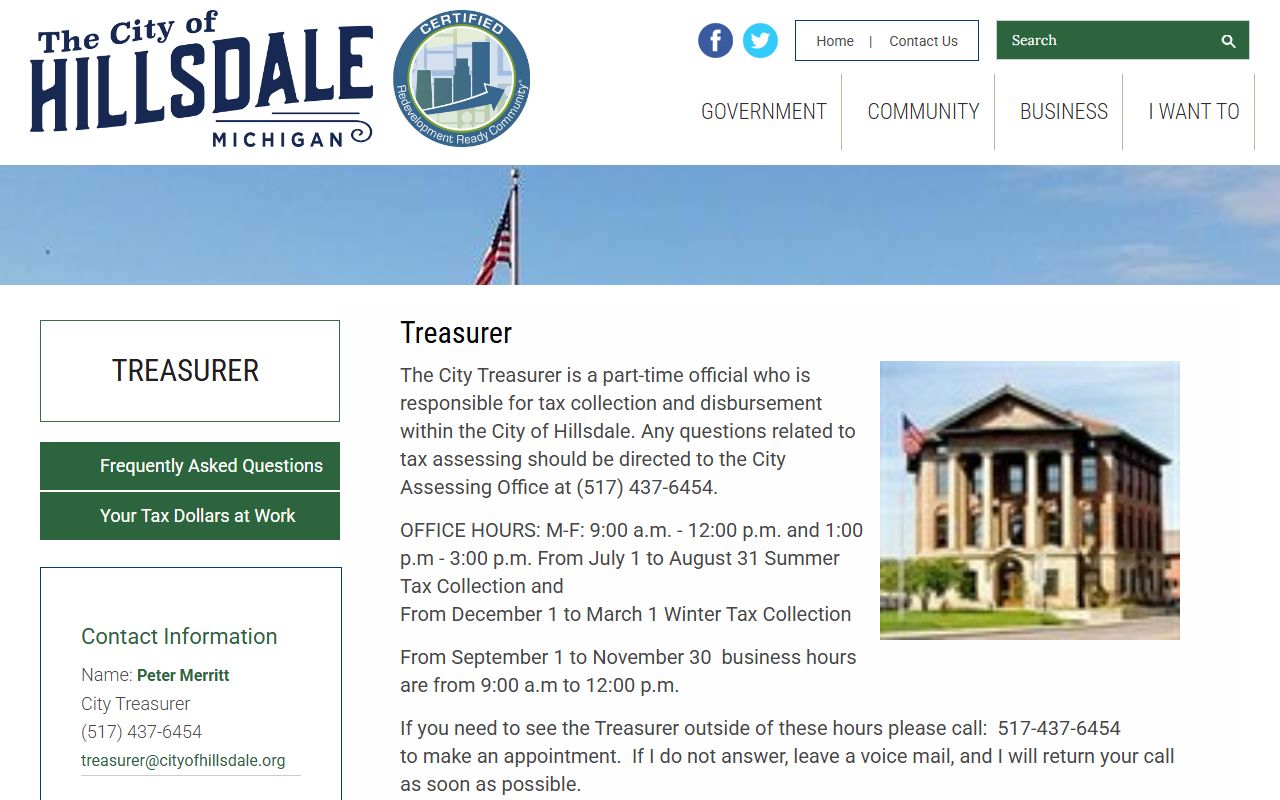
If you owe both city and county taxes, pay city taxes first. Unpaid city taxes roll to the county on March 1 and become delinquent at the county level at that point.
The Hillsdale County main website covers all county departments and services. The screenshot below gives a general view of what's there.
Visit hillsdalecounty.gov for the full directory of county offices and services.
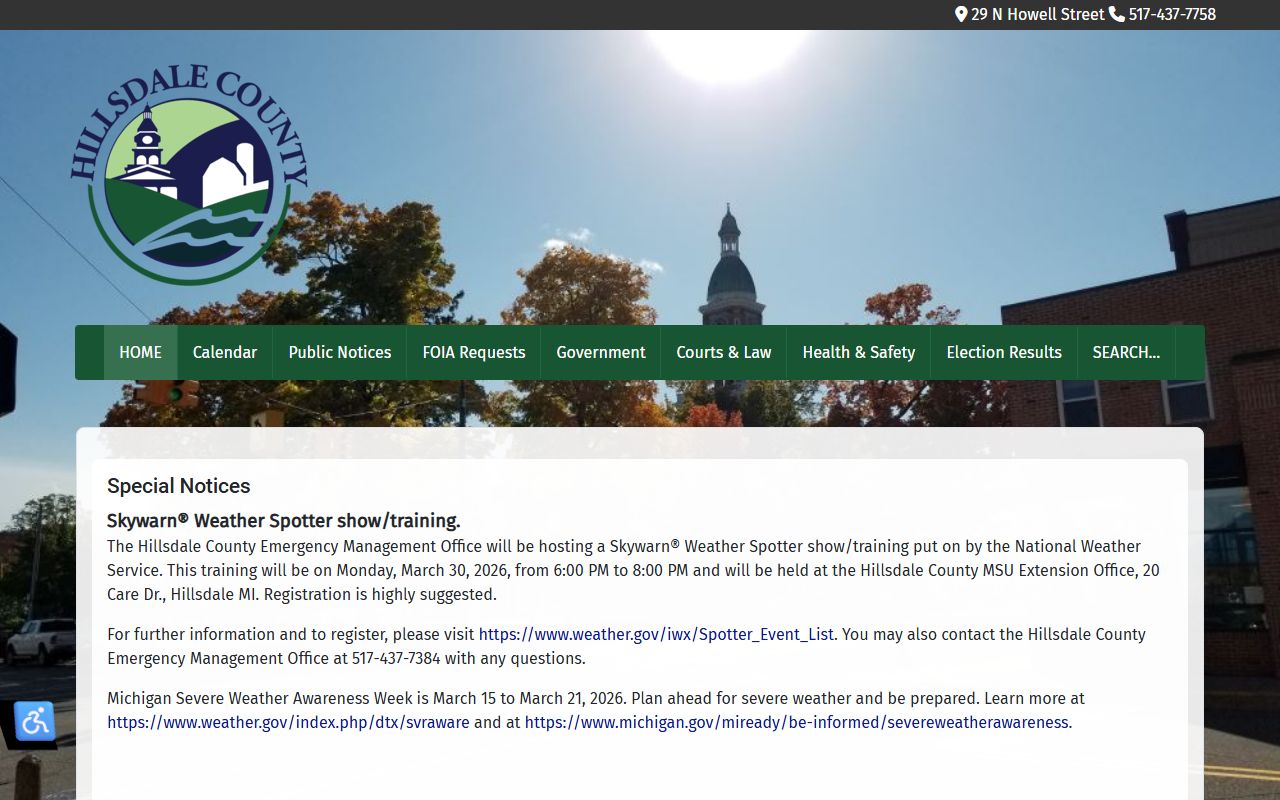
The site links to the clerk, courts, treasurer, and other departments. It's a good starting point if you're not sure which office handles your question.
Tax Foreclosure Surplus Funds in Hillsdale County
When Hillsdale County forecloses on a property for unpaid taxes and sells it at auction, the sale price sometimes exceeds the amount owed. That extra money is called a surplus. Under Michigan law, the former property owner has the right to claim it. But the process has firm deadlines, and many people miss them without knowing they were owed anything.
Michigan Compiled Laws section 211.78t sets out the rules for surplus funds after tax foreclosure sales. The law requires specific forms and filing windows. Miss the deadline and you lose the right to claim the funds.
Claim Forms and Deadlines
Two forms apply to surplus fund claims in Michigan:
- Form 5743 - Notice of intention to claim surplus proceeds. Must be filed by July 1 of the foreclosure year.
- Form 5744 - Petition to claim surplus proceeds. Due by January 31 after the foreclosure sale.
There is also a court motion option using form CC540. This can be filed from February 1 through May 15. The motion goes to the circuit court, where a judge reviews your proof of ownership and orders the county to pay out the surplus if the claim holds. This path is useful if you missed the earlier form deadlines but still have time to file the motion.
Rafaeli v. Oakland County (2020)
The Michigan Supreme Court's 2020 ruling in Rafaeli v. Oakland County changed things for property owners across the state. The Court held that the government cannot keep surplus proceeds that belong to the former property owner. This decision opened the door for many people to claim money they didn't know was owed to them. If you or a family member lost property to tax foreclosure in Hillsdale County in recent years, it is worth checking whether the sale generated a surplus.
Hillsdale County Class Action
Hillsdale County was part of a class action case, Docket No. 350406, that also named Monroe, Washtenaw, and Lenawee counties. These cases focused on surplus funds from tax foreclosure sales. If your property was foreclosed in Hillsdale County during the relevant period, you may have had a claim under this action. Talk to a local attorney or contact legal aid if you think you were affected.
Michigan Tax Foreclosure Timeline
Michigan uses a three-year process before a property can be finally foreclosed. Understanding the timeline helps you act while options are still open.
- Year 1: Taxes go unpaid. On March 1, the county treasurer takes over collection and a lien is placed on the property. Interest and fees begin to run.
- Year 2: The property is listed as delinquent. The owner still has redemption rights. Formal foreclosure proceedings may begin, with notices sent to the owner and any lienholders of record.
- Year 3: If taxes remain unpaid, the circuit court issues a foreclosure judgment. The property is sold at public auction, usually in late summer or fall.
At each stage, paying off the debt stops the process. After the court judgment in year three, redemption ends. Sale proceeds cover the tax debt, fees, and costs first. What remains is the surplus. Former owners have the right to claim it under MCL 211.78t, but only within the filing windows set by law.
Hillsdale County follows this same three-year structure. The County Treasurer serves as the Foreclosing Governmental Unit (FGU) and manages each step locally.
Legal Aid Resources for Hillsdale County Residents
Surplus fund claims and unclaimed property matters can get complicated fast. Free and low-cost help is available for Hillsdale County residents who need to navigate the process.
Michigan Legal Help
Go to michiganlegalhelp.org for step-by-step guides on filing surplus fund claims, dealing with tax foreclosure, and searching for unclaimed property. The site is free and written in plain language. It tells you which forms to use and when to file them. There are also guides on how to represent yourself in circuit court for surplus claims.
State Bar of Michigan Lawyer Referral Service
The State Bar of Michigan runs a lawyer referral service at lrs.michbar.org. Call (800) 968-0738. They can connect you with attorneys who handle property law, tax foreclosure, and estate matters. First consultations are typically low-cost or free.
Michigan Homeowner Assistance Fund
The Michigan Homeowner Assistance Fund (MIHAF) helps residents who fell behind on property taxes due to financial hardship. Visit michigan.gov/mihaf for eligibility information and how to apply. This fund may stop a foreclosure before it ever reaches the surplus stage, which is always the better outcome.
Act before the deadlines. The July 1 and January 31 filing dates for surplus claims are hard cutoffs. Missing them means losing your right to recover funds you may be owed. If you're unsure about your situation, call Michigan Legal Help first or use the State Bar referral line to find local counsel.
Cities in Hillsdale County
The City of Hillsdale is the county seat and largest city in the county. No cities in Hillsdale County meet the population threshold for a dedicated city page on this site. Residents of the City of Hillsdale and other cities in the county can use the state portal and county offices listed on this page to search for unclaimed funds and file surplus claims.